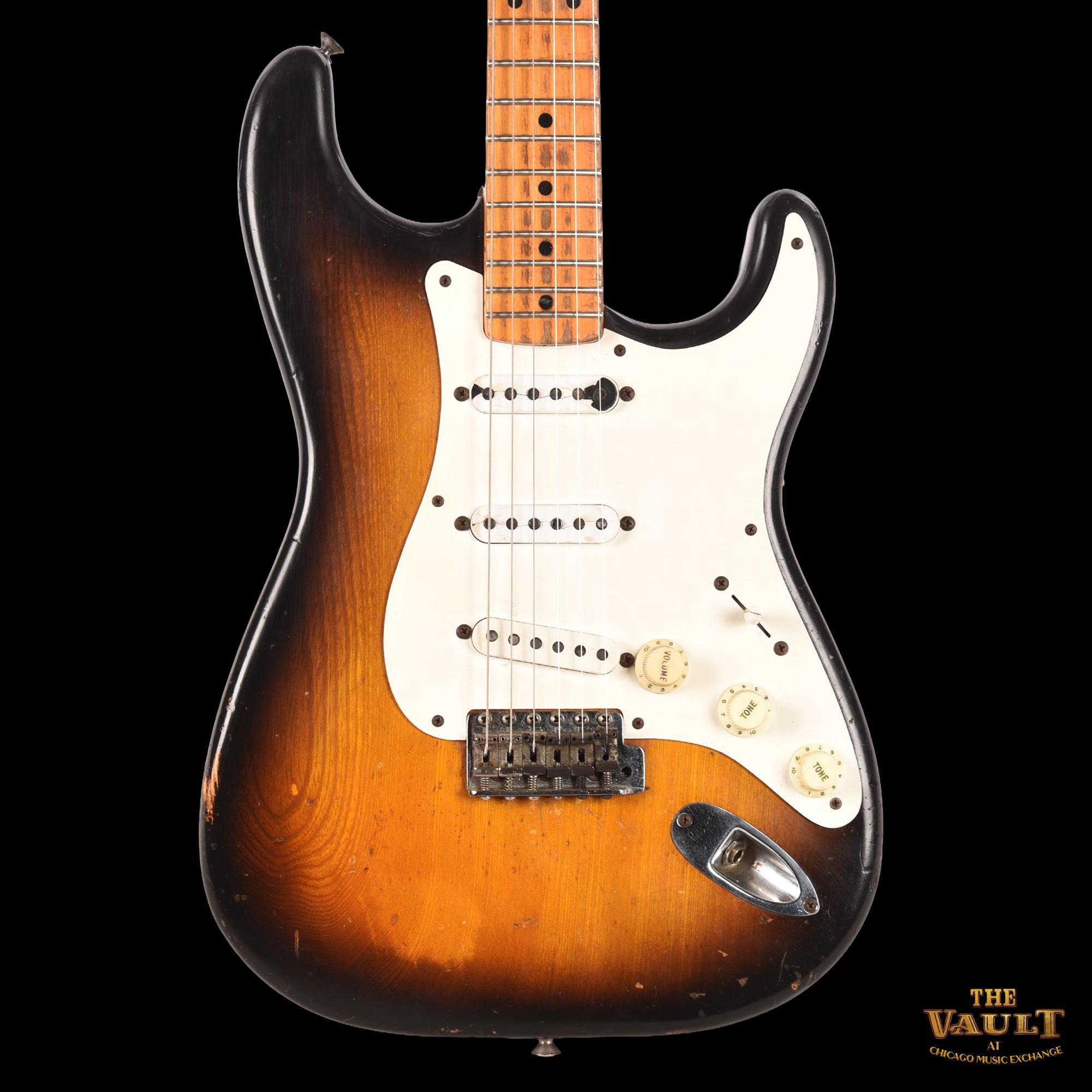
The Stratocaster is the most argued-about guitar in the vintage market. More money changes hands over old Strats than any other single model, and the arguments about which years are "real" vintage and which years are just old have been running since the 1980s. Most of those arguments start from the same place: pre-CBS good, CBS bad.
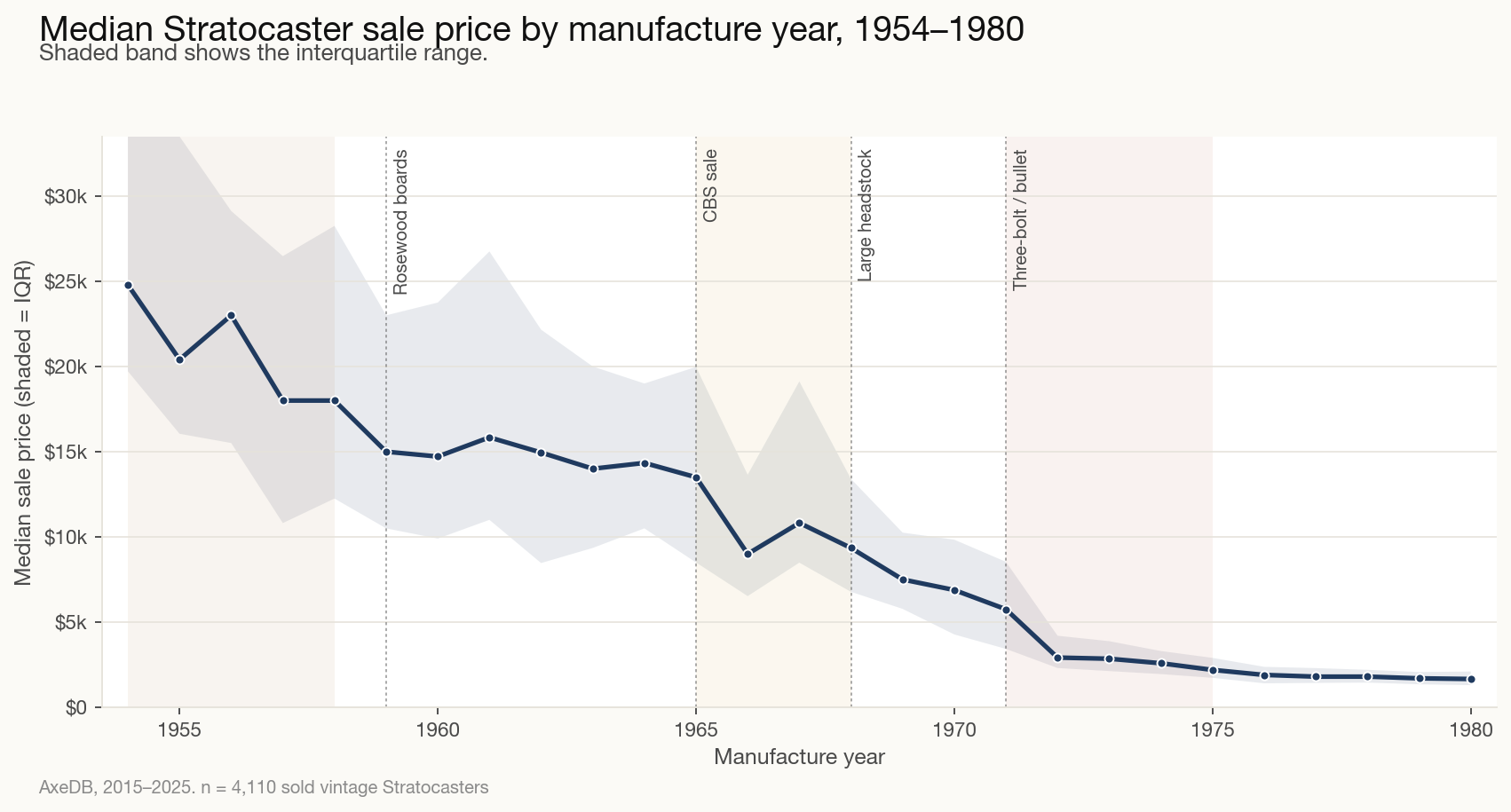
The data does not show a steep one-time cliff like this might suggest. It looks like a ladder, with a long list of Fender design choices affecting collectability and value one after the next.
The launch-era 1954–58 guitars sit at the top. The 1959–62 slab-board years come next. The 1963–64 veneer-board pre-CBS guitars are still expensive, but not quite in the same tier. Then there are the CBS years, which do not behave as one block either: a small initial step down in 1965–67, another in 1968–70, and a much larger one once the 1971–75 three-bolt / bullet-truss era arrives.
We tracked 4,121 vintage Stratocaster sales of models manufactured from 1954 through 1980, combining Reverb marketplace sales, auction records, and vintage dealer data into one research-grade sample.
The Big Picture: Price Descends by Manufacturing Year
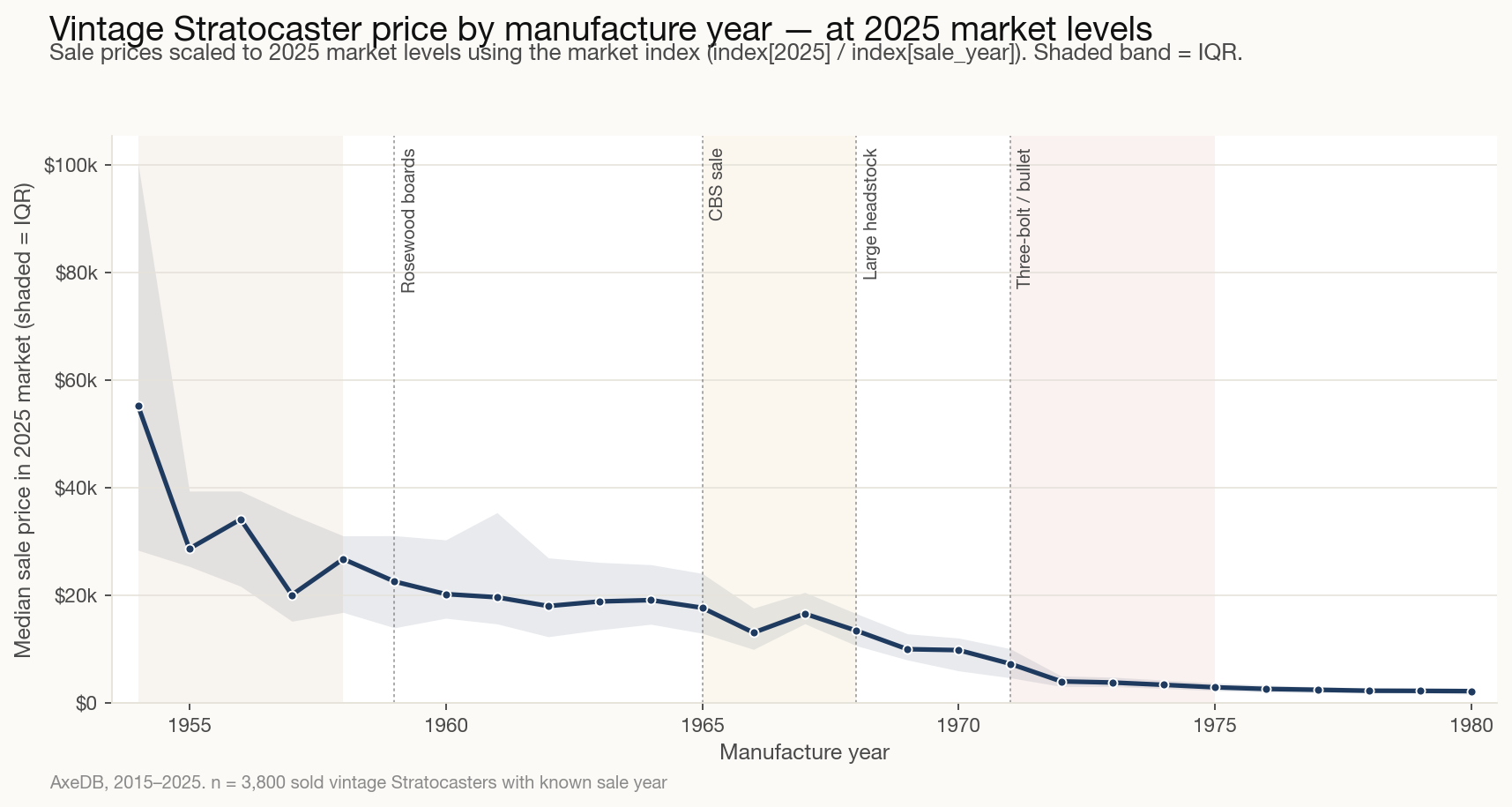
The highest tier is the launch-era maple-board Strat. The line steps down with the 1959 move to rosewood boards, softens again into the veneer-board 1963–64 period, and takes another hit at the 1965 CBS sale. But the deeper repricing comes later: first in the late 1960s, then far more dramatically once the 1971 hardware and construction changes become the default.
- 1954–58 is a collector market of its own
- 1959–64 is still premium vintage Strat territory, but not all one tier
- 1965–67 is discounted, not destroyed
- 1968–70 is clearly a lower market
- 1971+ is an affordable vintage Strat, not blue-chip vintage
One last thing to note: the above plot incorporates data from over a decade of sales (2014-26). Prices increased significantly over this time period, especially in 2020-21. To account for this, the plot scales historic prices to 2025 prices using a vintage Strat market index, essentially multiplying historic sales prices by the rate at which the market moved between the sale year and 2025. For more information on this market index, see the Has the Vintage Stratocaster Market Moved? section further down in this article. For a more raw, un-scaled version of this plot, see the appendix section.
Which Years Are Common?
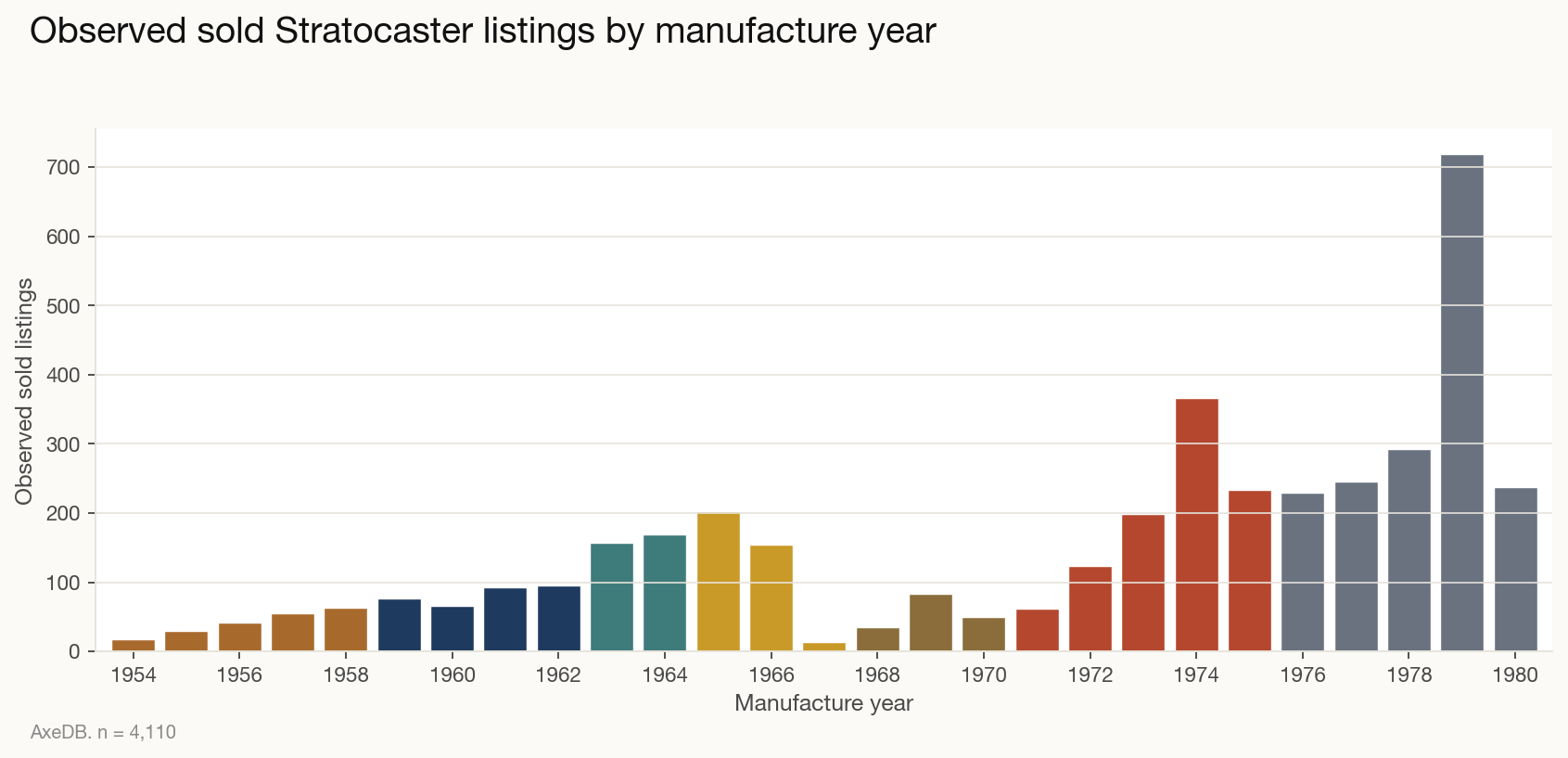
The visible market is not evenly distributed across the different vintages of Strat history. Early pre-CBS years are thin, with the first couple years of production very seldom hitting the market. 1970s models are plentiful: Fender produced a ton and many survive to this day. A 1954 Strat is not just expensive because buyers prefer its specs, they value that it's scarce compared to a 1974.
The later CBS years can feel deceptively cheap. More were made, more survive in visible circulation, and they sit in a part of Strat history that collectors do not treat as sacred. Forty-two percent of the sample was built between 1976 and 1980.
There's very little volume of 1967-68 Strats given how famous these years are for their Hendrix association. Both Black Beauty and the Woodstock Strat came from this period, and we barely see them hitting the market at all.
This is secondary market sales data, so it's not perfectly representative of true Fender production volumes throughout its early history. That data doesn't exist to the public, though, so this is about as close as we can get to seeing Stratocaster production volume trends across these eras (bearing in mind, of course, that many older Strats did not survive to present day and therefore can't be seen in modern-day sales data, that older guitars may sit in collections longer and therefore change hands less often, etc.)
Pre-CBS Is Not One Market
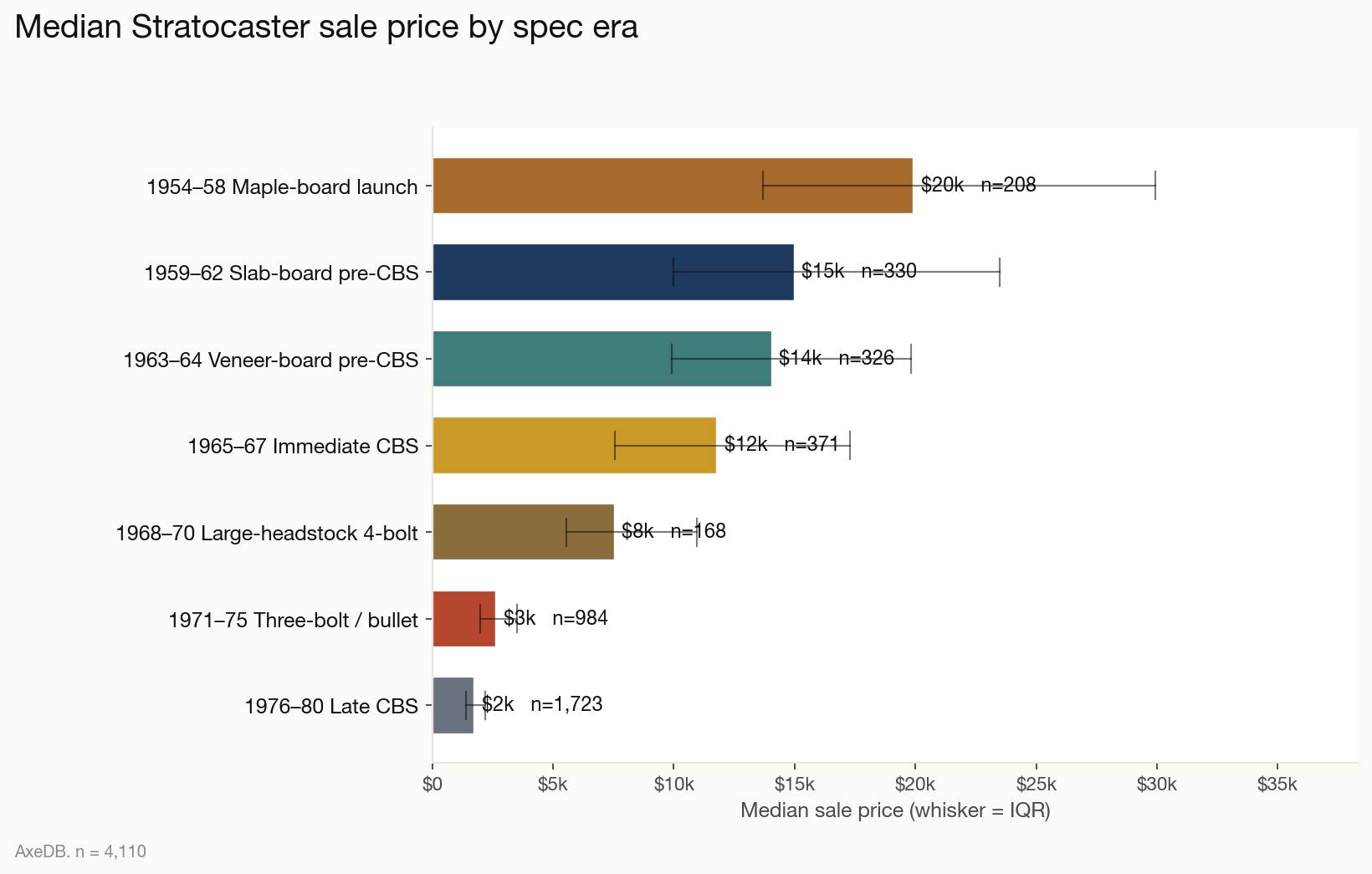
Treating all pre-CBS Strats as one bucket hides a meaningful split inside the era. Median prices by spec era:
| Spec era | Median price | n |
|---|---|---|
| 1954–58 Maple-board launch | $19,349 | 212 |
| 1959–62 Slab-board pre-CBS | $15,000 | 326 |
| 1963–64 Veneer-board pre-CBS | $14,045 | 336 |
| 1965–67 Immediate CBS | $11,837 | 366 |
| 1968–70 Large-headstock 4-bolt | $7,543 | 168 |
| 1971–75 Three-bolt / bullet | $2,690 | 985 |
| 1976–80 Late CBS | $1,800 | 1,728 |
The 1959–62 slab-board years hold up quite well despite not matching the original, most scarce maple-neck archetype. The 1963–64 veneer-board years remain expensive, but they are not interchangeable with slab-board guitars in this sample. The distinction is important despite the similar outward appearance — the thicker slab-board rosewood neck is described as having higher sustain and feeling more substantial than the later veneer-board, and the earliest maple-neck Strats are a different instrument entirely. The price data confirms the hierarchy that players and collectors have been describing for decades: "pre-CBS" is a useful umbrella, but it covers at least three distinct tiers.
Even Immediate CBS can be comparable to late pre-CBS on a case-by-case basis. While the CBS sale was announced in January 1965, they'd hardly had time to make meaningful changes to Fender's materials and manufacturing processes for a guitar that made it off the line that same year. A '65 "CBS" Strat is basically a stealth pre-CBS at a slight discount.
The CBS Staircase: Multiple Spec Changes Drove the Long Decline
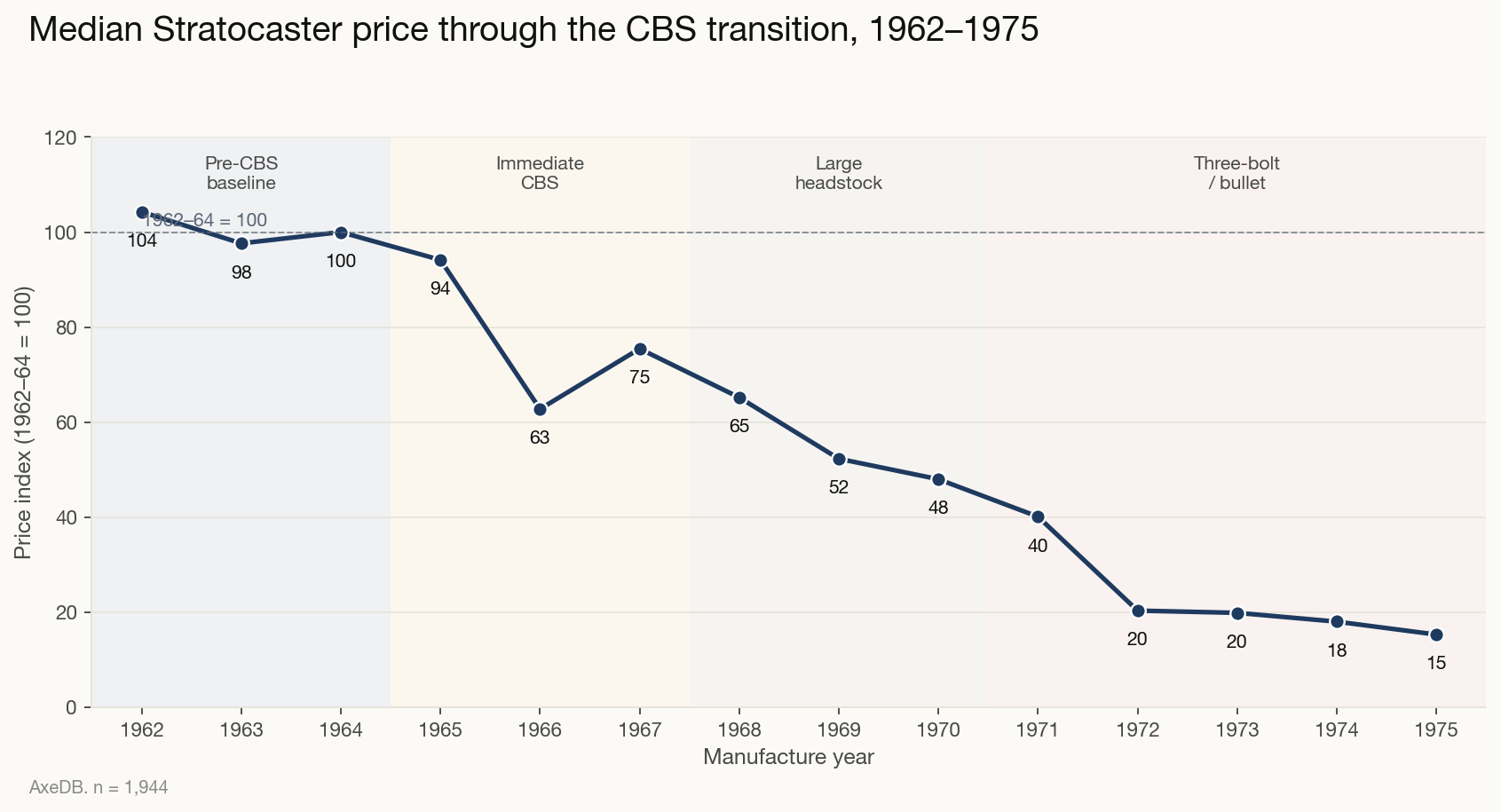
Using 1962–64 as the baseline, the median changes look like this:
- 1965–67: about −17%
- 1968–70: about −47%
- 1971–75: about −81%
- 1976–80: about −87%
Not a cliff. A staircase.
The immediate CBS years are lower, but still close to late pre-CBS territory. The late 1960s are where the line really breaks. By 1971–75, it is a different market altogether. Median price is roughly a fifth of the pre-CBS baseline.
This is why 1965 arguments tend to go nowhere. One side says "still basically pre-CBS." The other says "CBS ruined it." But comparing 1964 to 1974 skips over everything that actually happened in between.
Compare 1964 to 1965, then 1965 to 1968, then 1968 to 1971, and the sequence is obvious. These breaks in the staircase correspond to changes CBS made to the Stratocaster over the ~decade since buying the company: branding changes in '65 (see the transition logo), larger headstocks in '66, polyurethane finishes were phased in around '68, three-bolt necks and bullet truss rod in '71, and a slew of cost-cutting and quality-control complaints throughout this time period led to a heavier instrument with hit-or-miss quality by '74.
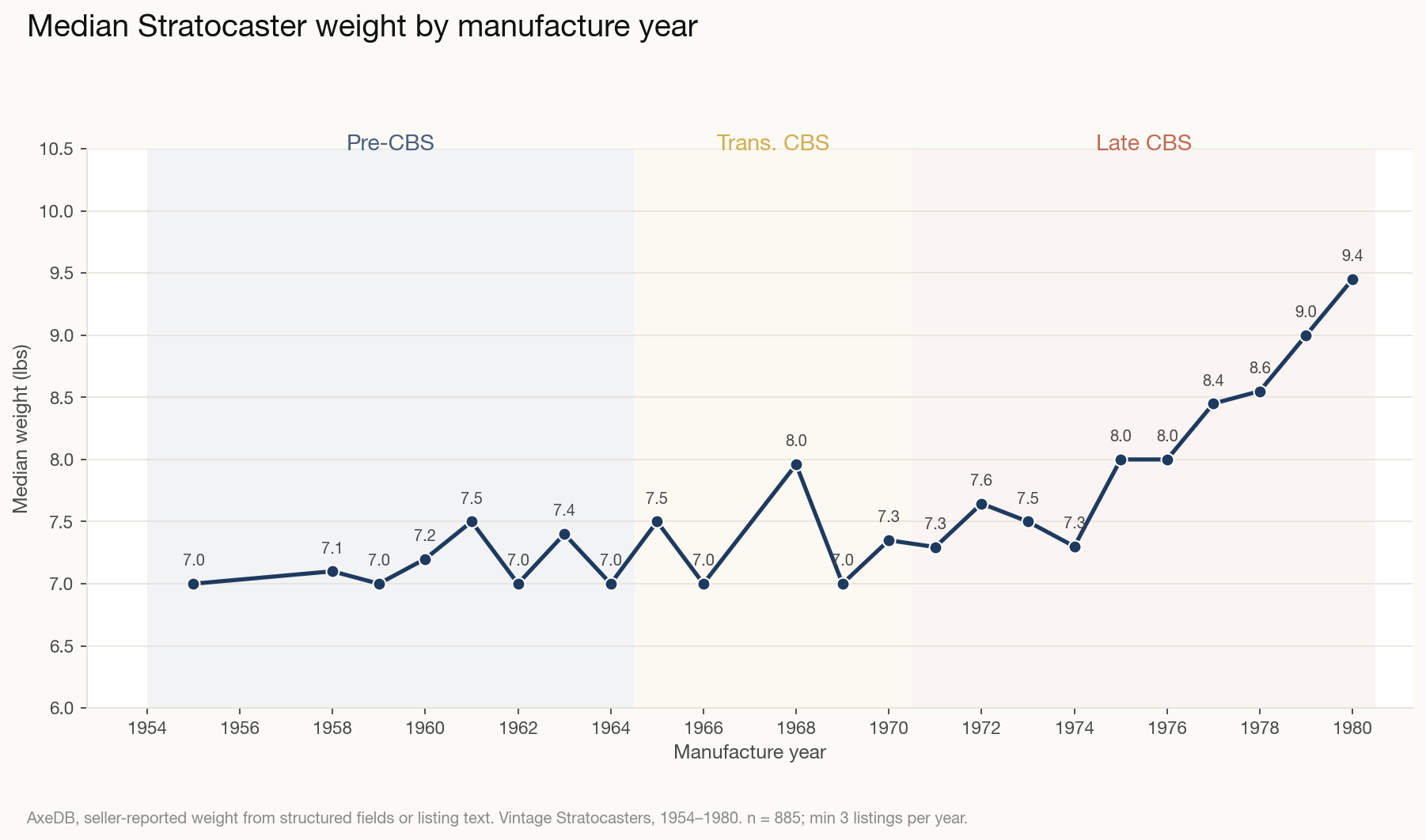
While not explicitly a spec change, the heavier weight of later CBS Strats is one of the reasons they get a bad reputation. Vintage-quality 7lb examples do exist from the late CBS era, but a 10lb Strat is reasonably common for this era and basically unheard of pre-CBS. While the CBS-era Telecaster slightly mitigated this issue with the invention of the Thinline, 70s Stratocasters got increasingly bloated with each passing year.
For a deeper dive, this transition is explored in great detail across all Fender models in our CBS transition analysis.
The Sweet Spot: 1965–66
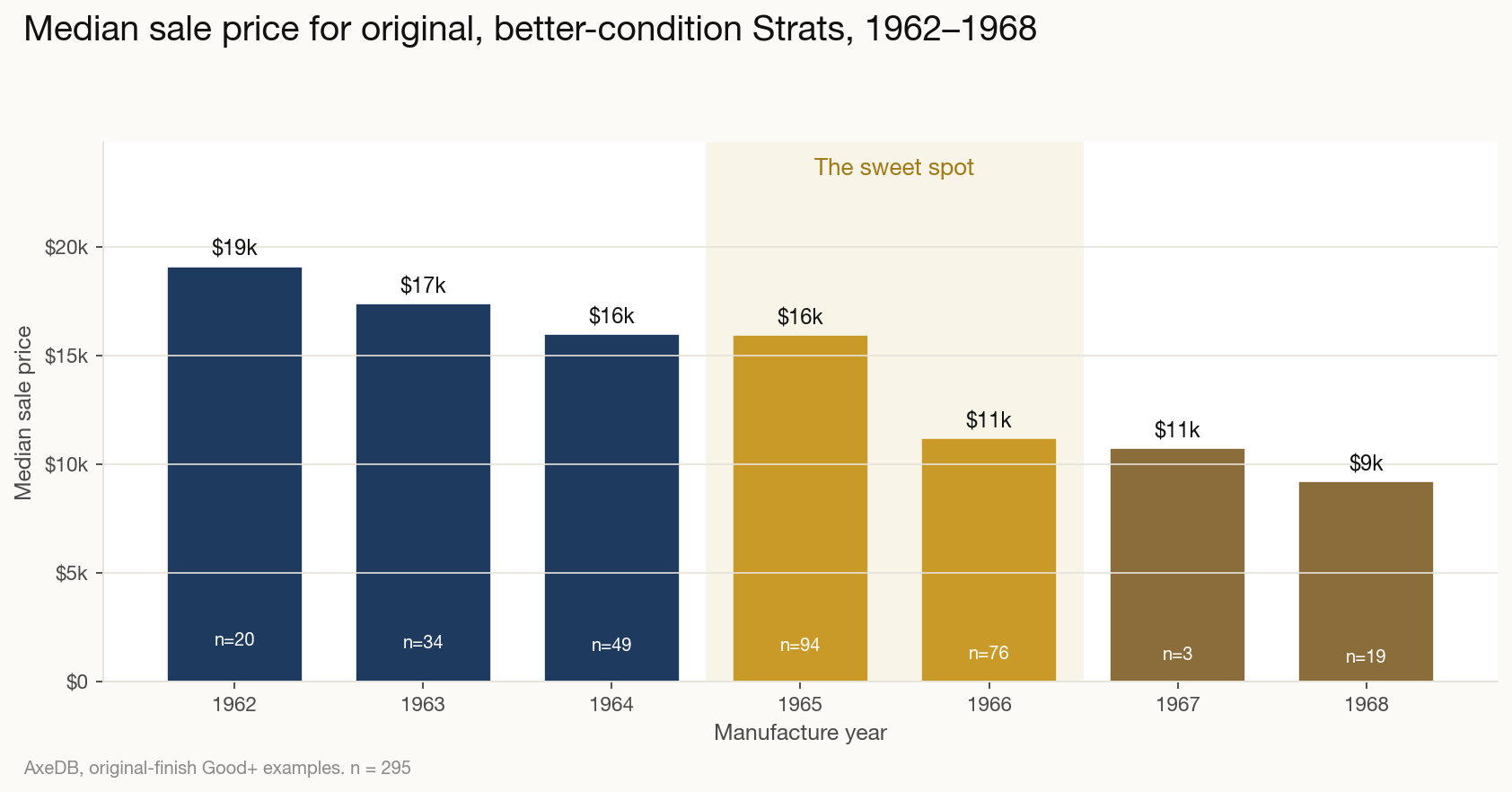
For original, better-condition examples, 1965–66 is the cleanest entry into vintage Strat territory without paying 1962–64 prices. The chart shows the year-by-year progression: 1962–64 sits in the late pre-CBS premium zone, 1965 is discounted but still strong, 1966 falls further, and by 1967–68 the instrument has moved into a different tier.
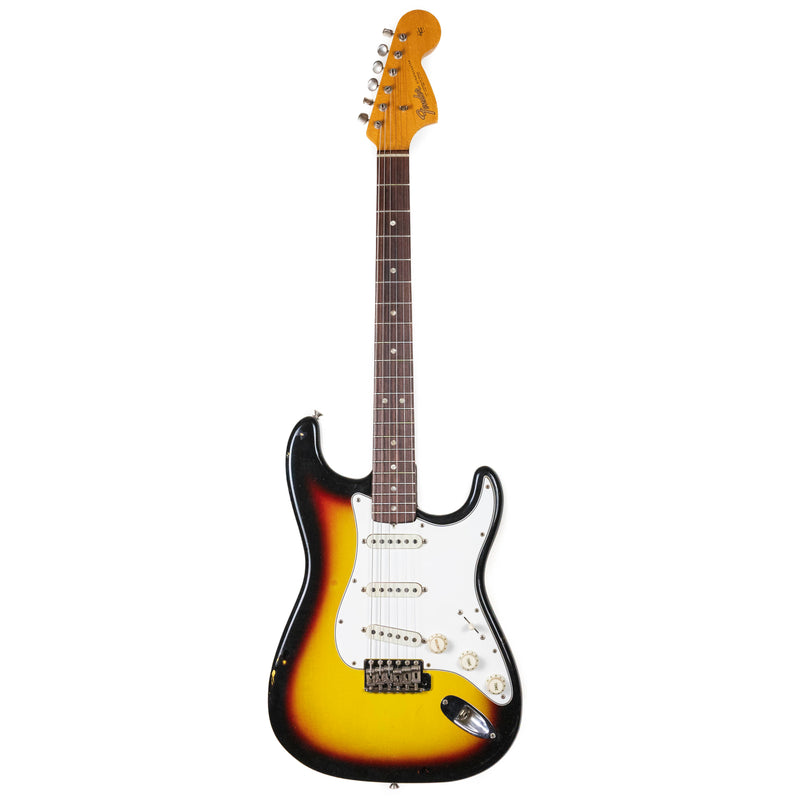
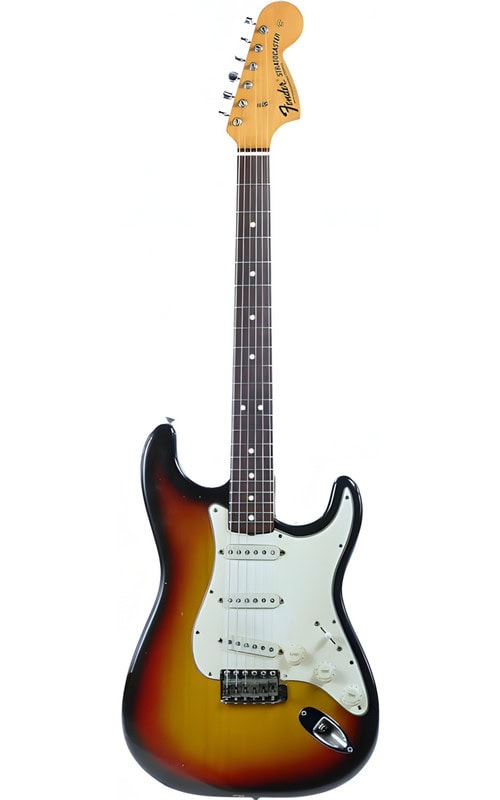
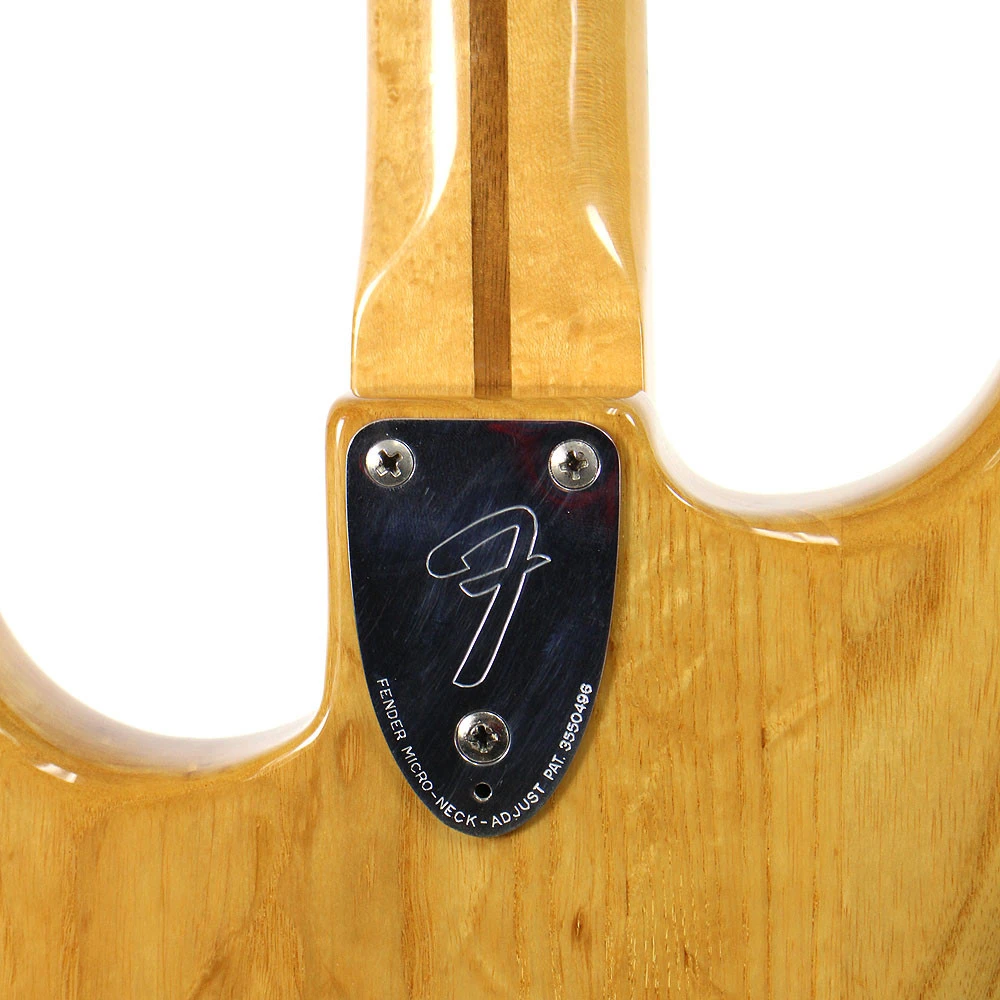
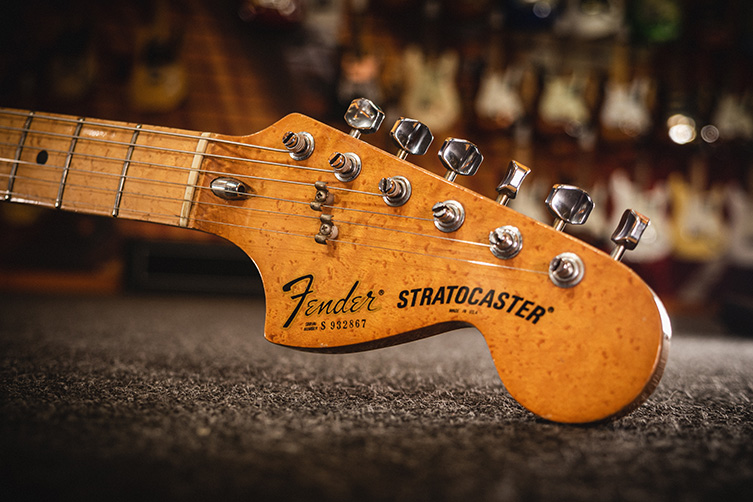
An early/mid 1965 Strat shares essentially the same specifications as a 1964: four-bolt neck, nitro finish, the same pickup and wiring configuration, and relatively low weight. You get a slight CBS name discount without the spec changes and arguably without the quality degradation that actually drives the negative CBS reputation. You start to see larger headstocks, transition logos, and F-stamped neck plates into '66, but still largely with pre-CBS construction and feel.
Why 1971 Is the Real Break
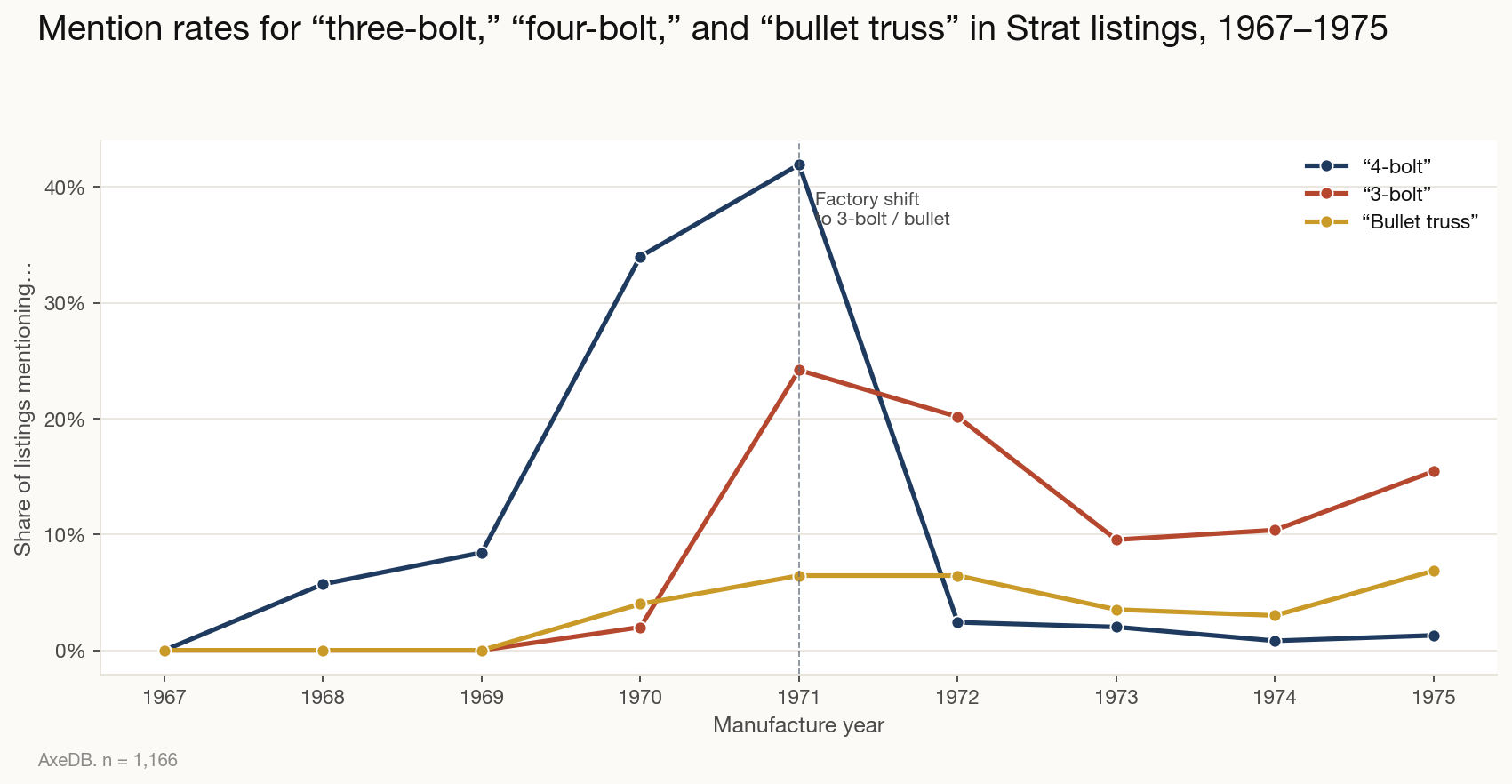
The Stratocaster's biggest repricing does not land in 1965. It lands when the later CBS hardware changes — three-bolt neck, Micro-Tilt adjustment, and bullet truss rod, all introduced in late 1971 — become the norm.
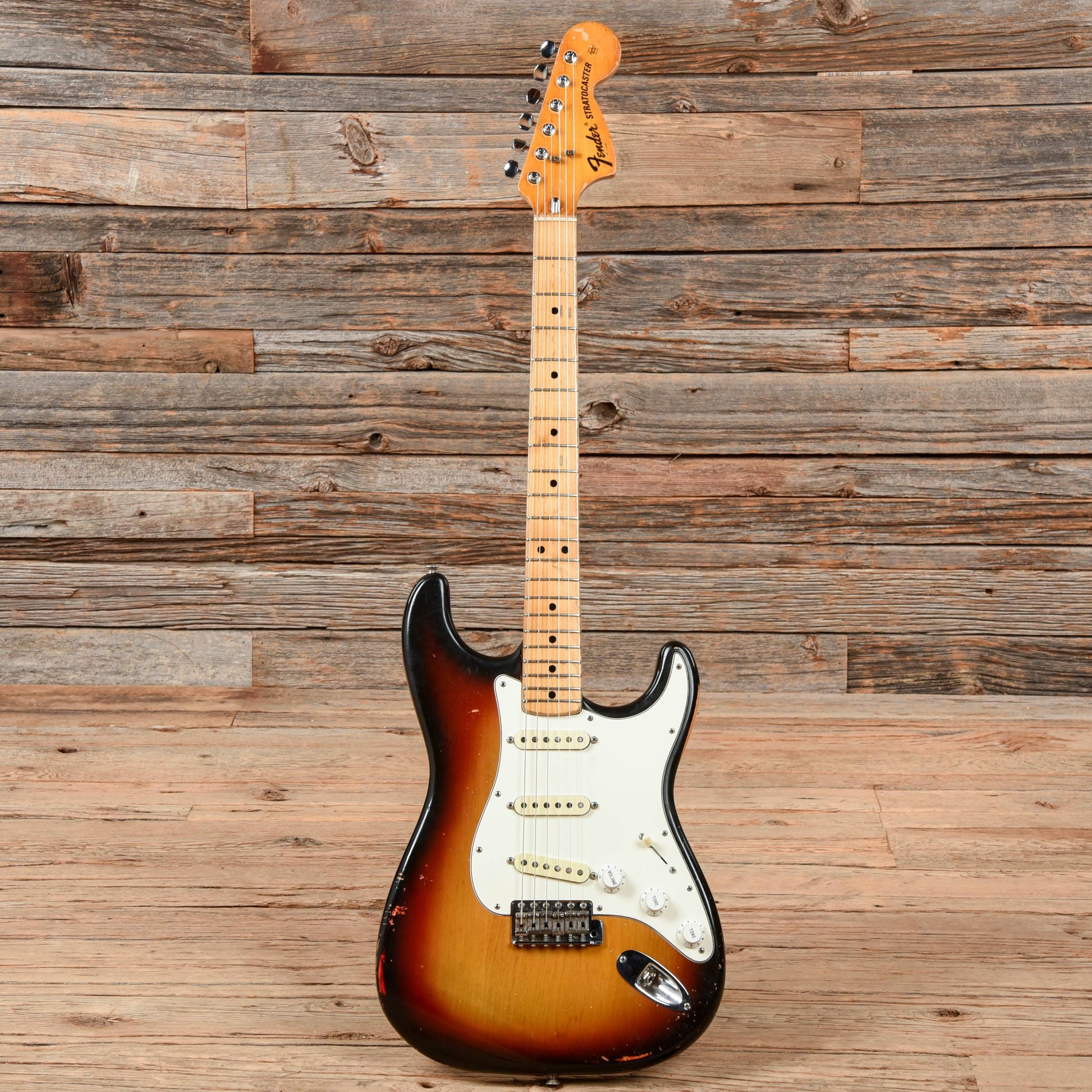
You can see this in how sellers describe the guitars. In 1970, a large share of Strat listings mention "4-bolt" explicitly — sellers signaling to buyers that this guitar still has the pre-change construction. By 1971–72, three-bolt mentions spike and four-bolt mentions drop away. The price curves fall in exactly that window. A 1970 Strat with a four-bolt neck and a 1972 Strat with a three-bolt neck are only two years apart, but they occupy different tiers.
The three-bolt is the point of no return for many buyers: it travels with the full heavy-CBS package of bullet truss rod, Micro-Tilt, poly finish, and excessive weight. Everything after this point trades as late CBS, not transitional CBS.
The Channels Agree
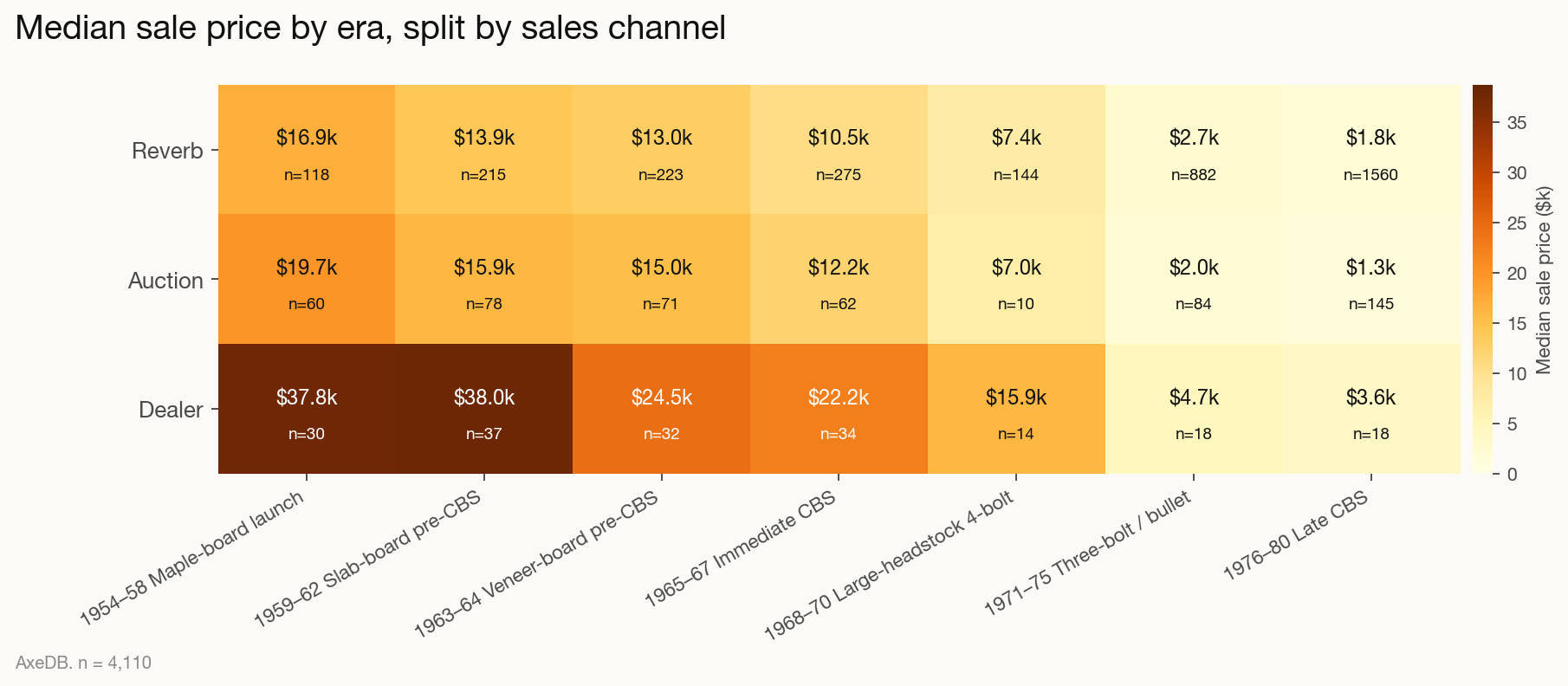
An obvious objection to a marketplace-driven analysis is that the observed trends might be a platform artifact. If the ladder were driven by the idiosyncrasies of Reverb's seller population — unfamiliar names, uncertainty about what you're actually buying — auction houses and vintage dealers would show a different shape.
They don't. Dealers run about twice Reverb on the top rungs and a bit more than that on the lower ones, as you would expect from curated, well-documented inventory that comes with some form of provenance. Auctions land closer to Reverb. But the relative structure is the same across all three: launch-era maple-board at the top, progressive steps down through the CBS eras, a much deeper drop at 1971. Three independent channels pricing the ladder the same way is decent evidence that the ladder reflects a genuine market consensus.
Has the Vintage Stratocaster Market Moved?
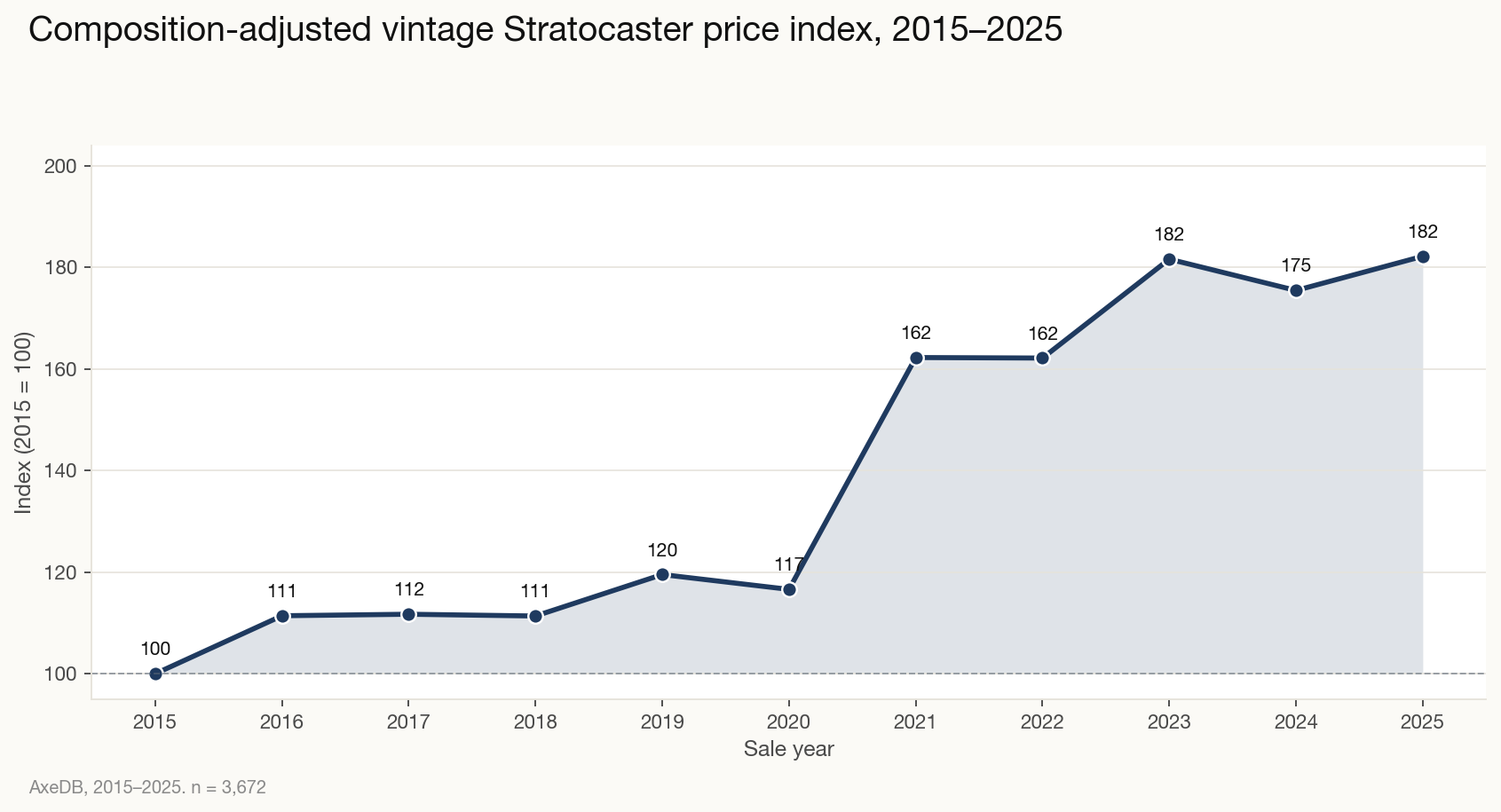
The index shown here holds the era mix fixed. This means that the index value doesn't jump around year to year as more 1970s guitars or fewer pre-CBS examples hit the market. It captures the movement of the vintage Strat market as a whole, rather than any of its individual components.
The composition-adjusted index climbs from a baseline of 100 in 2015 to about 117 by 2019, jumps sharply to 173 in 2021 during the post-pandemic collectibles boom, and settles in the 180s–190s through 2025. A 1966 Strat is cheaper today than a 1964 Strat, but it is also considerably more expensive than a 1966 Strat was ten years ago. The pandemic-era price explosion has subsided, but prices never reset back to their former level, instead resuming their former growth trend from a new post-boom baseline.
Next we look one layer deeper, at how the different Fender eras performed across this time period.
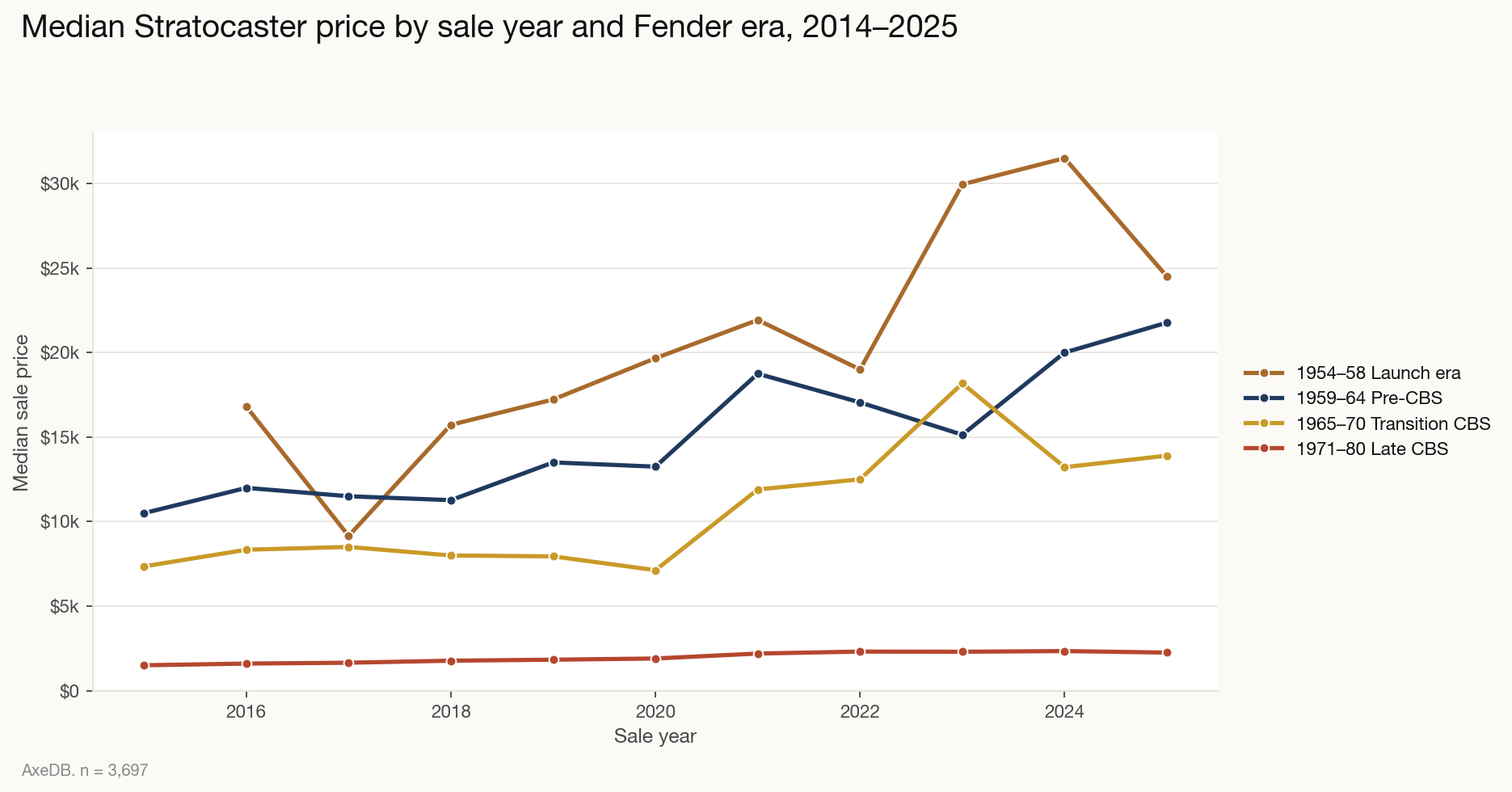
Launch-era Strats (1954–58) are the most scarce, and as a result are prone to price volatility. They hovered around $15,000 in the mid-2010s, shot up to over $30,000 in 2023–24, and have moderated back to around $25,000 as of 2025. As the oldest era with the fewest surviving examples, it makes sense that these would lead the market. Due to the low sales volume that follows their scarcity, however, these are also going to have the least consistent year-to-year pricing trend.
Pre-CBS rosewood-board Strats (1959–64) roughly doubled from around $12,000 in the mid-2010s to the low 20,000s today, with a fairly smooth overall price trajectory.
Transition-era CBS guitars (1965–70) were roughly flat heading into the pandemic at about $8,000, steadily inflating to around $18,000 between 2020 and 2023, and then pulling back to sub-$15,000 in recent years.
Late CBS (1971–80) is the odd rung out. It barely moved at all, with the median spending a decade floating around $2,000–$3,000. Everyone assumes vintage guitars appreciate; these essentially have not. The collectible premium, and the price appreciation, is concentrated at the top of the ladder where there's true scarcity. At least as of today, '70s Strats are players and not assets.
The consistent finding here is that vintage Stratocasters did observe a pandemic "boom" akin to other collectible and vintage markets such as watches, trading cards, and NFTs. Many of these other booms deflated around 2022, however, while the guitar market has held fairly steady around those post-pandemic highs. Pricey vintage guitars appear to be here to stay.
Where Sellers Hold the Line, and Where Buyers Haggle
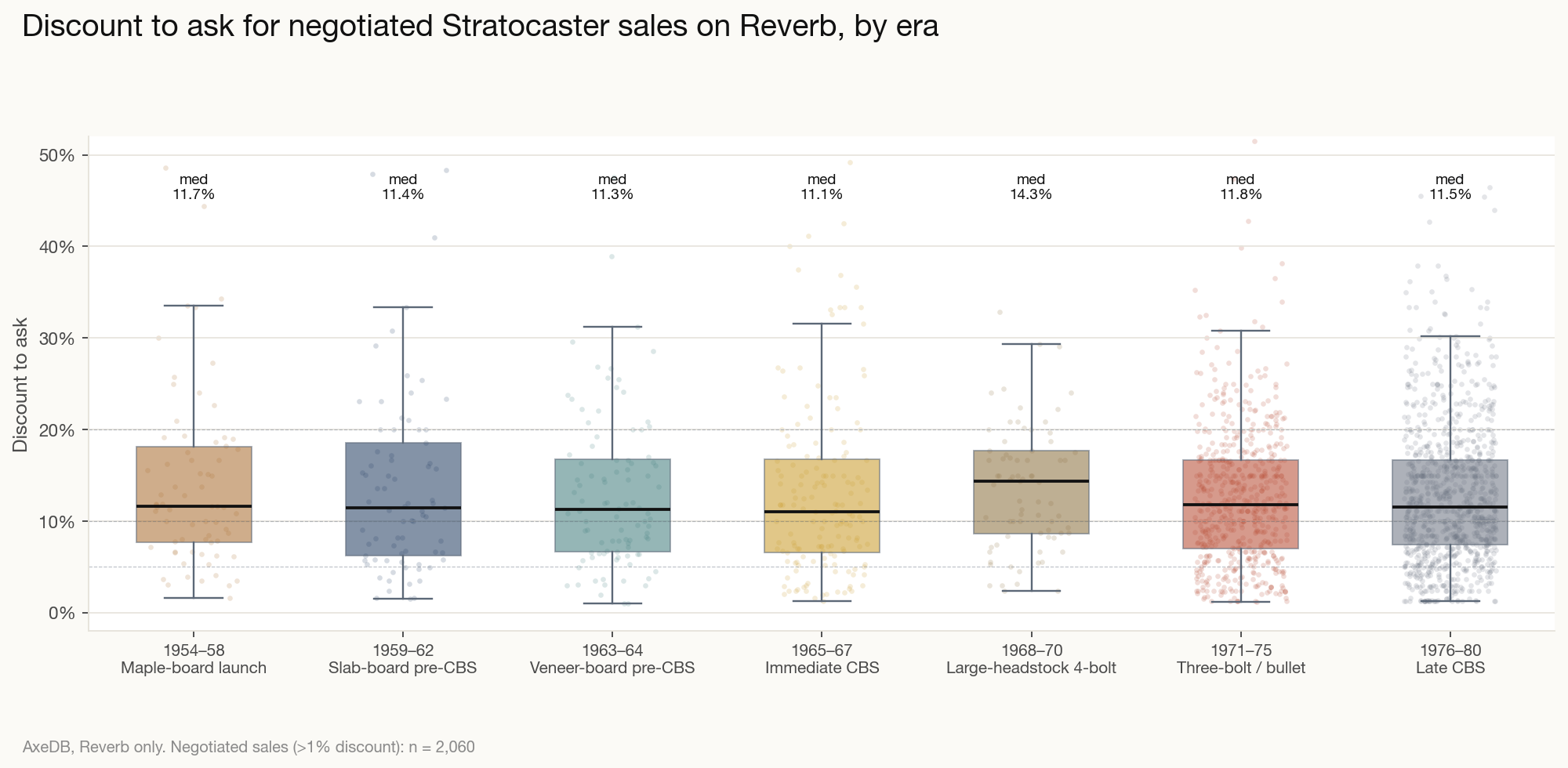
It's important to separate listing and sale price wherever possible. A guitar is often listed for sale at an aspirational price, or maybe the seller is using Reverb for price discovery to see what they could fetch. Here we examine when, and by how much, the listed and final selling price differ, for a look into where there may be room to negotiate in this market.
We find two themes:
Buyers haggle more at the top of the ladder. 61% of 1954–58 Strat sales on Reverb closed below ask. So did 56% of 1965–67 and 53% of 1968–70. The late CBS end of the ladder, where prices are already low and listings move more quickly, only gets haggled about 38% of the time. The pattern fits the intuition: expensive, illiquid guitars sit longer, attract lower offers, and give sellers more reason to accept them.
The depth of the discount is consistent. When a buyer does negotiate, the median concession lands in a narrow 11–14% band across every era. Haggling is nearly binary — either the seller holds firm or they give up roughly a tenth of the ask. It doesn't matter much whether you're negotiating over a $20,000 1958 or a $2,500 1978.
This also means the "median sale price" numbers throughout this post are meaningfully below where these guitars tend to be listed. Roughly half of top-tier listings ultimately transact at a 10%-plus discount to ask.
Finish, Color, and Originality
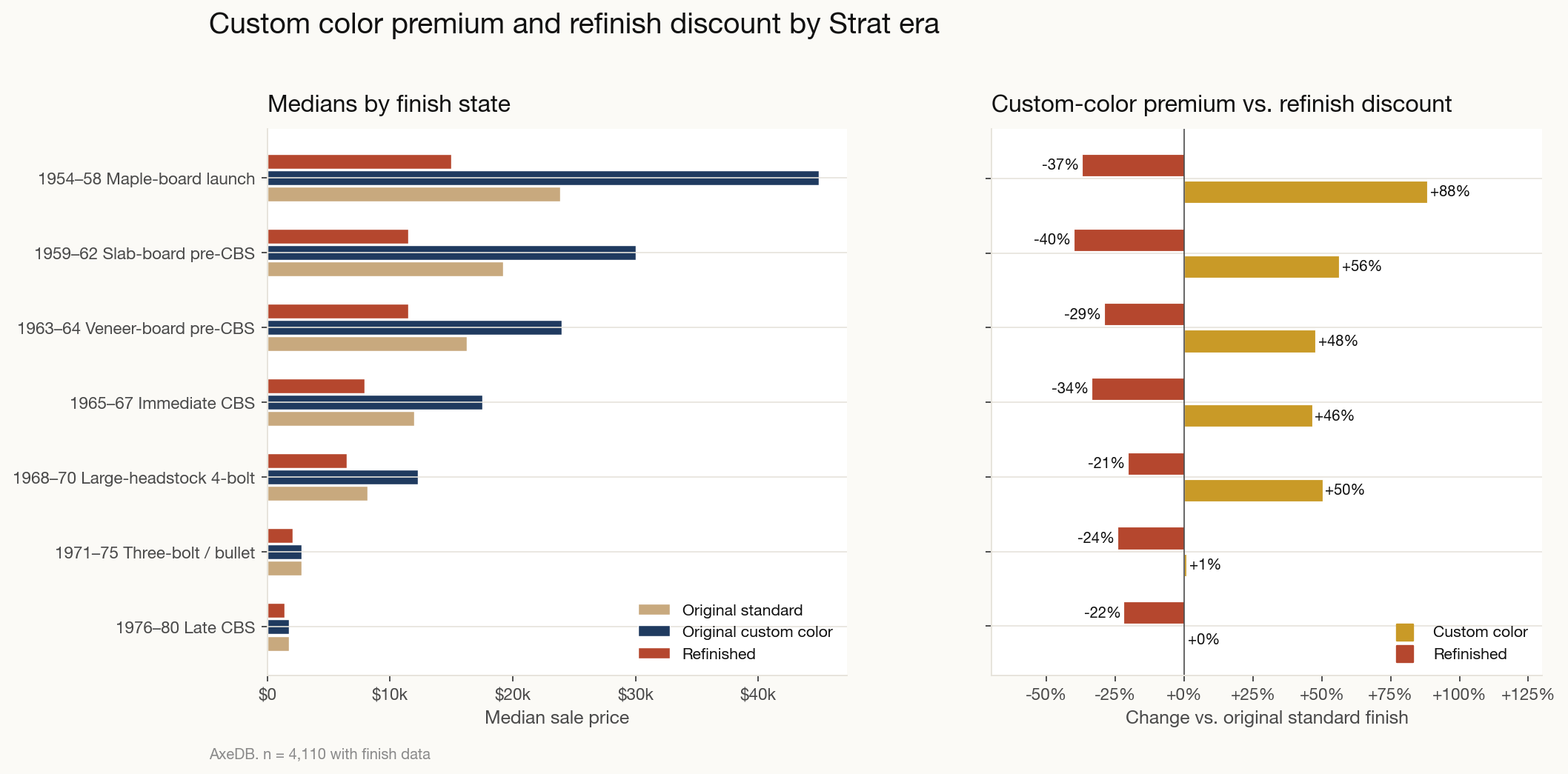
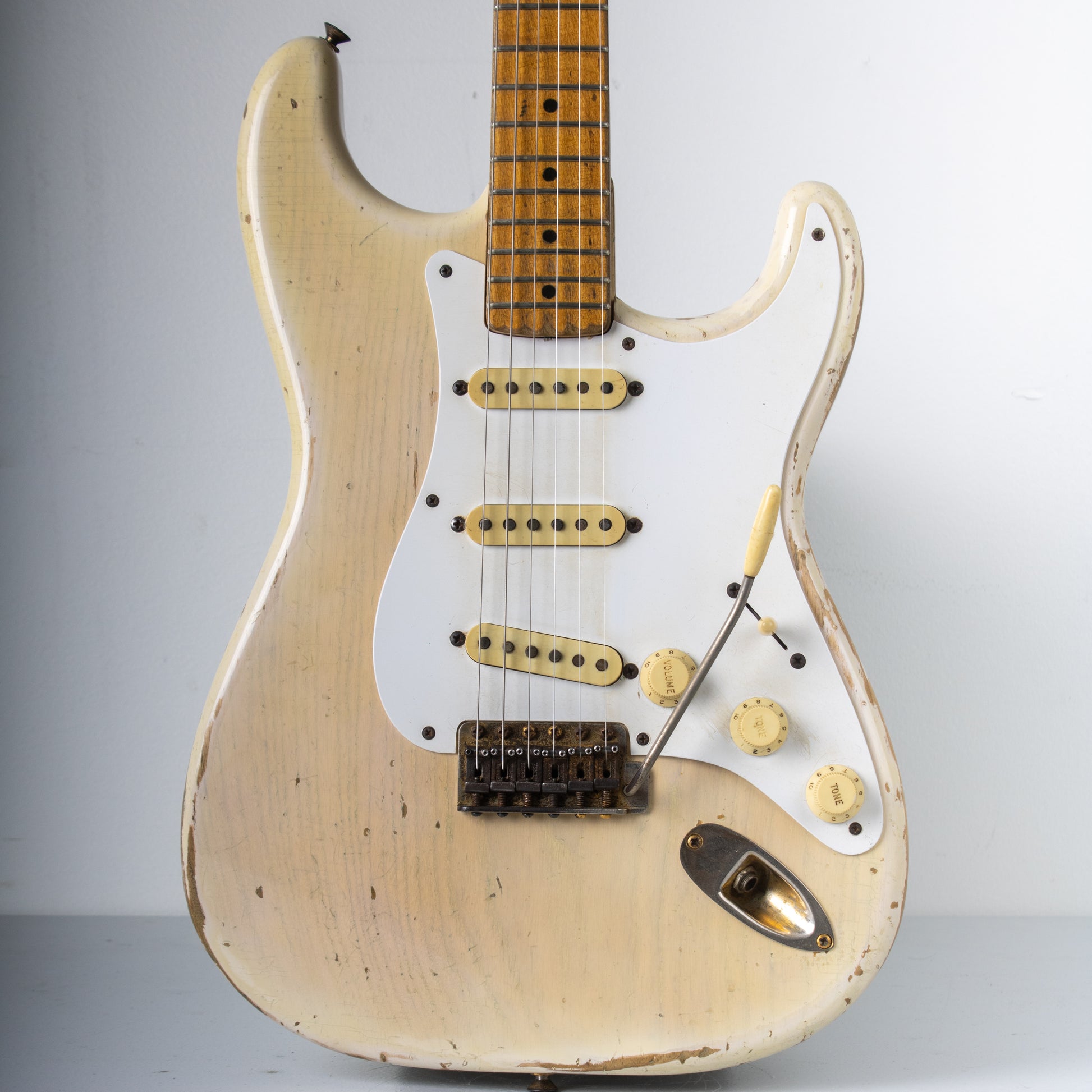
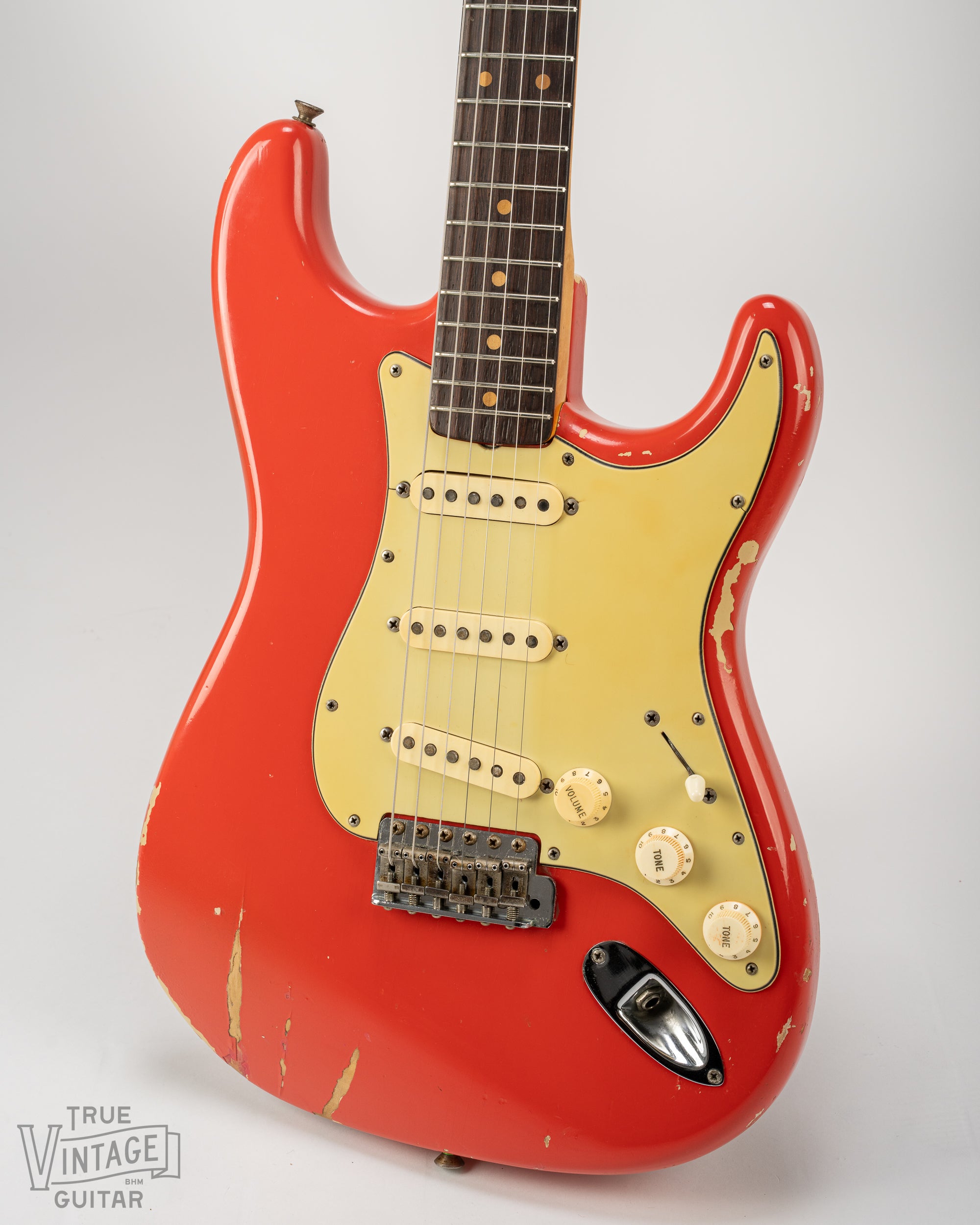
While it's the first thing you see, color alone isn't actually the most important detail when discussing a Strat's finish. Originality comes first, era second, color third. Vintage custom colors generally sell for a premium due to their rarity and because modern players and collectors prefer them aesthetically, but a refinish wipes out that premium and then some. An original finish sunburst is going to be more valuable than an equivalent refinish in fiesta red. What's more, the custom color premium eventually shrinks in later Strat eras where non-sunburst finishes saw higher production volumes and became more widely available. For greater detail across all Fender models, see our custom colors and refinish analysis.
For 1965–67 models, original custom-color Strats show roughly a +46% premium over same-era original-standard examples. Refinished examples in the same era take roughly a −34% discount. Custom color helps, but not if it's via a refinish. That asymmetry holds across the rest of the vintage timeline: early pre-CBS custom color values can be enormous when they're original and clean, the 1960s are the richest custom-color pocket, and by the mid-1970s the custom color premium has mostly evaporated while refinishes still drag. Fender stopped charging extra for their custom colors beginning in 1975, so it makes sense that the premium disappears around then.
Natural finishes deserve a warning label. In the 1970s, Natural (a clear finish over visible wood) becomes one of the defining Strat finishes. Outside the 70s, a natural finish is more likely to be a "hippie refin," or a shoddy home stripping job. It was common in the late 60s and 70s to strip the finish off these guitars as the wooden look came into style.
The color landscape changed by decade
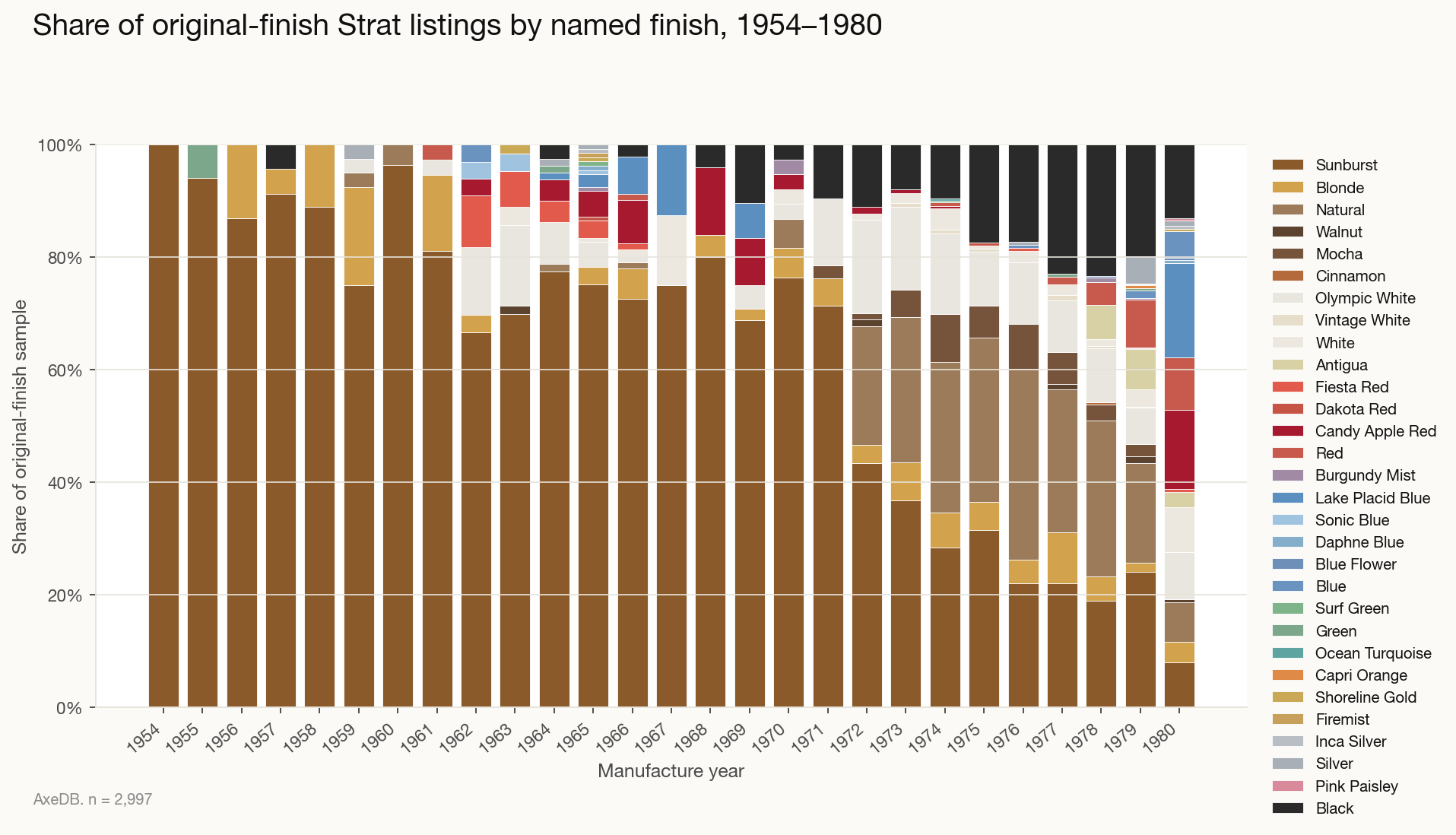
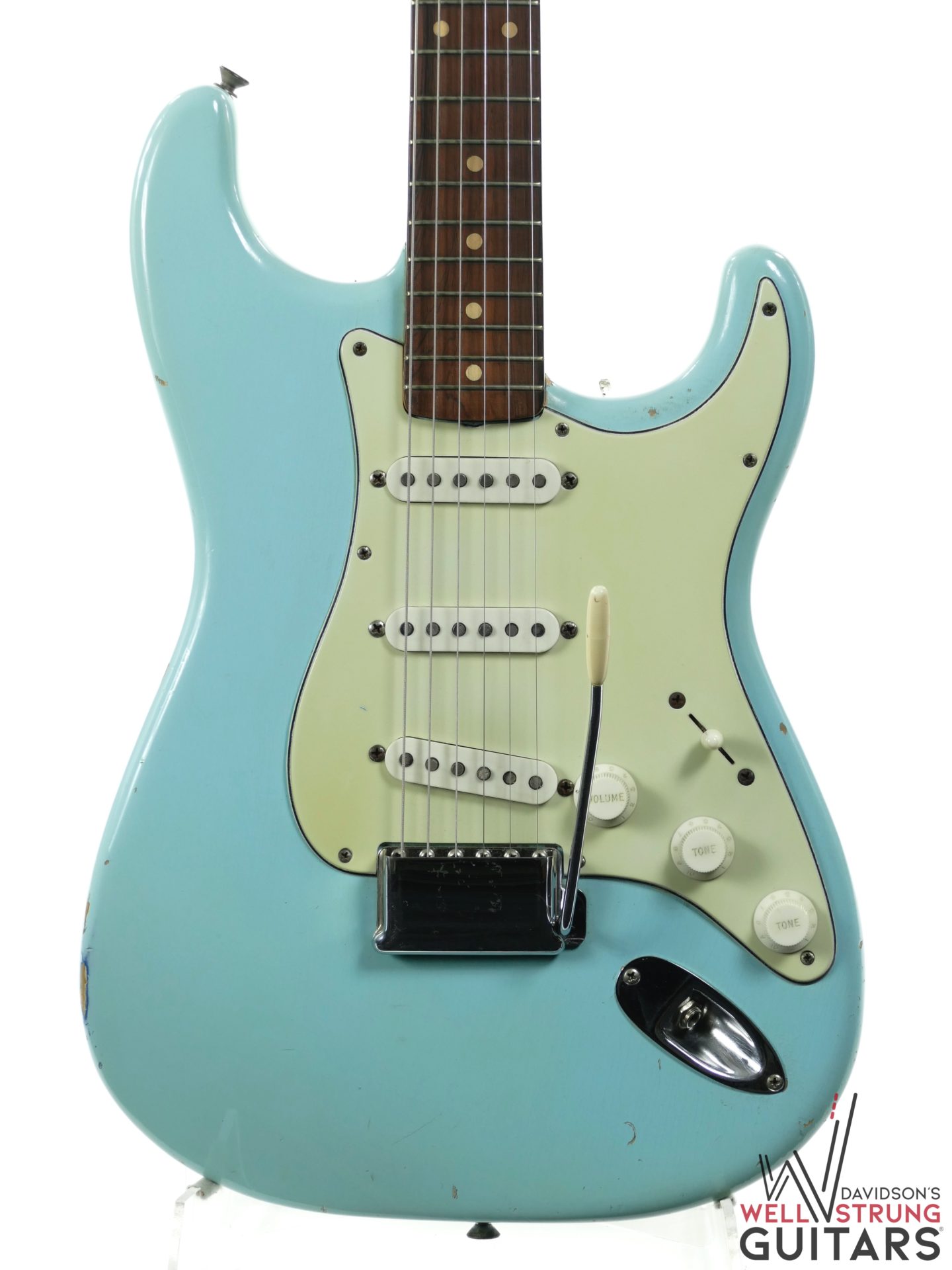
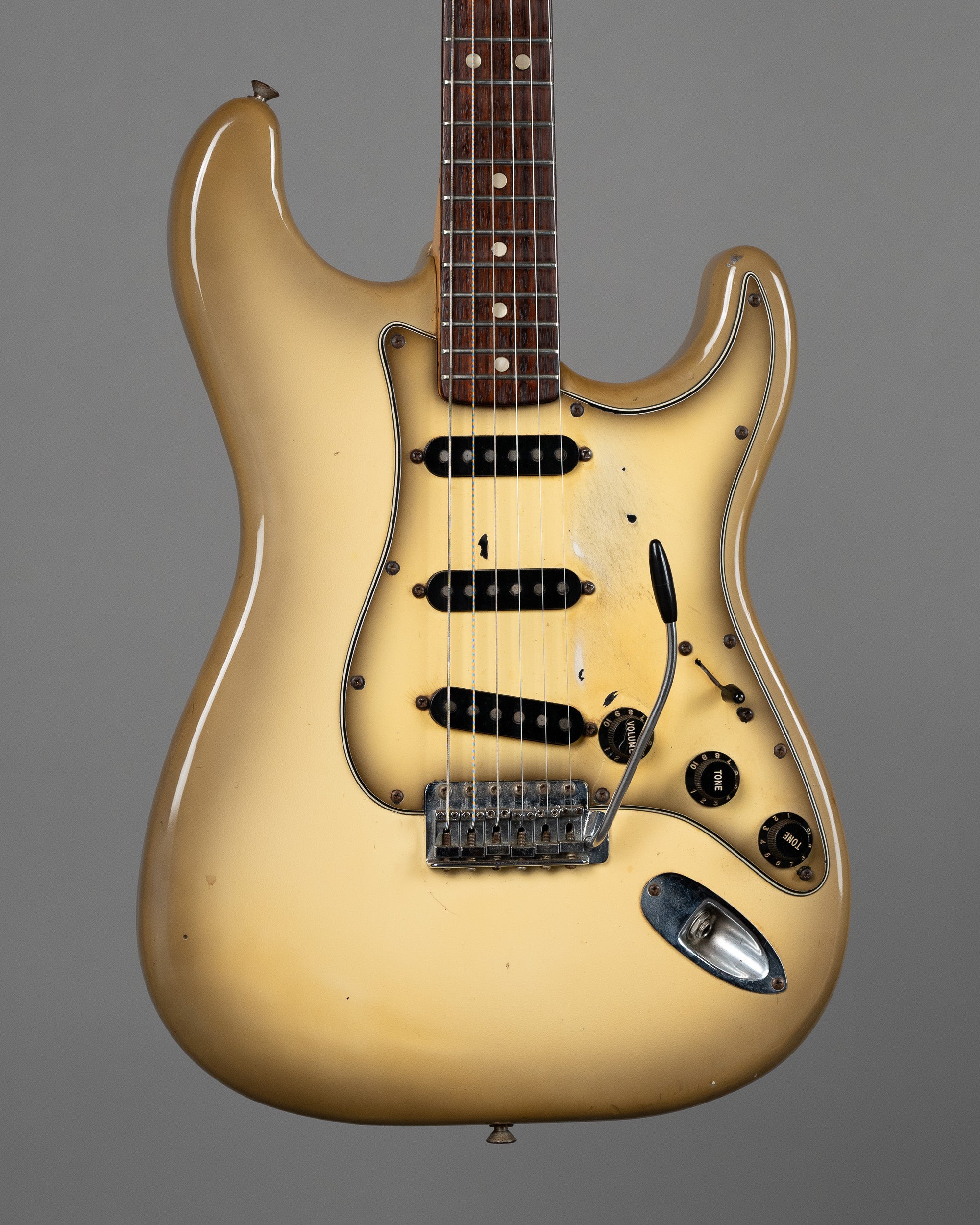
The 1950s are conservative: sunburst, blonde, and not much else. The 1960s are where the Strat opens up — Fiesta Red, Lake Placid Blue, Sonic Blue, Olympic White, and the rest of the color palette people see when they say "vintage custom color Fender." By the 1970s, the special-order mystique has faded and natural, black, and other standard late-CBS finishes take over. A 1964 Fiesta Red Strat and a 1977 Antigua Strat do not come from the same finish culture, and buyers do not treat them as if they do.
Which colors actually carry a premium?
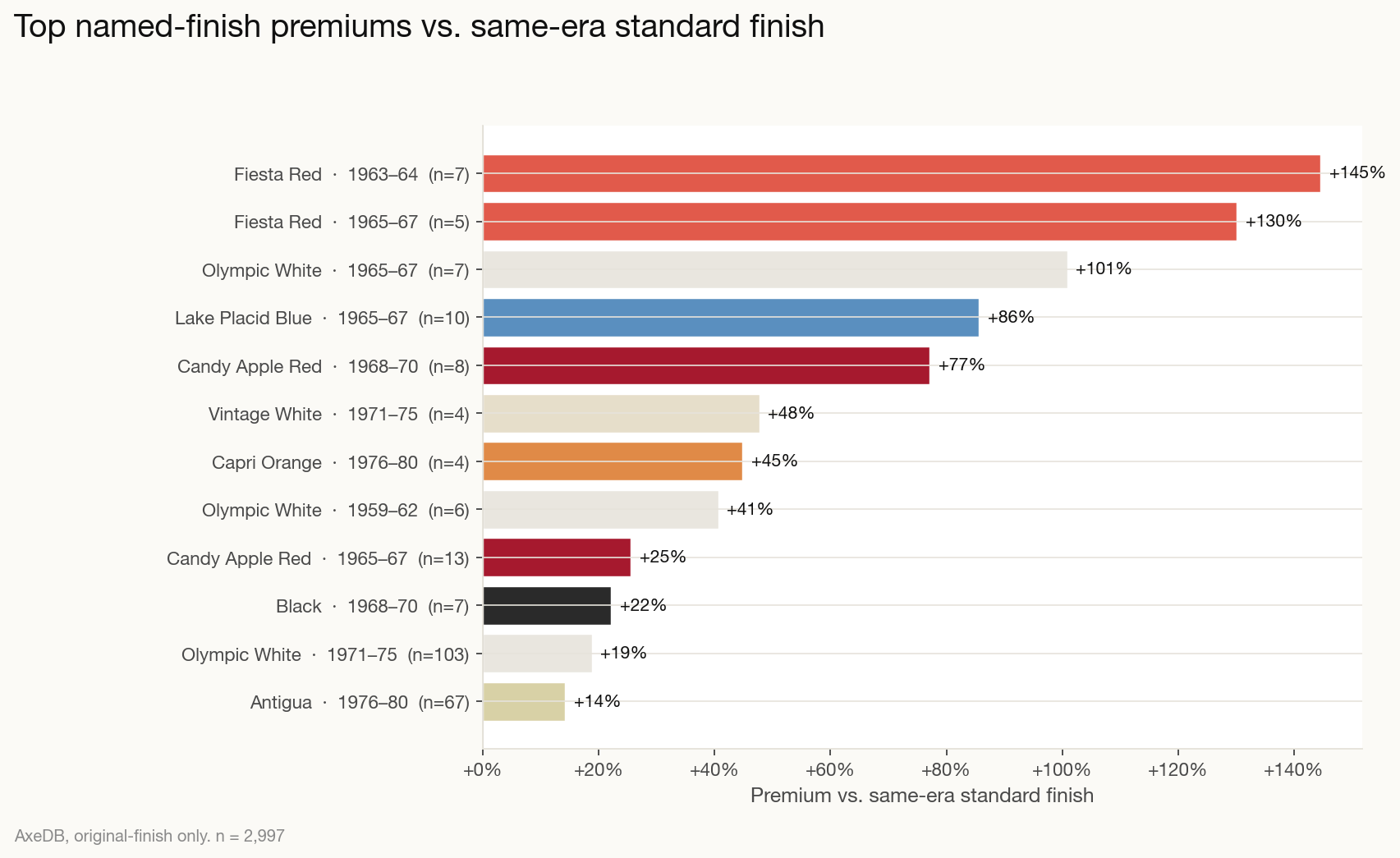
It's hard to make definitive statements about the "best" or "most valuable" custom colors, as sales volume for any one custom color can be thin for any particular era. The stack ranking of which custom colors are most valuable seems to come from a mix of rarity and aesthetic preferences. Shell Pink is not shown in this analysis because it's so rare that we have nearly no data on it. Accordingly, it's likely the most valuable custom color. Black, on the other hand, is both a relatively common custom color and also not very expressive; all else equal, it carries a lower premium than the various shades of red, blue, and green.
Sunburst, as a reality check, sits close to the bucket median or slightly below it in most eras — exactly what you would expect from the default finish. The colors that command genuine premiums combine three things: visible rarity inside the era, actual buyer demand (modern buyers find bright colors more appealing and interesting than Black and Olympic White), and an unmolested original finish.
What This Means for Buyers
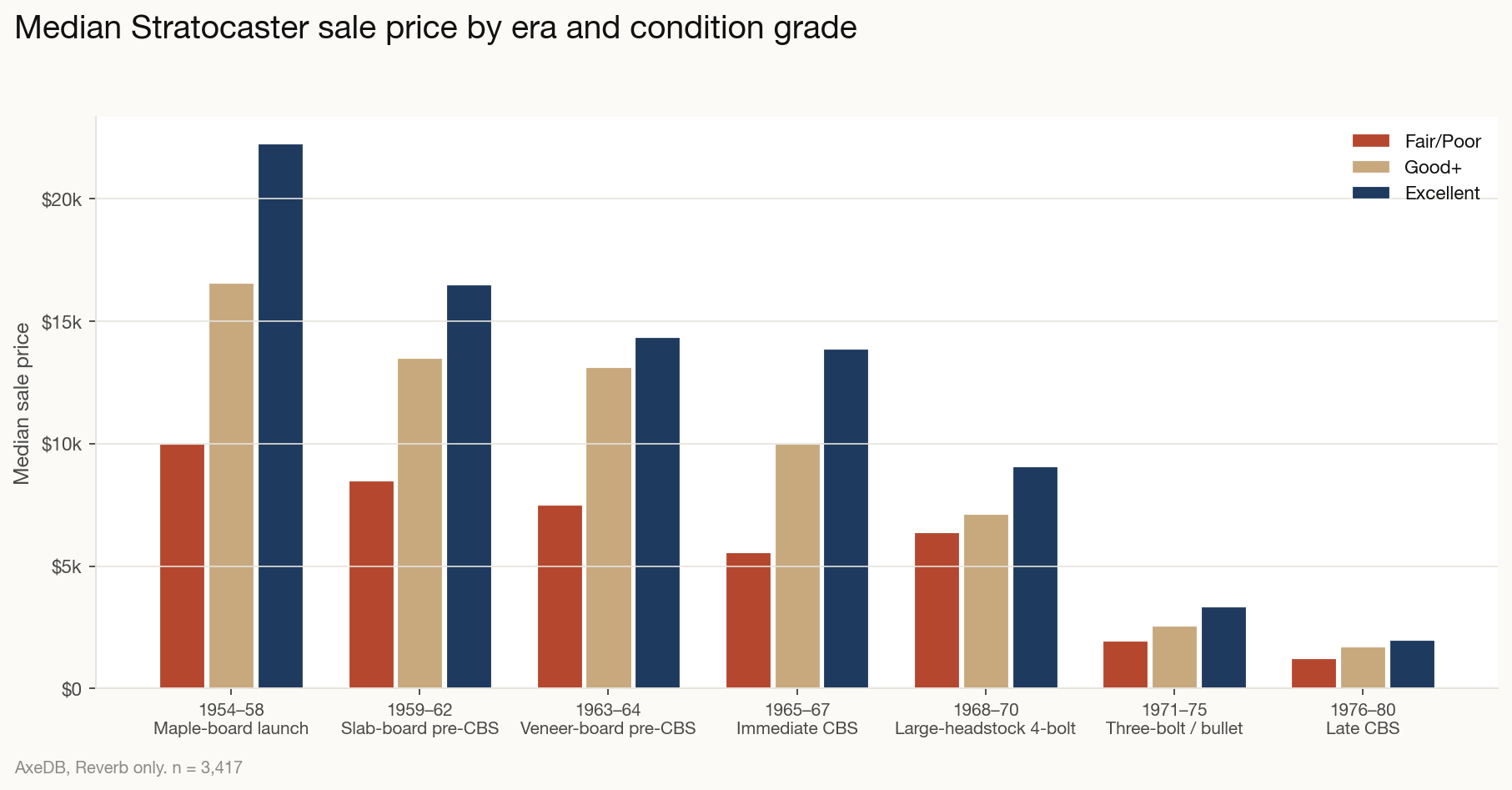
Three buyer tiers emerge from this data.
Collector-grade pre-CBS Strat means 1954–64, but even that needs subdivision. 1954–58 is the peak collector tier. 1959–62 slab-board guitars hold a premium over the later veneer-board pre-CBS years. At this level, condition is the single biggest price variable within an era — Excellent examples sell for about 30% more than Good+ examples in the 1954–58 Reverb sample, and the spread widens further in the pre-CBS years where buyers are most exacting about preservation. Verify condition before year.
The 1965–66 sweet spot is where value and vintage overlap most cleanly. These remain very close to 1964 Strats but trade at a meaningful discount to 1962–64 prices. The few transitional features they carry — pearloid dots, transition logos, and larger headstocks appearing in 1966 — tend not to bother buyers as much as the later CBS changes. These have shown the steadiest appreciation trajectory of any Strat era over the past decade, without the COVID-era spike-and-pullback that hit other vintage eras. For someone who wants a real vintage Strat with early-CBS proximity to the earlier instrument, this is the window.
Affordable vintage Strat means later CBS, 1971 and beyond. The three-bolt neck, bullet truss rod, and poly finish mark a different era, and the market prices accordingly. These are much cheaper, and — unlike the upper rungs — they have barely appreciated over the past decade. Condition is more forgiving here; the spread between grades narrows, and late CBS is the most tolerant tier for a buyer who prioritizes playing over collecting. The trade-off is straightforward: you get an old Strat, not one the collectible market is likely to reward you for holding.
Hardtail is its own submarket, accounting for about 17% of this sample. Hardtail pricing varies by era, sometimes at a small premium, sometimes at a small discount to tremolo examples. It is a preference split among buyers rather than a consistent value signal in either direction.
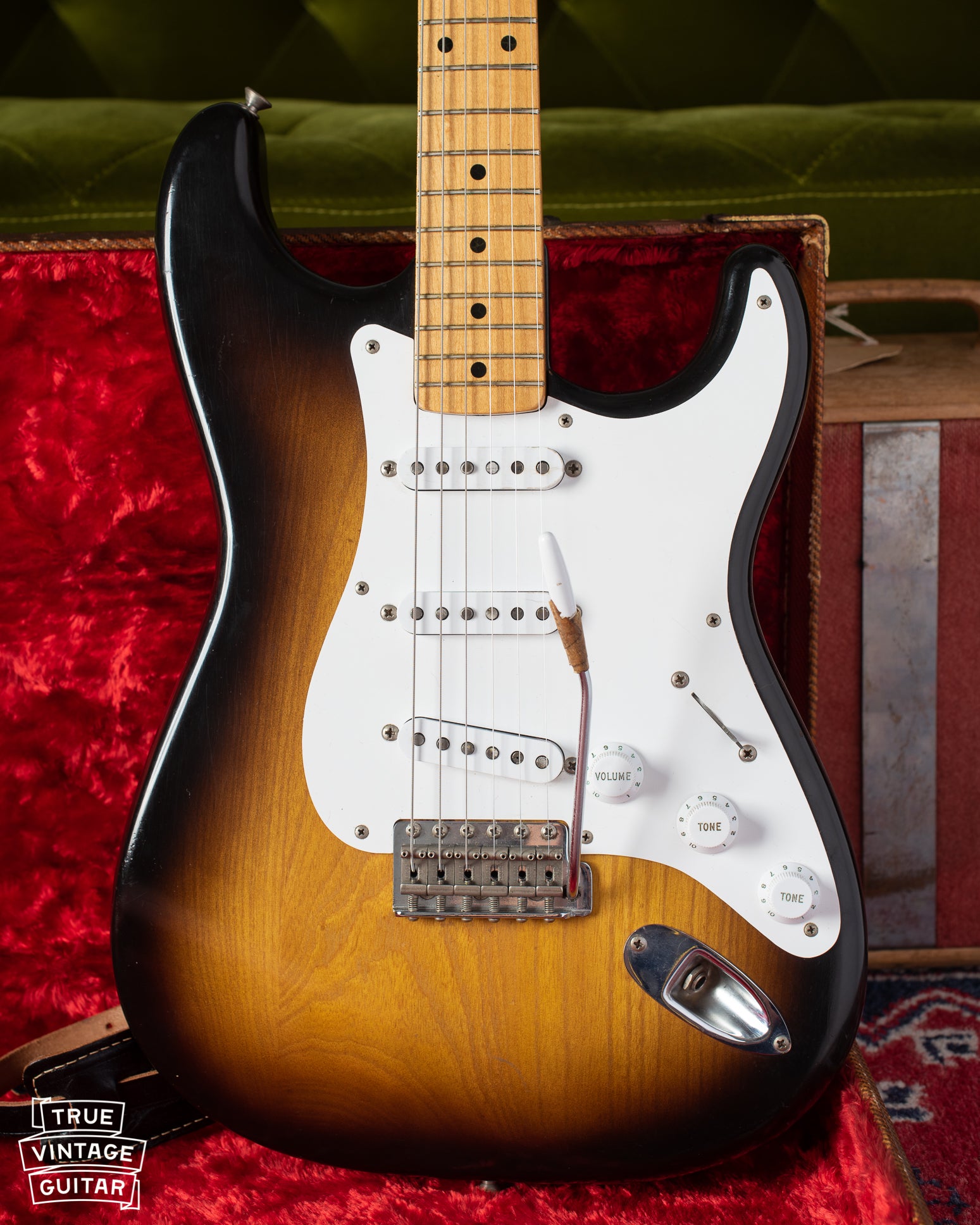
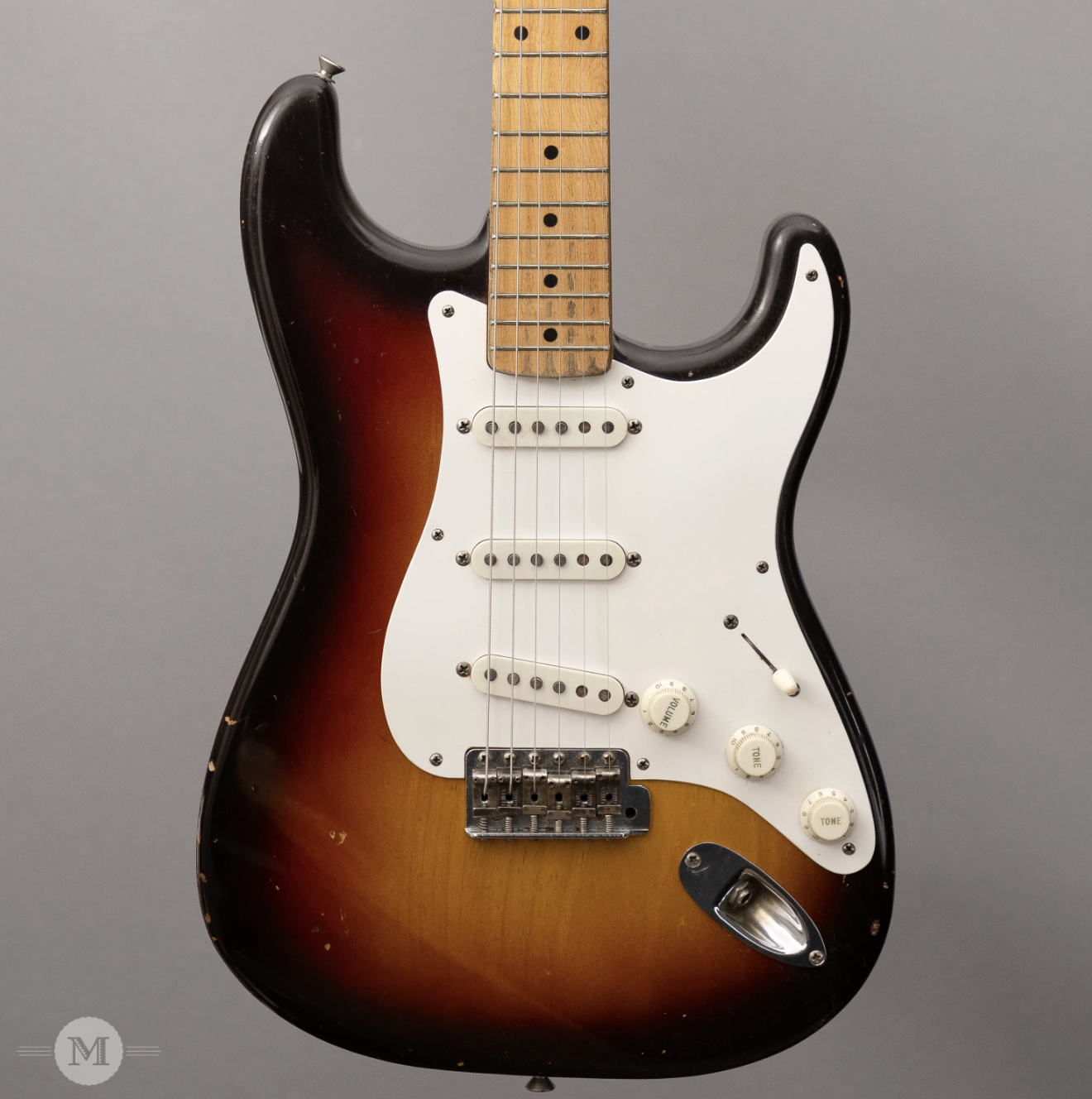
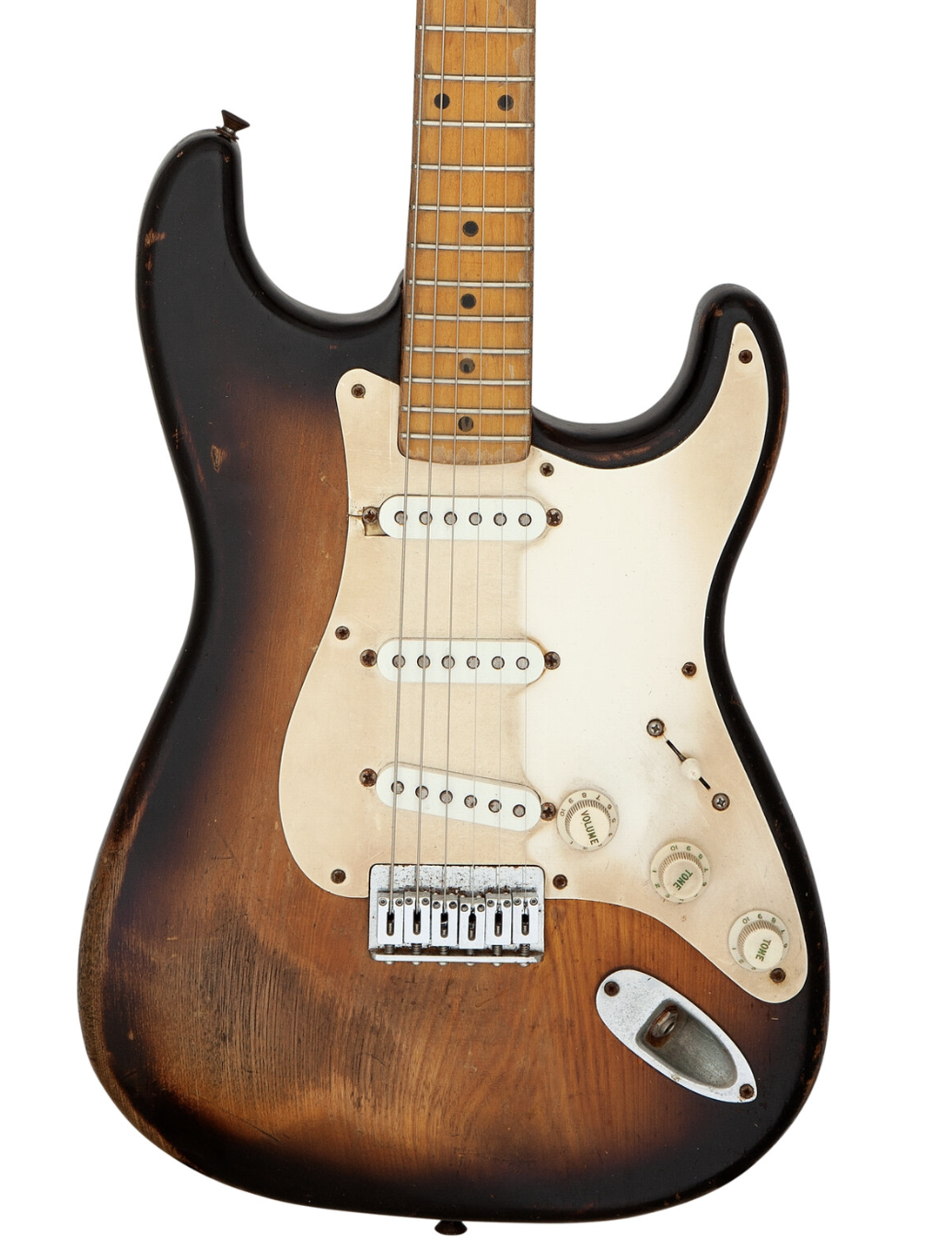
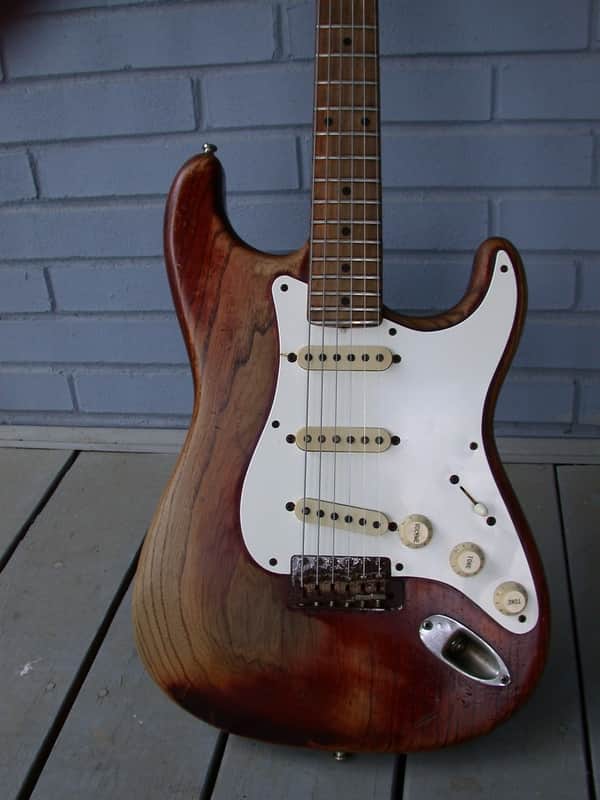
Conclusion
The vintage Strat market is a ladder with at least seven rungs, not a binary split. Three independent sales channels — Reverb, auction houses, and vintage dealers — confirm the same relative hierarchy, and the entire market has moved higher over the past decade. The appreciation has not been even: the top spiked during the 2021–22 collectibles boom, the middle climbed steadily, and the bottom barely moved at all.
Originality anchors the story at every rung. Custom color adds a lot in the right pockets — the 1960s especially — but refinish takes a more consistent toll, and condition separates the best examples from the merely old ones. On Reverb, a third to two-thirds of sales close below ask, so the listed numbers are a ceiling rather than a clearing price — with the deepest haggling concentrated at the top of the ladder, where guitars move slowly and sellers price aspirationally.
The pre-CBS / CBS shorthand is not useless, but it collapses too many distinct markets into two buckets. A 1957 maple-board Strat, a 1961 slab-board, a 1965 early-CBS, a 1969 large-headstock, and a 1974 three-bolt are all vintage Stratocasters, and they are all different purchases with different risk profiles, different appreciation histories, and different reasons to buy.
Want a price estimate for a specific guitar? Try the Vintage Stratocaster Price Estimator — enter year, condition, finish, pickups, and weight to get a model-based range trained on the same dataset behind this analysis.
Appendix
The first chart in this analysis shows price by manufacturing year, market-adjusted to 2025 market price levels. For reference, the unadjusted historical sale-price chart is shown below. You will see that the shape of the graph is about the same, but prices are lower across the board because the data includes historic prices, where the market as a whole has appreciated over the time period considered in this analysis.
Methodology and Dataset Notes
Dataset: 4,121 verified sales from 2014 through early 2026, manufacture years 1954–1980.
Sources: Reverb, auction houses, vintage dealers.
Filters applied:
- Sold status only (no for-sale/unsold)
- Model = Stratocaster, item_type = guitar (no standalone pickups/tuners/etc.), Fender only (no Squier, non-Fender S-types, lawsuit guitars)
- Custom Shop excluded: CS did not exist pre-1980, any "vintage" Custom Shop guitar is just a mis-tagged reissue
has_celebrity_provenanceexcluded: guitars whose price reflects ownership history rather than instrument characteristics were excluded when possible (e.g. David Gilmour and Eric Clapton's charity auctions)- Reissues, Squiers, and non-original-production guitars excluded via keyword filtering (MIJ, CIJ, Road Worn, American Vintage, American Original, FSR, NOS, etc.)
- Parts listings excluded (body only, neck only, pickups only, bridges, empty cases, etc.)
- LLMs used to expand coverage and precision of reissue, celebrity provenance, and part detection
Refinish detection: Combined regex keyword matching in listing titles and descriptions with LLM-labeled flags. Both heuristic and LLM detections are merged into a single refinish indicator.
Finish classification: Raw finish strings are normalized into canonical groups (Sunburst, Fiesta Red, Lake Placid Blue, Olympic White, Candy Apple Red, etc.). "Standard finish" is defined as Sunburst for all years, plus Natural and Blonde for 1972 and later. Custom color = any original non-standard finish in that year.
Spec buckets: Year ranges are grouped by major specification changes: maple-board launch (1954–58), slab-board rosewood (1959–62), veneer-board pre-CBS (1963–64), immediate CBS (1965–67), large-headstock four-bolt (1968–70), three-bolt/bullet (1971–75), and late CBS (1976–80).
CBS transition baseline: All transition-era percentage comparisons use a 1962–64 baseline, not all pre-CBS. This avoids inflating the baseline with the highest-value launch-era guitars and isolates the change at the CBS sale itself.
Market index: Composition-adjusted — each coarse era (1954–58, 1959–64, 1965–70, 1971–80) is indexed to its own 2015 median, then the four indices are averaged with equal weights. Holding the era mix fixed keeps year-to-year composition shifts from driving the headline trend.
Ask-vs-sale analysis: Only Reverb sales are included, since the other sources don't record an independent asking price. A sale is counted as "negotiated" when the sale price is at least 1% below the listing price.
Data source: AxeDB.com — guitar market data cleaned and aggregated from Reverb, multiple auction houses, and specialist dealers.