Vintage Fender color discussions usually go wrong in the first sentence. People talk about Fiesta Red or Lake Placid Blue as if the finish color is the asset. It usually is not. The asset is the combination of originality, era, color, and model, and the vintage market values those things in roughly that order.
Two guitars can present the same color and still belong to completely different markets. One is a factory custom-color guitar wearing its original finish. The other is a later refinish, sometimes done decades after the fact. They may look similar in a thumbnail, but they do not trade similarly.
That is the organizing idea of this piece. Start with the question collectors actually ask first: is the finish original? Only then does it make sense to ask whether a given color is scarce enough, in that specific model-and-era bucket, to command a premium.
We compiled a massive dataset of nearly 300,000 guitar sales spanning the vintage and modern eras to form the most comprehensive understanding to date of this topic. The rest of this article is a data-heavy analysis of the history of Fender's custom colors, refinishes, and how these factors affect vintage and modern guitar value.
A Brief History of Fender's Custom Colors
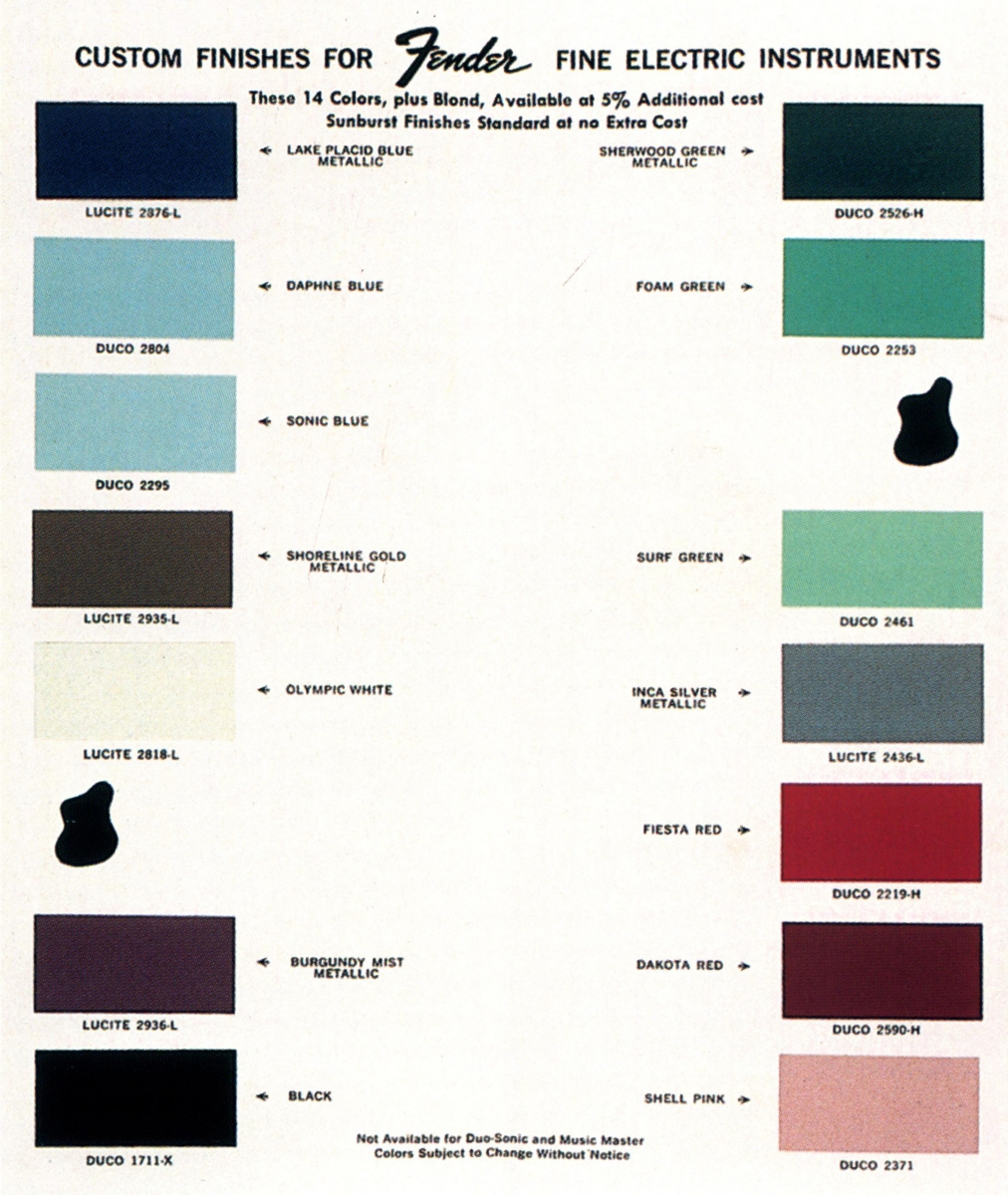
Fender's standard finishes in the early 1950s were conservative by design: blonde on Telecasters, two-tone sunburst on Stratocasters. Custom colors came later, and they came from an unlikely source. Leo Fender adapted colors directly from DuPont's automotive Duco lacquer line — the same palette being sprayed on Chevrolets and Cadillacs. As of the mid 1950s, if you had a direct relationship with Fender, you could put in a special request to have a guitar made in one of these finishes. By the late 1950s, any buyer could special-order a guitar in any of roughly fourteen named colors for a 5% upcharge. The colors had names like Fiesta Red, Lake Placid Blue, and Surf Green because those were their automotive catalog names. Fender didn't invent them; they borrowed them.
The program expanded through the early 1960s and then quietly wound down. By the early '70s, CBS-era Fender had shifted to more durable polyurethane finishes and was making a wider range of colors part of the standard catalog while reducing the number of non-standard options that could be custom ordered. By 1975 the Custom Color program had effectively been unwound. Initially this meant that only a small number of default finishes were available, but by the 1980s a wide variety of colors had been re-introduced, this time widely available and at no additional cost.
Refinishes entered the picture from multiple directions. Nitrocellulose lacquer, the finish material used from the '50s through the CBS transition, is fragile — it checks, cracks, and wears through in ways that invite touch-ups or full repaints. Some original owners had their play-worn guitars touched up or refinished back to the same standard sunburst because they didn't want an unusual color. Others had the reverse done, seeking something bright and novel. Some would send their guitar back to Fender for an official factory refinish. Plenty of others were simply refinished at home or taken to a local luthier — quality ranging from professional luthier work to garage spray paint jobs.
For a deeper look at the history, guitarhq.com's color guide has been a standard reference for years, and fuzzfaced.net covers the offering timeline for individual colors in useful detail.
Dataset
As we get into the data, a brief aside on what the data is and where it comes from. This analysis pulls data from sold listings on online marketplaces (Reverb, Sweetwater), several individual US-based vintage dealers (Retrofret, True Vintage, Emerald City, and more), and sold auction lots from various live auction houses.
In total, after cleaning the data and filtering down to only the cases where we know the guitar's finish and condition, we have approximately:
- 294,300 sold Fender guitars with known finish information
- 7,800 "vintage" sales (manufactured before 1975, the end of the Custom Color Program)
- 2,400 vintage guitars with a custom finish
- 1,700 vintage refinishes
That's obviously a large drop-off between total guitar sales and the vintage subset, but 7.8k is still plenty to dive into and study this topic in depth. Ultimately, vintage guitars are rare, and it's difficult to compile a much larger sales dataset than this for a market whose supply is as small as 1950s-70s Fender sales.
Start With Originality
The headline is simple: on vintage Fenders, the first question is not “what color is it?” It is “is that color original?” There is both a significant price premium for an original custom-color finish, and a significant penalty for any kind of refinish. The refinish penalty happens to be more substantial than the custom-color premium by a factor of about 2x.
The below chart shows the relative sales-price valuations of factory-original custom colors, custom-color refinishes, and same-color refinishes across Stratocaster, Telecaster, Jazzmaster, and Jaguar models and across the Pre-CBS (1950–1964), Early CBS (1965–1969), and Mid CBS era through the end of the Custom Color program (1970-74, called "70s" on these plots). A same-color refinish, here, refers to refinishing a standard-color guitar in the same standard finish, for example touching up or re-doing the finish on a Sunburst Stratocaster so that it still remains a Sunburst post-refinishing.
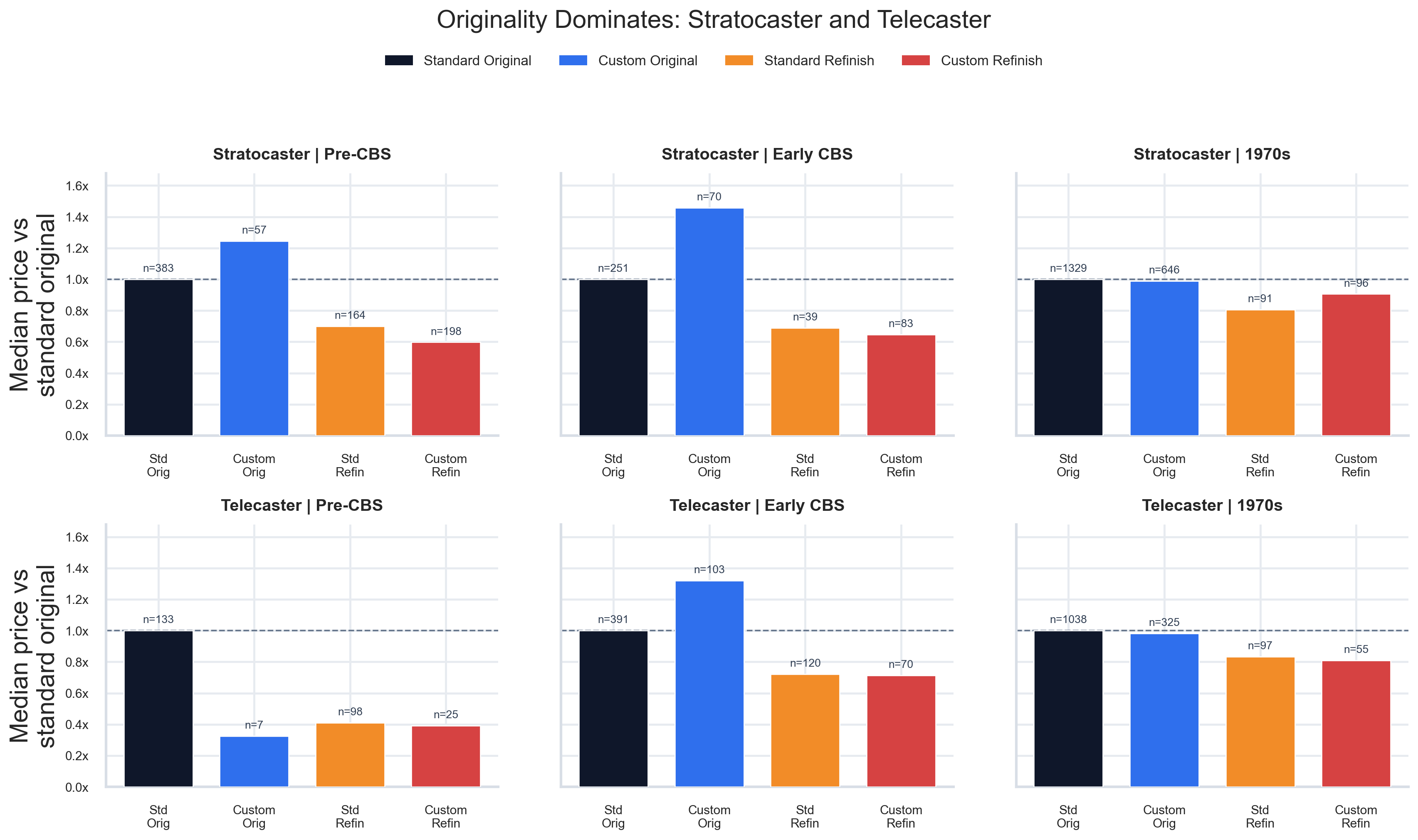
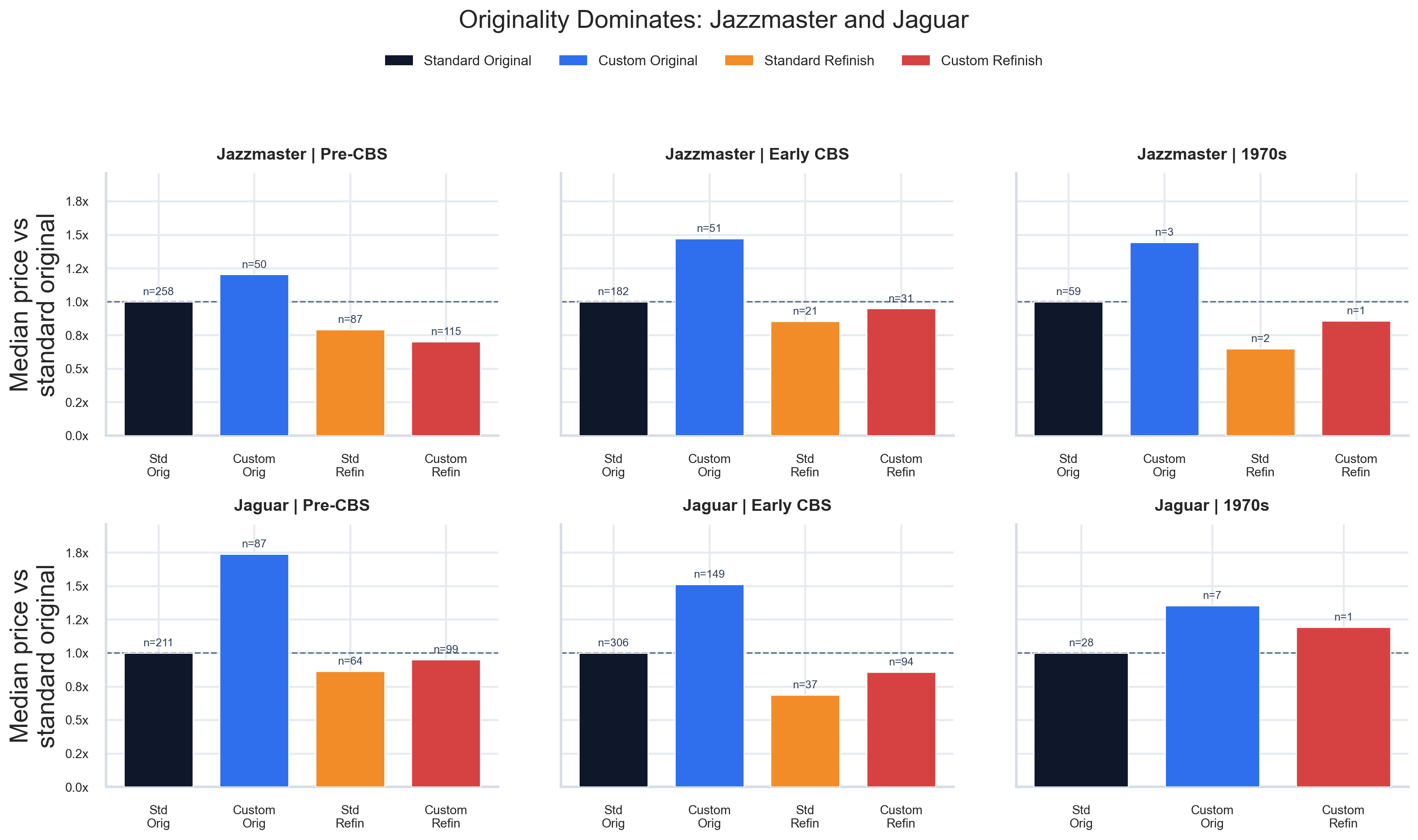
The broad pattern is consistent across the grids:
- Original custom colors command premiums over standard finishes, generally about +20%
- Refinished guitars take substantial discounts, about -40%
- Offsets are the strongest custom-color market, with higher color premiums and a lower refin penalty
- Pre-CBS Telecasters don't cleanly fit this narrative in our available data, discussed further below
The highlight, shown here and consistently throughout this research, is that a custom color finish adds approximately 20% to the pricetag while a refinish subtracts about 40%.
Those are not universal constants — they are a framing device. Above we can see that the market values custom colors more and punishes refinishes a bit less among Jazzmasters and Jaguars, for example, possibly because of their relationship to the colorful era of surf music and the presence of highly desirable headstock finishes. Pre-CBS Telecasters, on the other hand, value custom colors less on average, likely because the most sought after years of the instrument's history come from the early '50s where there were essentially zero custom colors produced.
The important point is directional: custom colors are valuable, but originality usually matters more than color alone. Don't get that refinish.
Where Vintage Color Premiums Are Highest
The vintage result is straightforward but not uniform. Original custom colors do command premiums in the right pockets of the market, but not every Fender model gets valued the same way.
The strongest buckets are offsets and mid-60s guitars:
- pre-CBS Jaguar: very strong
- early CBS Jaguar: strong
- early CBS Stratocaster: strong
- pre-CBS Jazzmaster: positive
- early CBS Jazzmaster: positive
That is not the same thing as saying every desirable vintage Fender color wins automatically. It means some model-and-era buckets had both scarcity and buyer demand, and the market still pays for that combination.
Also note that these were the strongest in relative terms; a pre-CBS custom color Strat is more valuable than an early-CBS one, but the early CBS one has a higher value relative to its standard-finish counterpart than the pre-CBS one does.
Finish Effects are Consistent Over Time, but not Across Manufacturing Eras
The above-demonstrated custom color premium and refinish penalty are stable over time, providing some confidence in their stability as a rule of thumb in vintage Fender valuation. The custom color premium and the refinish penalty each remain stable at approximately +20% and -40% respectively for guitar sales occurring over the 2012 - 2026 time range studied. This is only true as an average effect size, however. There's nuance to how the effect sizes vary by the guitar's production year.
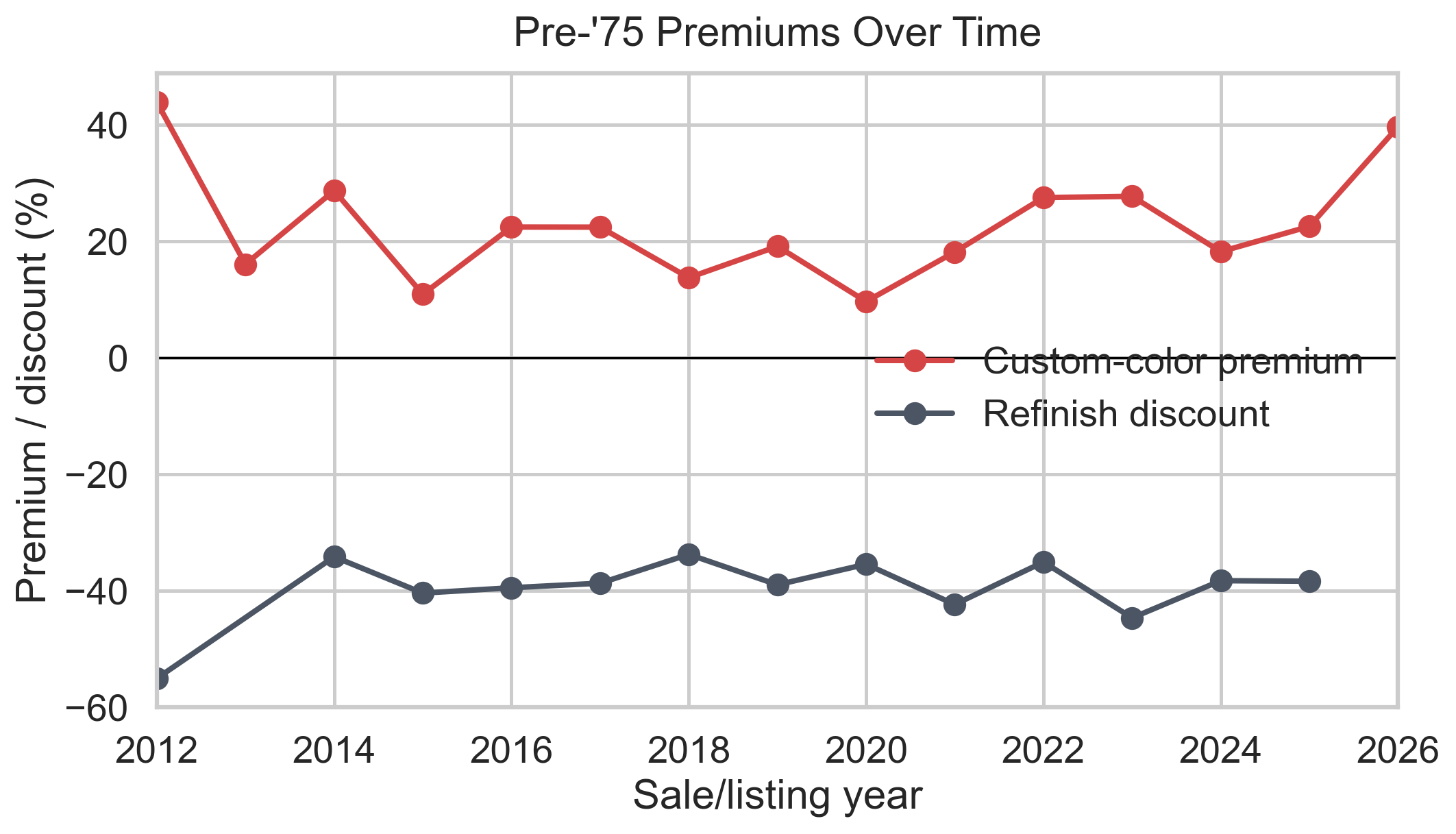
Original custom-color finishes command a much higher premium, on average, for guitars manufactured from the early to mid 1950s. Nearly all guitars produced in this era carried the default Blonde or Sunburst finish; anything custom from this era is truly special, and the pricing premium for this is substantial. By the 70s we start to see the market around Fender finishes stabilize, with custom colors becoming less valuable and refinishes becoming less punished, until ultimately finish seems to barely matter at all after the custom color program is phased out from '73-'75.
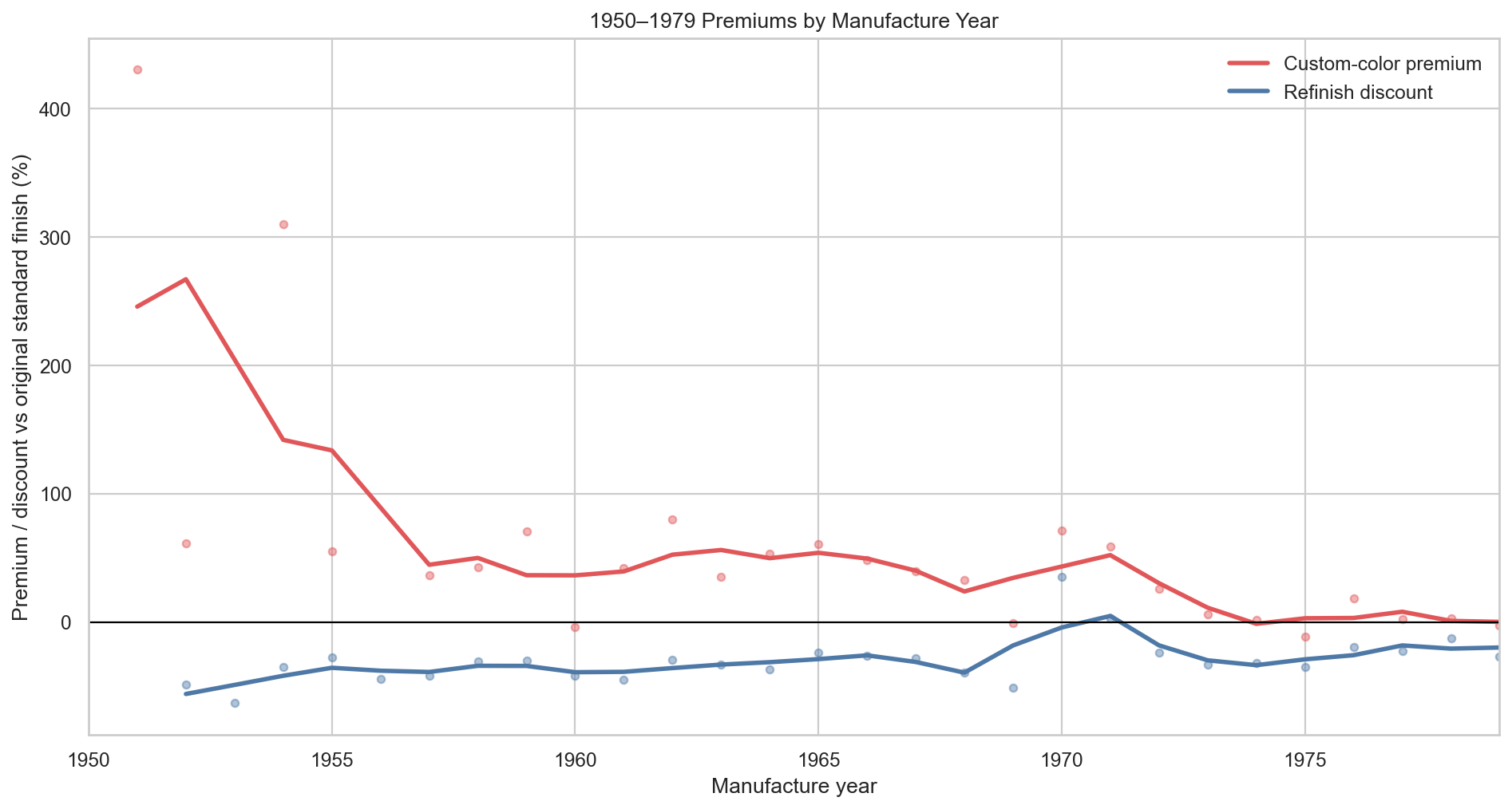
The cross-era data shows some nuance missed by the blanket 20% custom color premium. Namely:
- Early to mid '50s: case-by-case basis; can double the value in some scenarios; these are extremely rare and should all essentially be handled as one-off cases
- Late '50s through mid '60s (early CBS): approximately a 50% custom color premium
- Late 60s through mid '70s: Custom color premium decays by year until it essentially disappears
The refin penalty shows less movement across eras. It persists rather stably around -40% from the 50s through 60s, and then softens slightly to around -30% by the 70s. This softening may reflect that many 70s refins involved stripping to a natural finish, which was itself a common default finish offered in this era. Collectors and players, in general, seem to be less precious about the finishes of the less-collectible 70s era and onward.
The Supply Side
How Common are Original Custom Colors? How Common are Refinishes?
The below plot shows, by manufacturing year, the percentage of sales that were refinishes and the percentage that were original (non-refinished) custom colors.
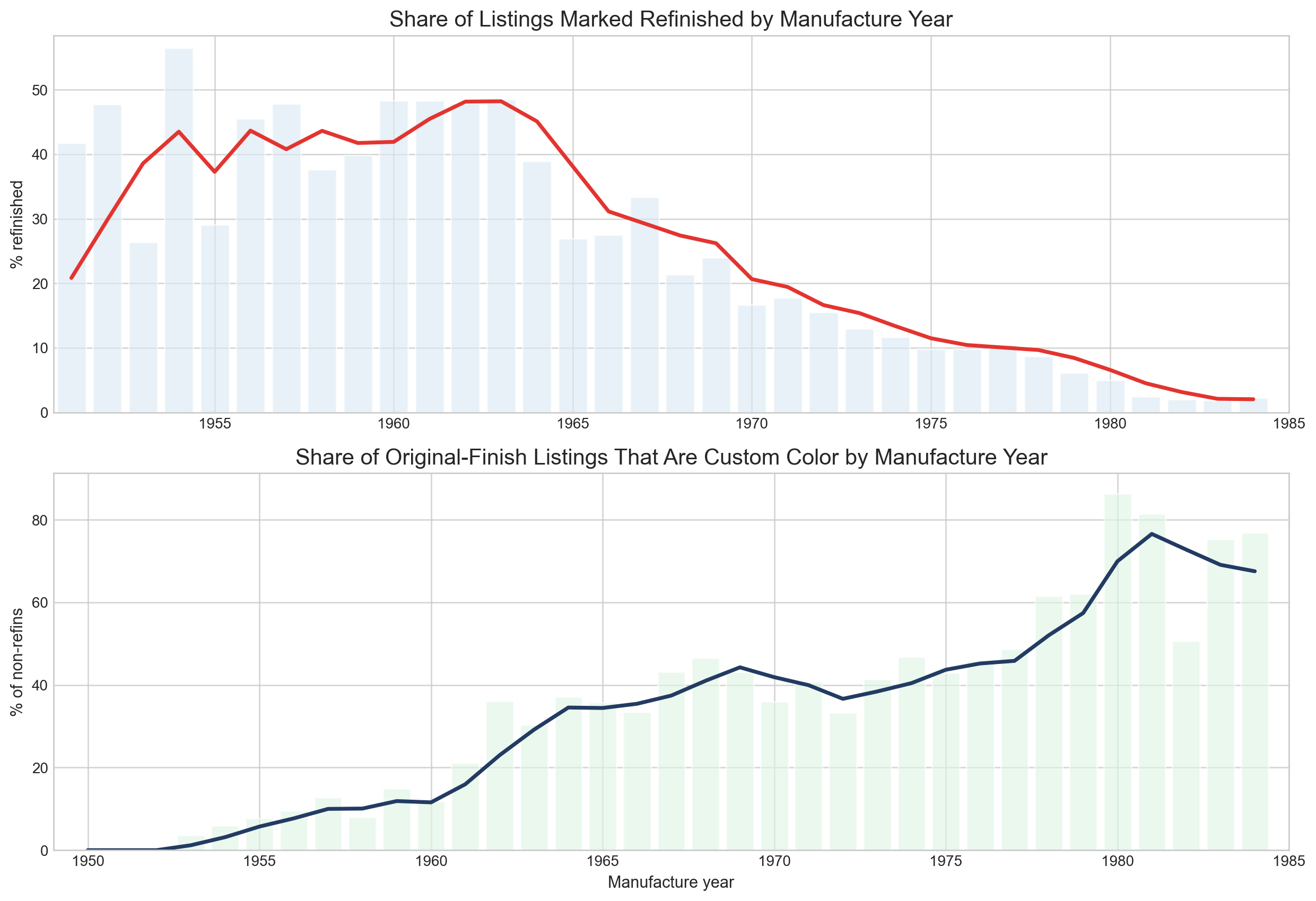
A couple of patterns emerge.
- Roughly 40% of sold pre-CBS (1950 - 1964) vintage Fender guitars have been refinished
- The rate of refinishes steadily declines beginning in 1964 and continuing through the mid '80s, after which it's effectively 0%. People don't refinish modern guitars, they just get a new one.
- There were effectively no custom color guitars prior to 1954. Some artists had custom finishes developed via direct relationships with Fender around this time.
- The adoption of custom colors accelerated beginning in 1961, following the release of Fender's first official custom color chart in 1960.
- "Custom" colors' prevalence increased again beginning in '78 with the introduction of new colors, but by this time there was no longer a formal distinction between a custom color vs. the default Sunburst, Blonde, and Natural offerings.
Let's take a closer look at the breakout of what finishes were popular over time.
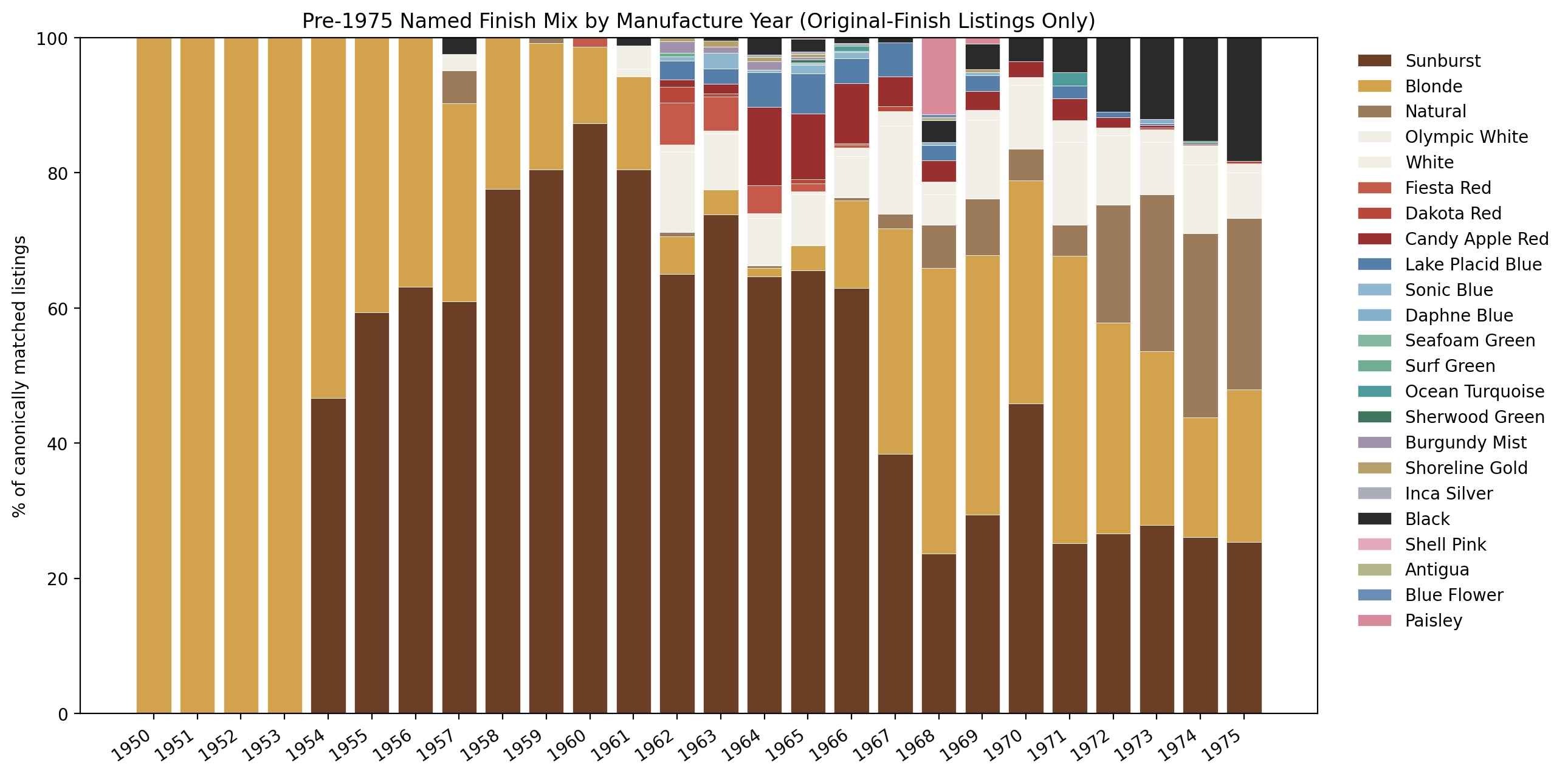
Statistics on custom colors, refinishes, and pricing are only interesting in context. The above plot begins to fill in a picture of what the custom colors were over these eras and how the overall taste profile of musicians (or executives at Fender and CBS) evolved.
It provides a rough visual history of Fender finish culture:
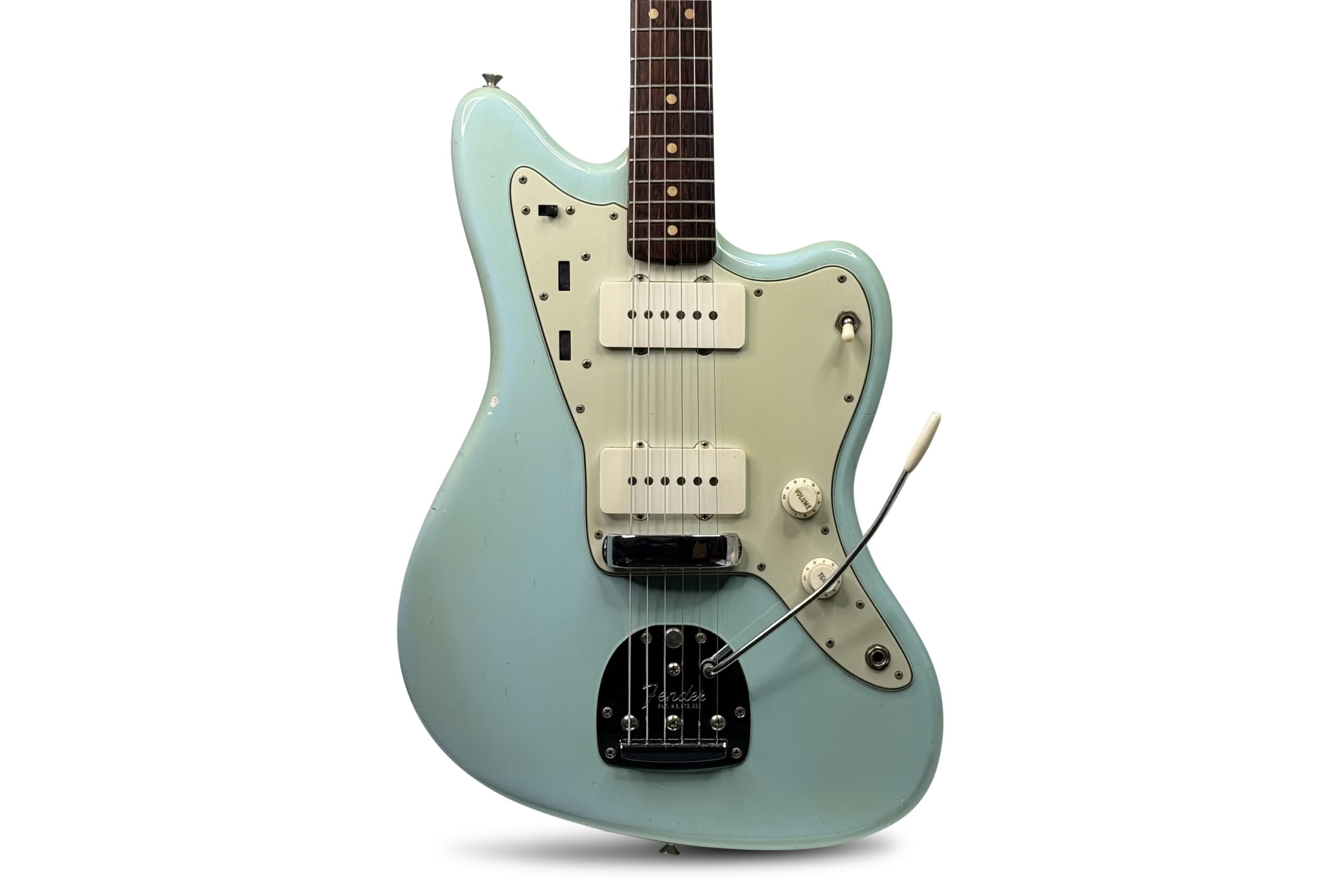
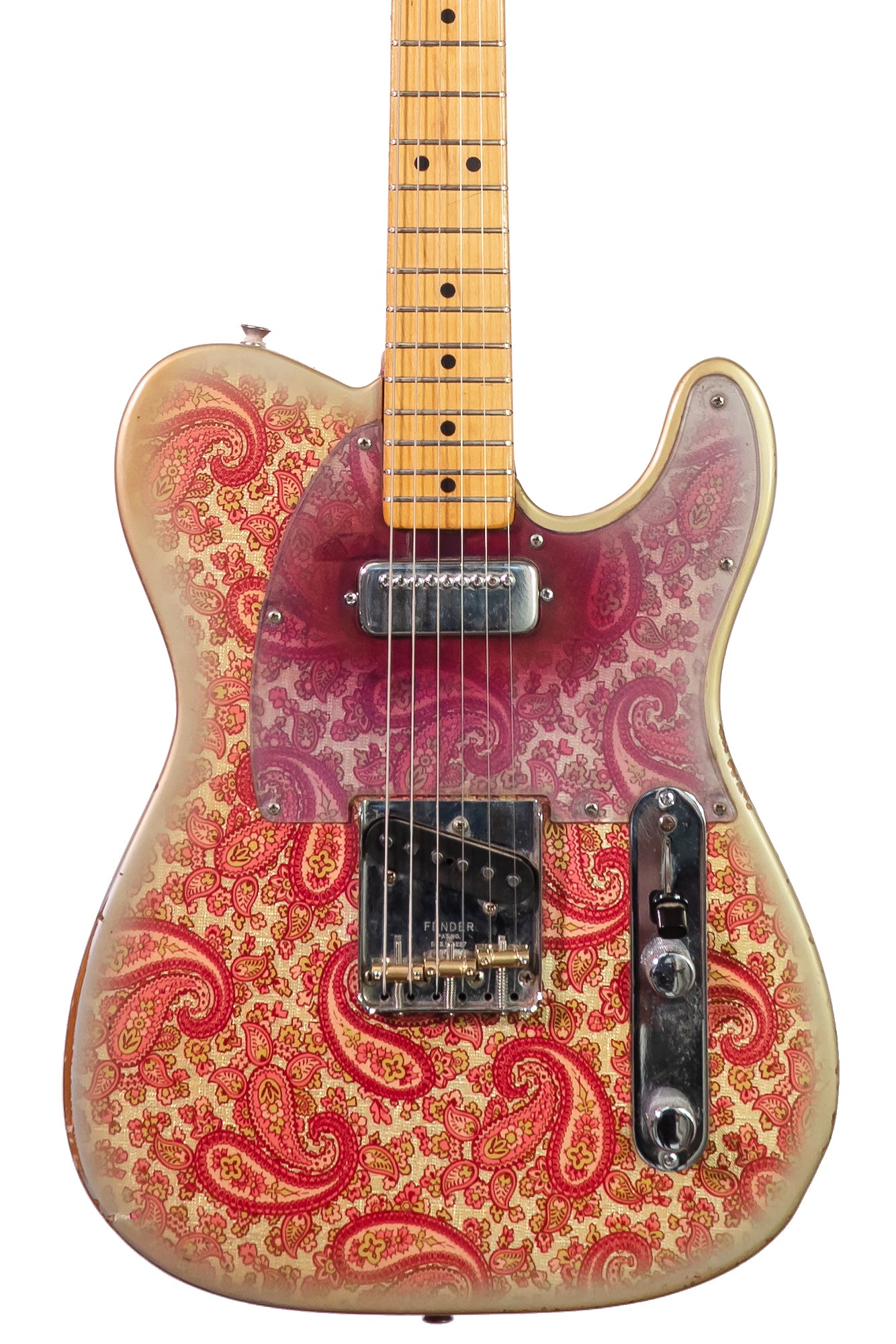
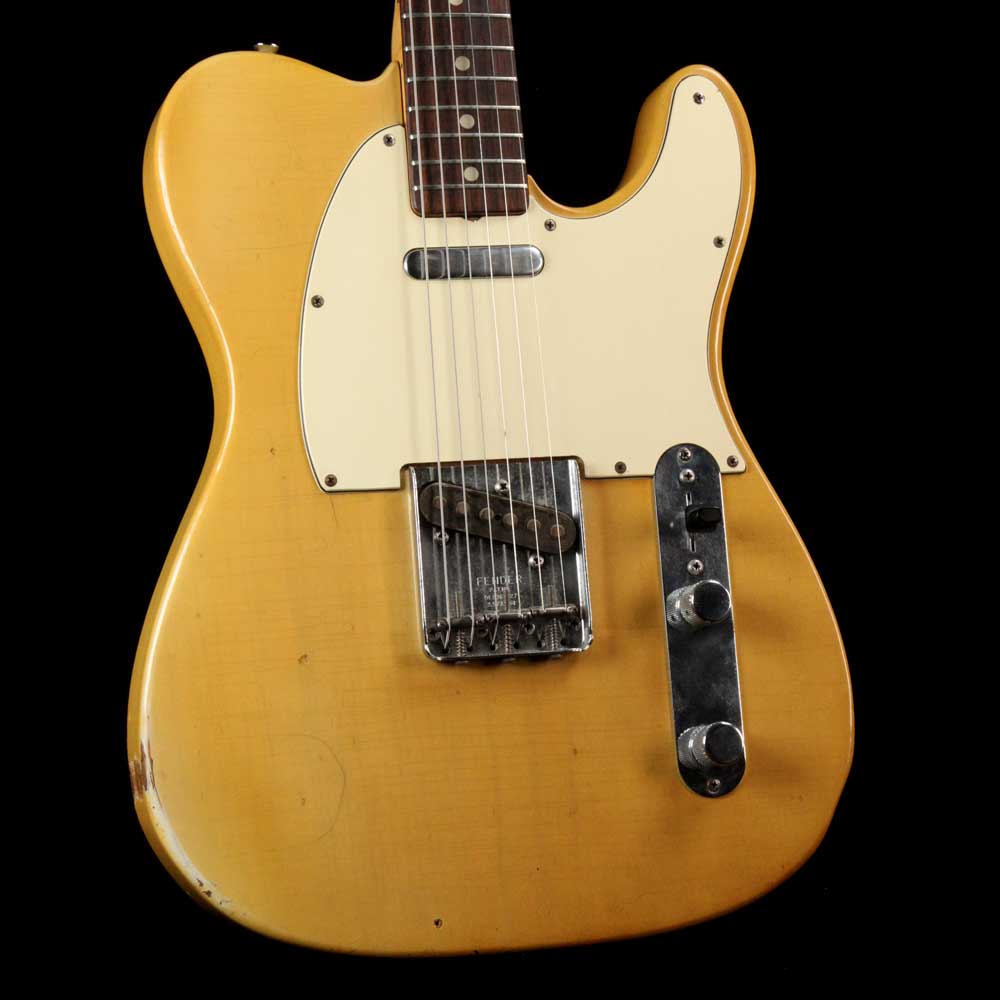
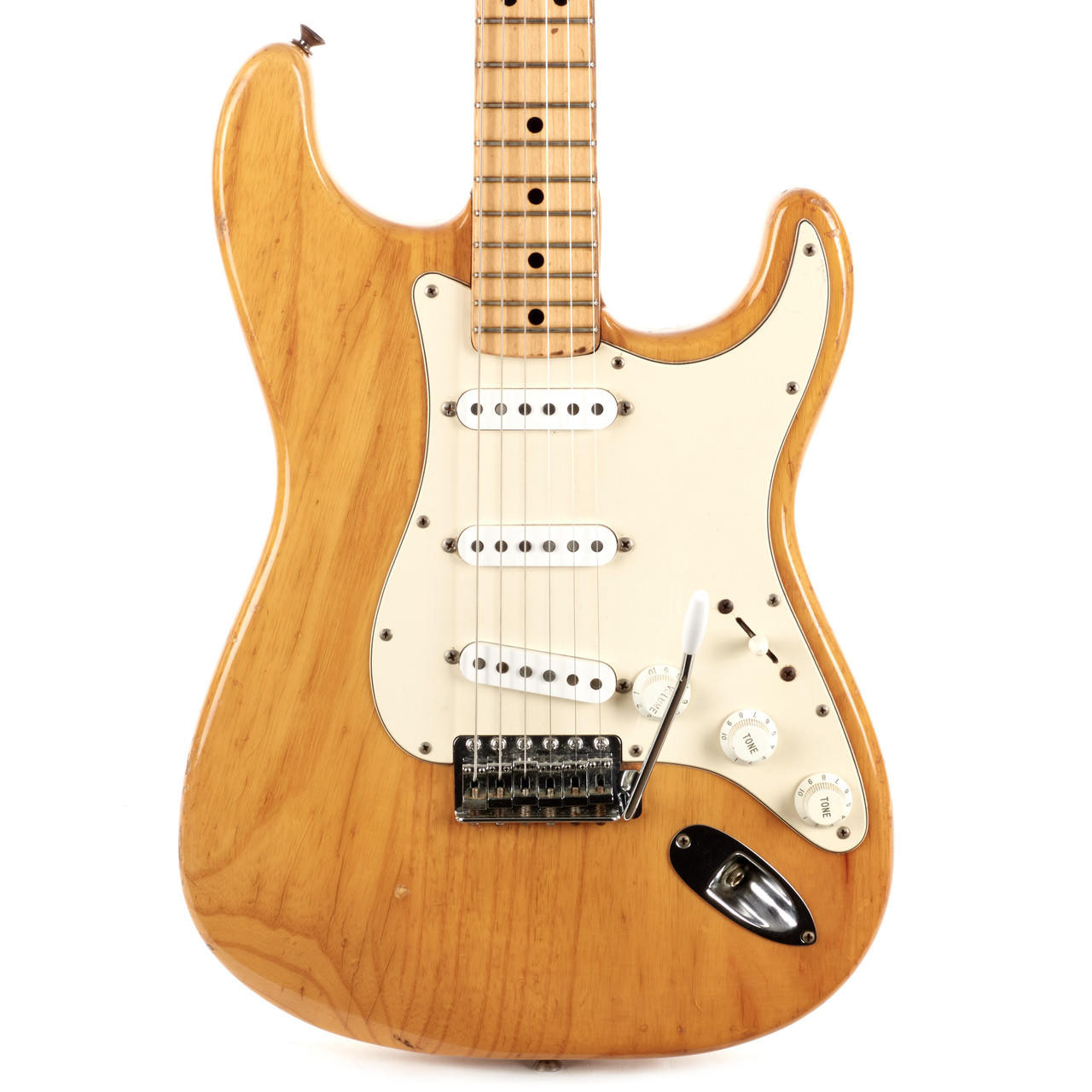
1950s: conservative defaults like blonde and burst1960s: the main expansion in expressive, bright custom-color variety1970s: more natural, black, and earthy finishes, less special-order mystique.- later decades (pictured at the end of this section): the return of color, the fading of Sunburst and Blonde as defaults
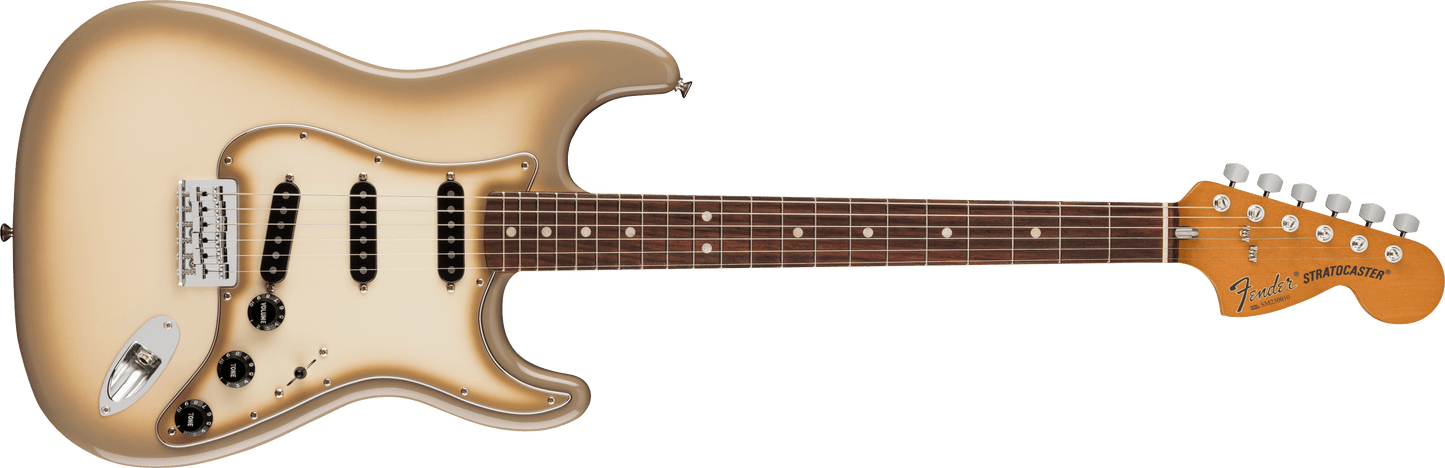
Here's how that looks in some representative sample guitars:
1950s — Blonde, burst, and the very first custom colors
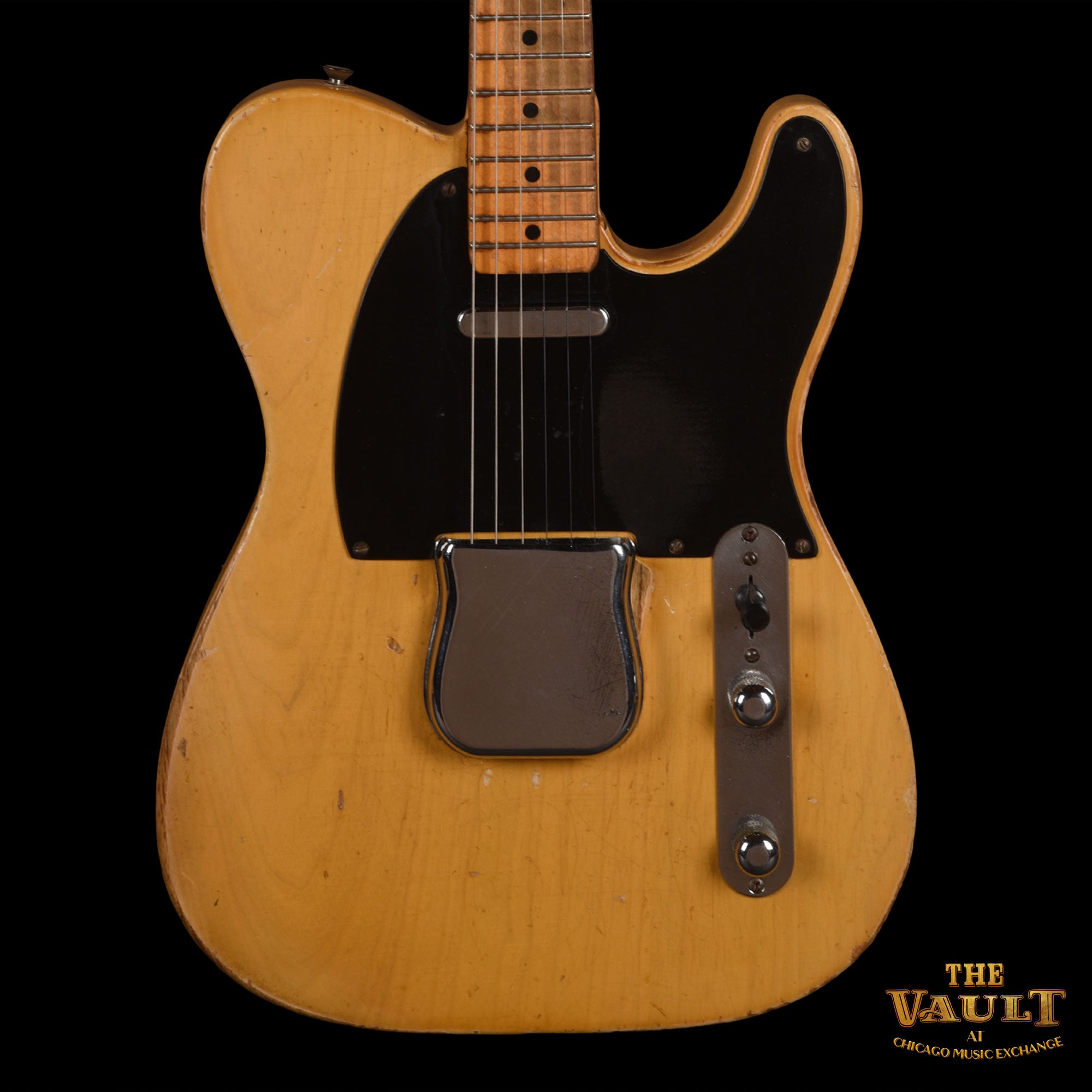
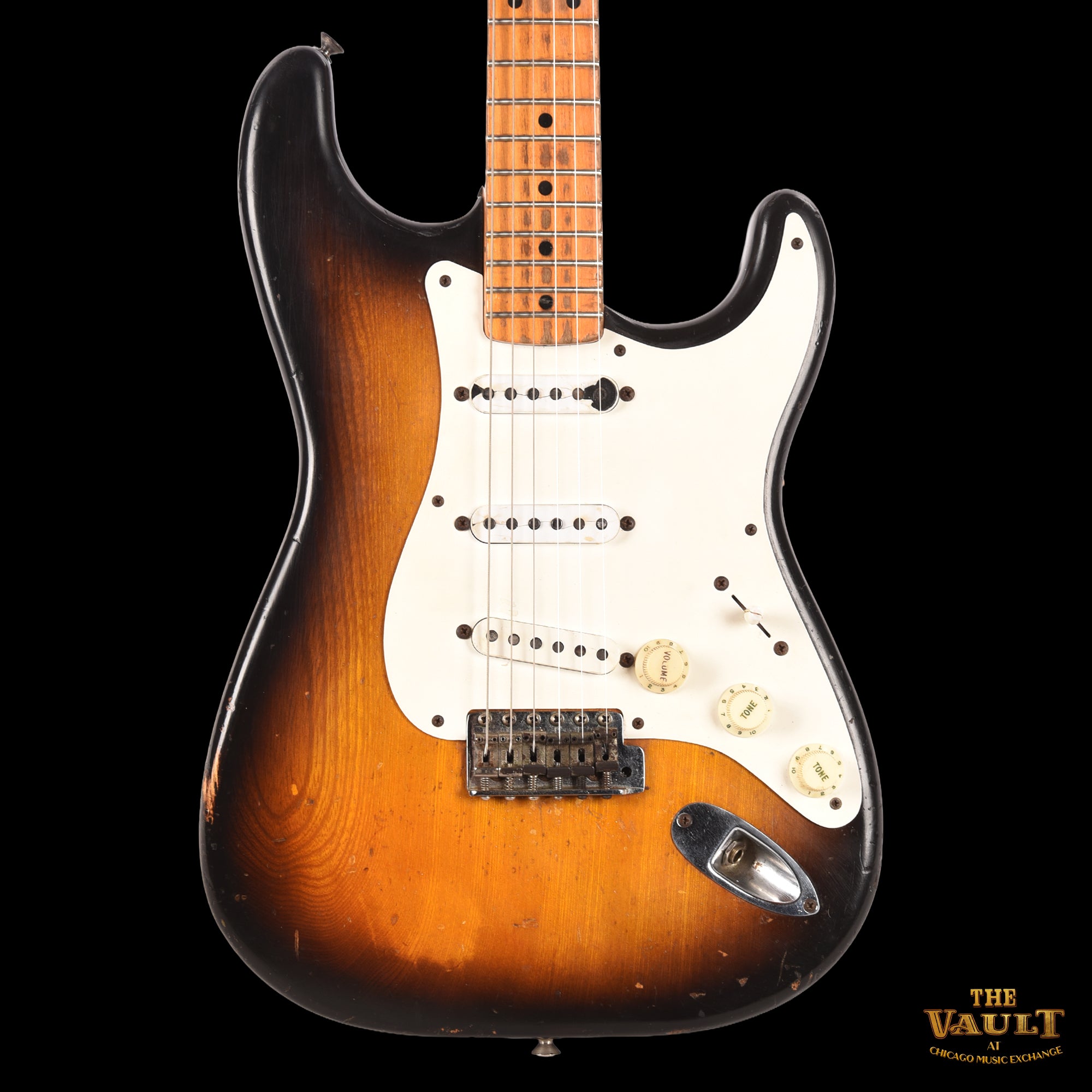
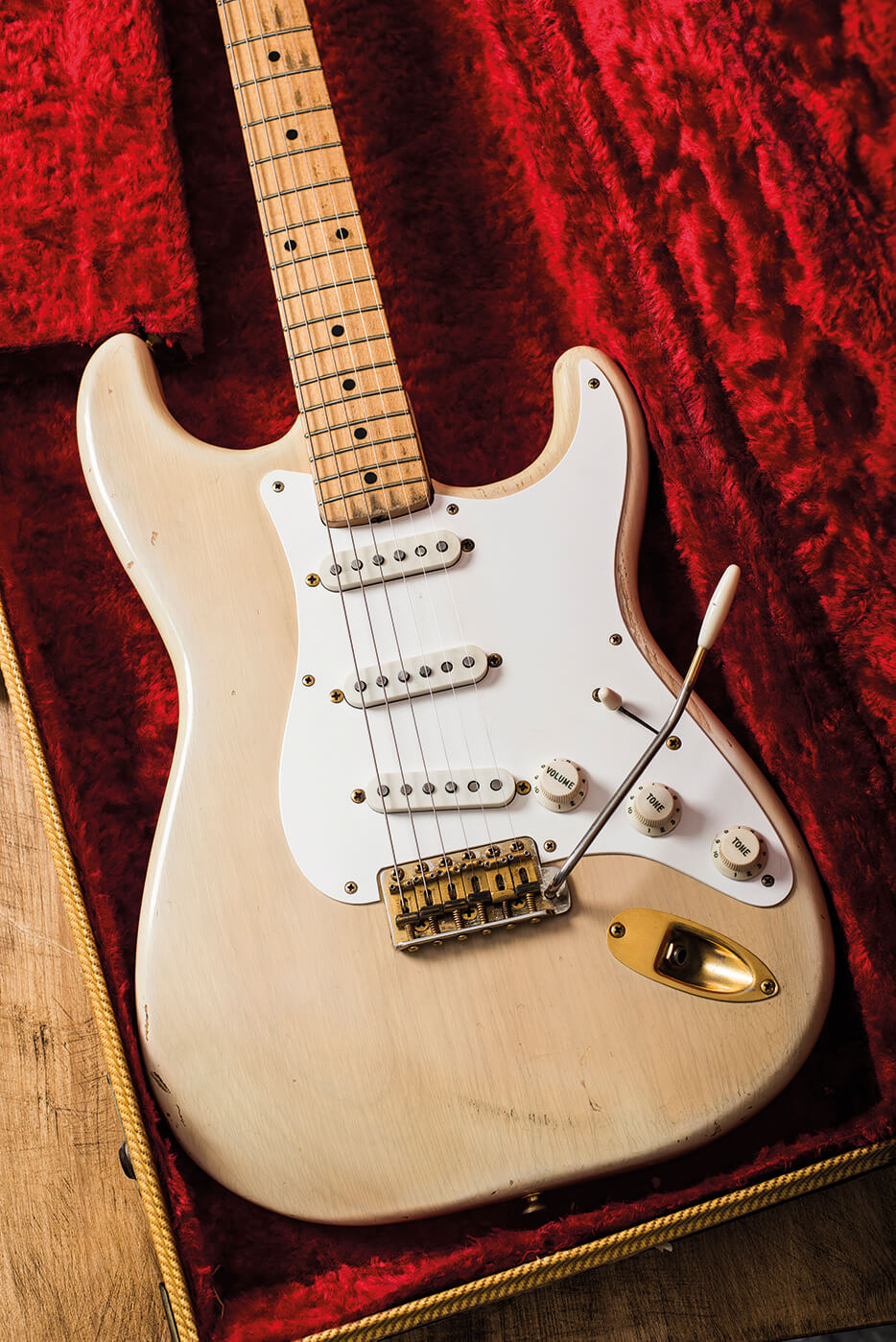
1960s — The custom-color era opens up
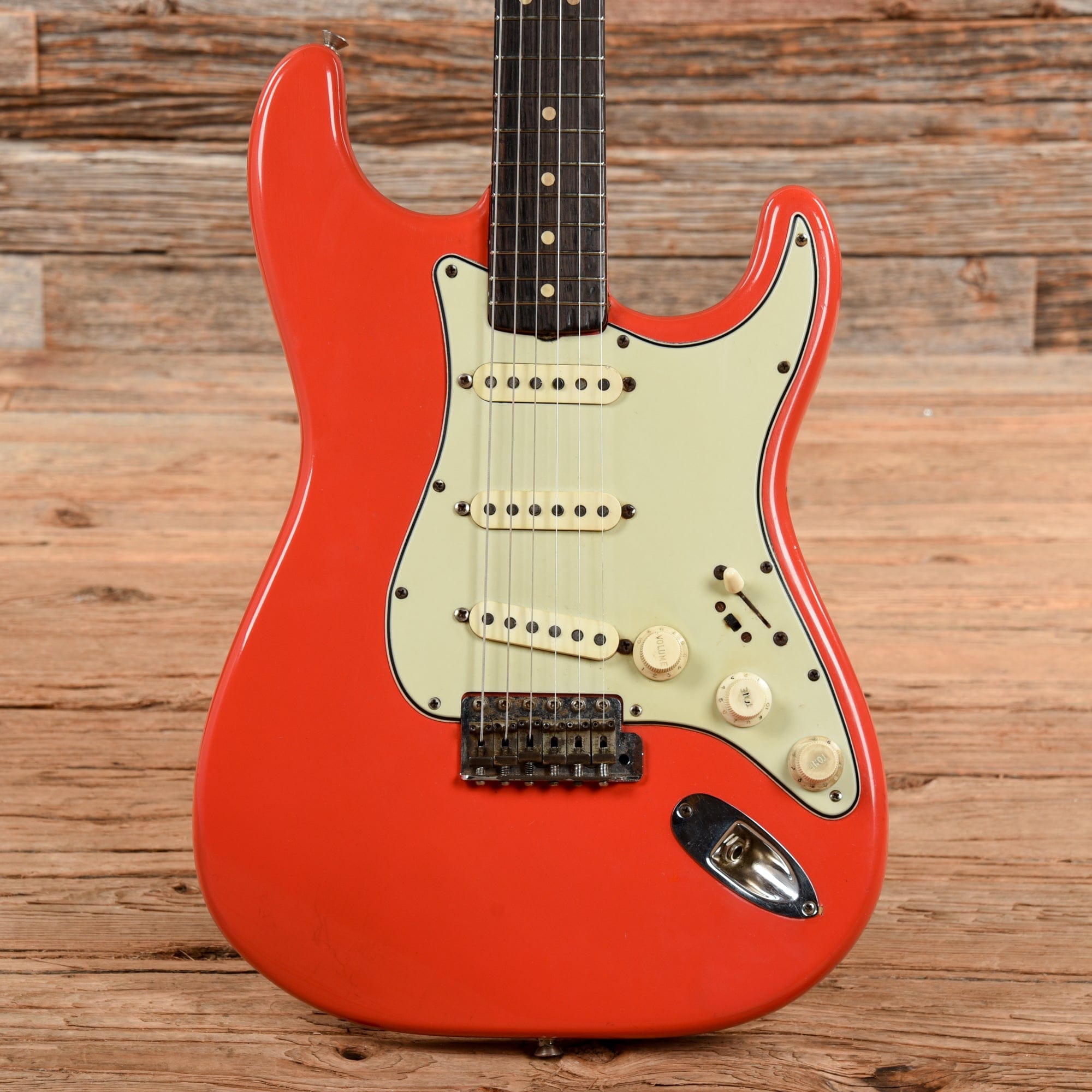
1970s — Natural, black, and the fading of special-order culture
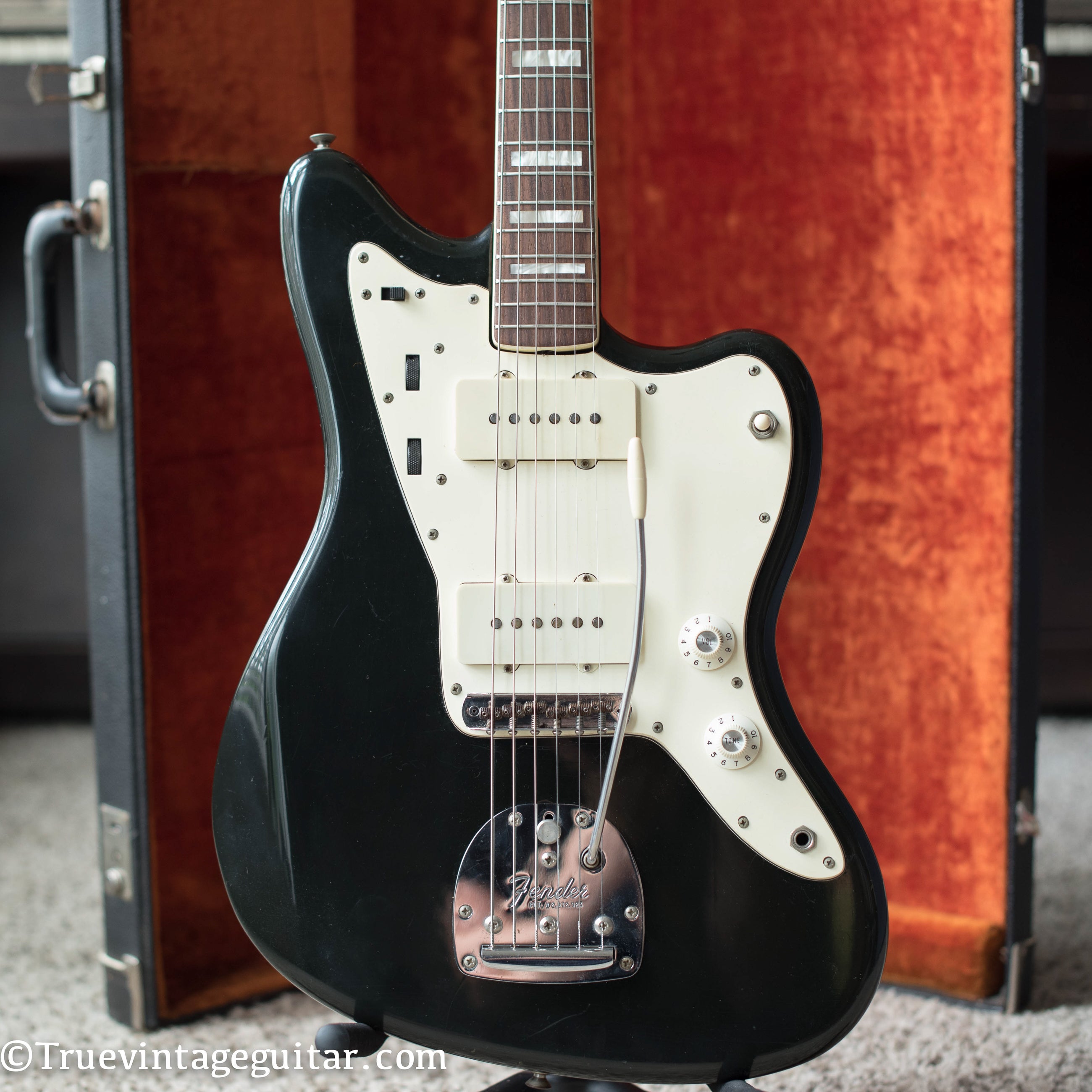
Let's take a more granular look at how this breaks out for Stratocaster, Telecaster, Jazzmaster, and Jaguar finishes in isolation.
Each Model has its Own Finish History
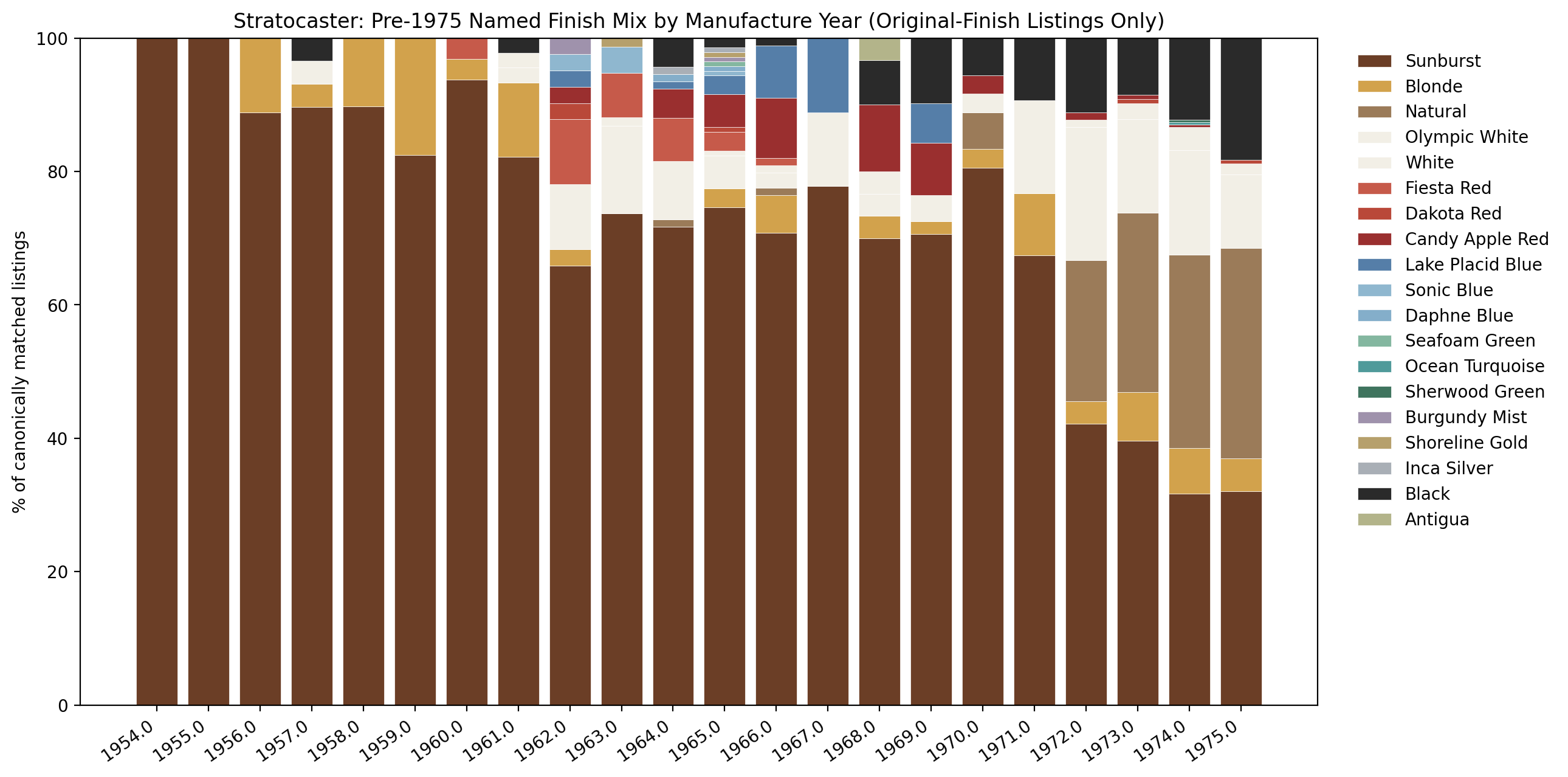
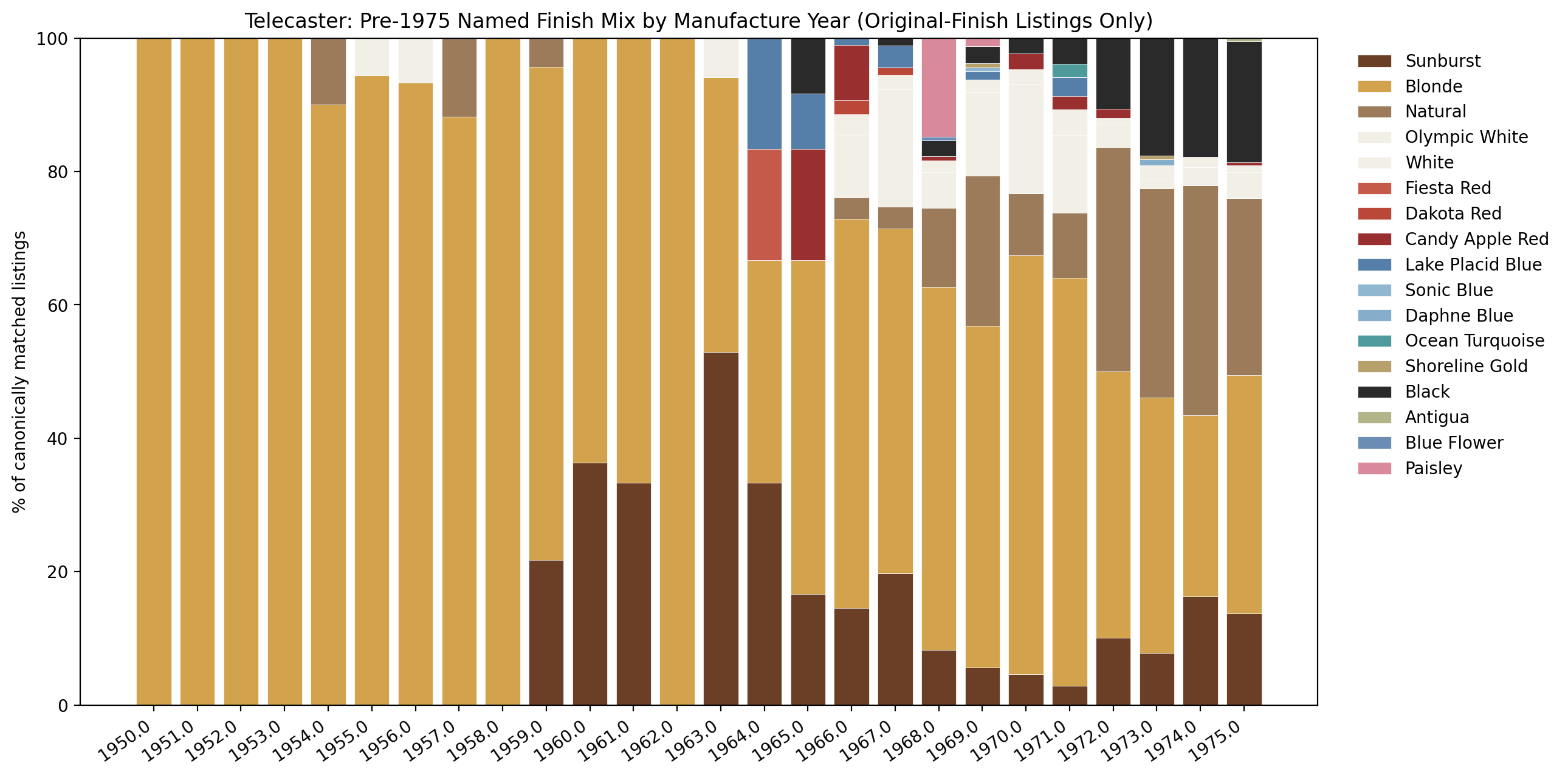
Below is the same plot re-created for each individual model. Note the diversity of Stratocaster colors throughout the '60s, the relative dominance of "default" and muted colors (Blonde, Natural, Sunburst) for the Telecaster, and the relative dominance of custom colors for the Jazzmaster and Jaguar compared to the other models before the custom offerings were discontinued a couple years into the 70s.
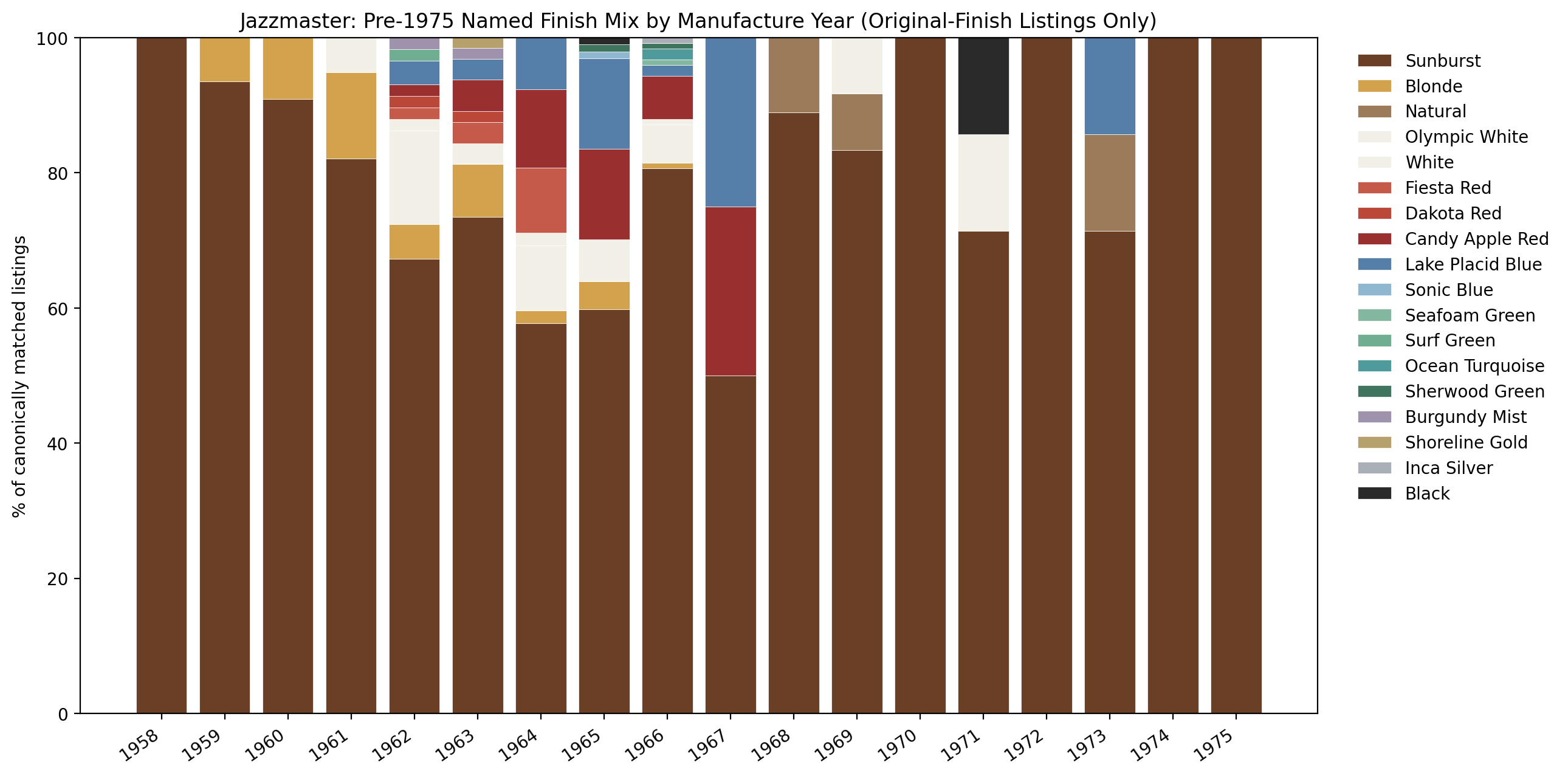
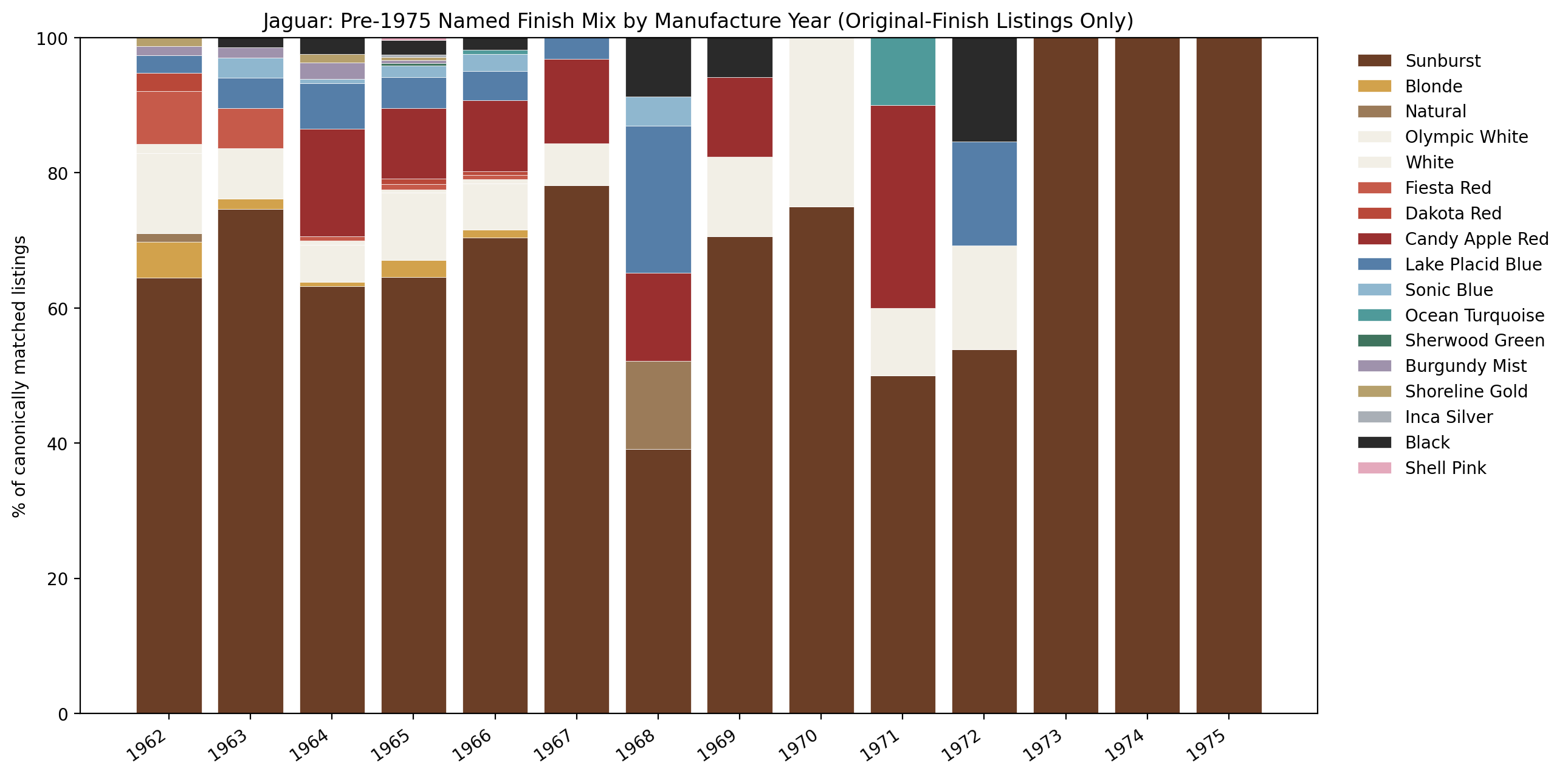
Note: both the Jazzmaster and Jaguar were offered in sunburst only from approximately mid-1973 through 1975, when they were effectively on their way out of the standard catalog. (Fender 1972 catalog via Vintage Guitar and Bass; custom colors show as discontinued by the June 1973 catalog)
These model-level charts are here to kill a bad habit: talking about “Fender custom colors” as if it were one market. It's not; each has its own history, defaults, and culture tied to the musicians who adopted it (e.g., the expressive Surf Rock movement that claimed offsets as their own.)
Here's how it looks at a more coarse level, and extended to the modern era.
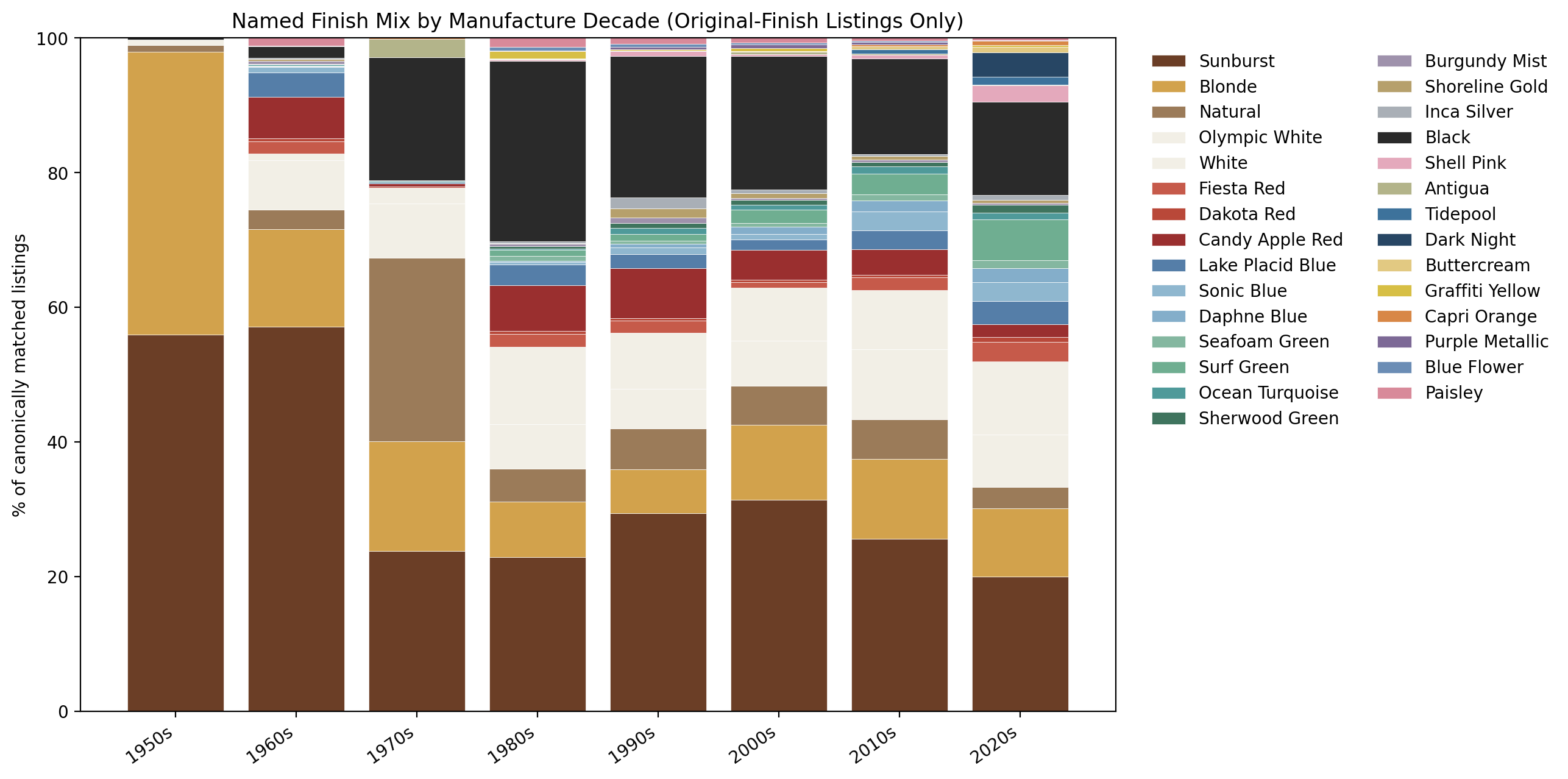
The general history of Fender's color offerings is:
- 50s: Default offerings; Butterscotch Blonde and Two-Tone Sunburst
- 60s: A pop of color, but relatively rare due to the Custom Color upcharge and custom ordering process
- 70s: Subdued and woody; Natural finishes, Blondes, and Sunbursts. Black overtakes reds blues and greens. Antigua.
- 80s through modern day: a steady state with relatively equal proportions of: the original defaults (Sunburst and Blonde), Black + White, and a rainbow of "custom" colors
Rarity and Expressiveness are Rewarded by the Market
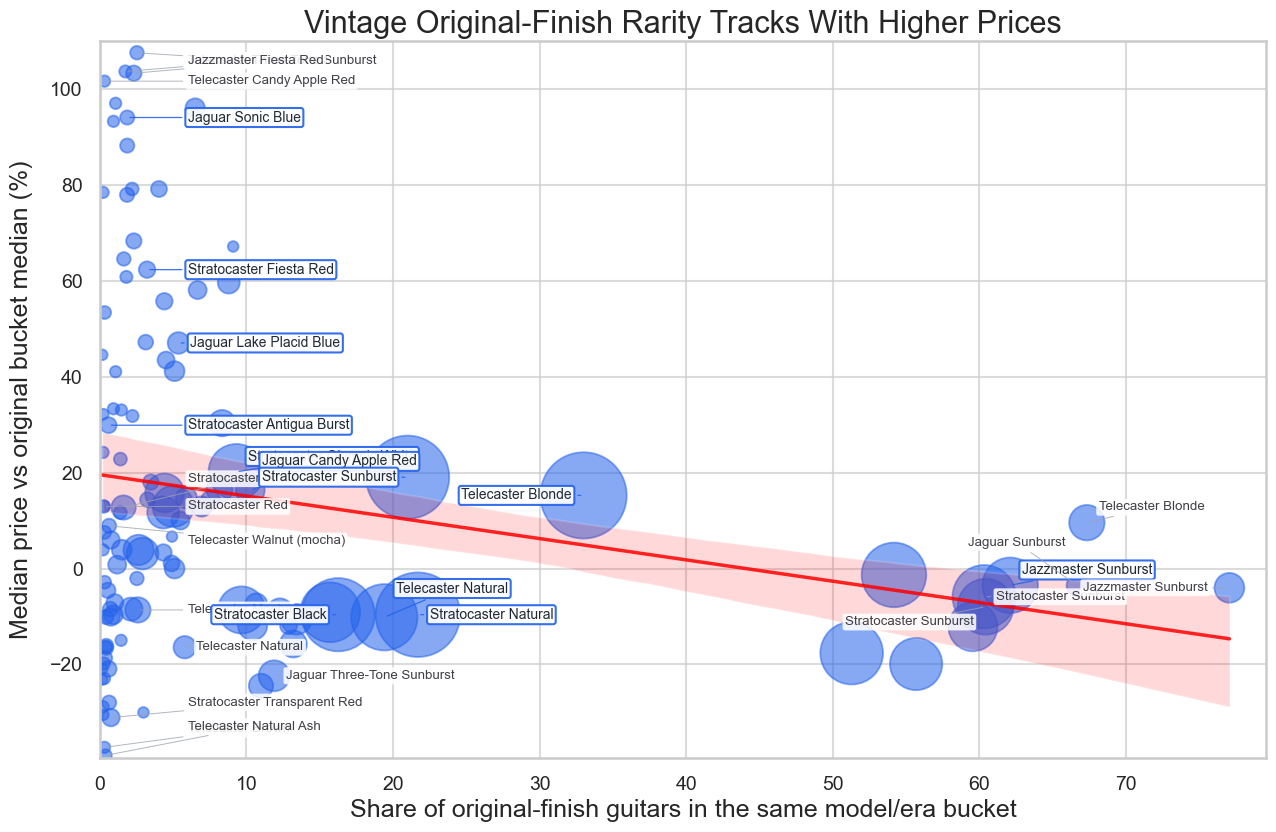
This chart gets closest to the actual collector question. It does not say “Fiesta Red is worth X.” It says that within a given model-and-era bucket, rarer original finishes tend to price above more common original finishes. The X axis represents commonality: further to the right means the finish was more common for that model during that era. The Y axis represents value relative to the median for that model in that era (i.e. to what extent does this finish drive a premium or penalty for this model during this era).
You can see roughly four clusters:
- Top left: the "fun" zone; rare and desirable custom colors (Fiesta Red, Sonic Blue)
- Far right: the "default" zone; sunbursts and blondes: extremely common finishes with neutral pricing
- Bottom left: the rare undesirables; "Wine", Olympic Whites (Oly White did not age gracefully in later eras)
- Lower middle: the "natural" zone; lots of stripped and natural finishes; these were common and priced at a slight penalty
Not every uncommon finish behaves like a collectible finish, as you can see in the lower-left quadrant of this plot. Some finishes from later eras, such as Wine, were not particularly beloved. Others are simply controversial or nuanced. You'll see the controversial Antigua finish priced at a slight premium for some models and at a penalty for others. Similarly, Olympic White performs well in some cases and at a penalty in others; this may be because later eras' takes on Olympic White aged into a cigarette-stained yellow look that people find unpleasant.
That is a much better framework than a universal color leaderboard. It keeps the comparison where it belongs: inside the original-finish pool, within the same model family, and against the same historical backdrop.
It also helps because it's a general framework that allows us make assumptions about rare finishes that are too infrequent in our data to measure directly. Shell Pink and Sea Foam Green, for example, were extremely rare in the early 60s; we don't have enough of these in our dataset to measure directly, but you can infer from this plot that they would sit in the top-left on this plot among all the other rare-and-expressive custom colors.
Natural Is Usually A Warning Sign, Not A Premium Category
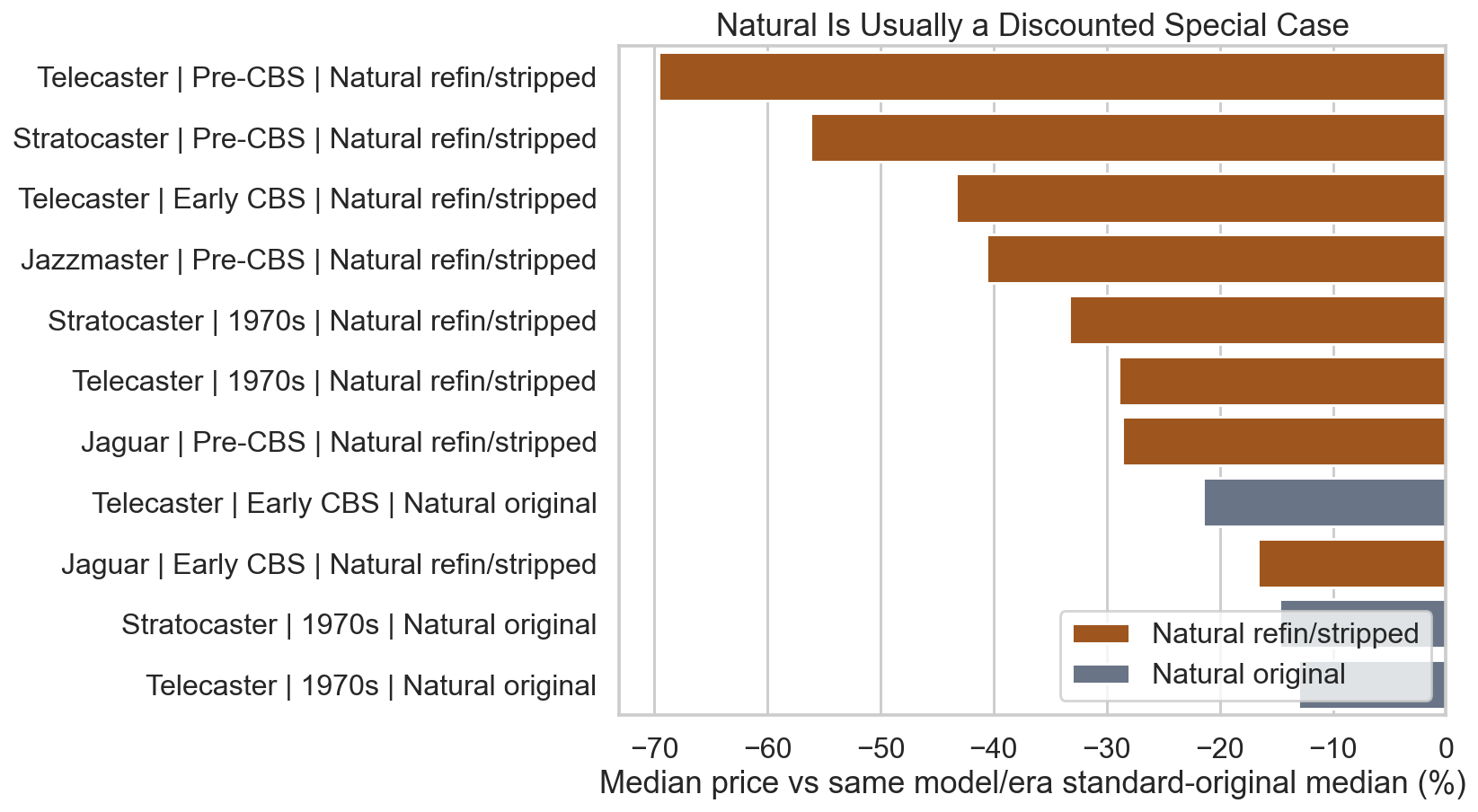
One of the clearest weak-value patterns in the data is Natural.
In vintage Fender listings, natural often means one of four things:
- stripped finish
- sanded or oiled wood
- a nonstandard look created by finish loss
- a later presentation of damage as an aesthetic choice
That is why natural is best treated as a special-case bucket, not casually grouped with genuine original custom colors. As a common 70s finish, "natural" is often exactly what the seller says it is. Sometimes, however, it's shorthand for “something happened here.” Especially if you see it out of its home 70s era.
To some this is an opportunity. Some of the best deals on pre-CBS Telecasters are examples where the finish was stripped, if you don't mind the aesthetic or collectability hit.
Same-Color Refins Still Take A Hit
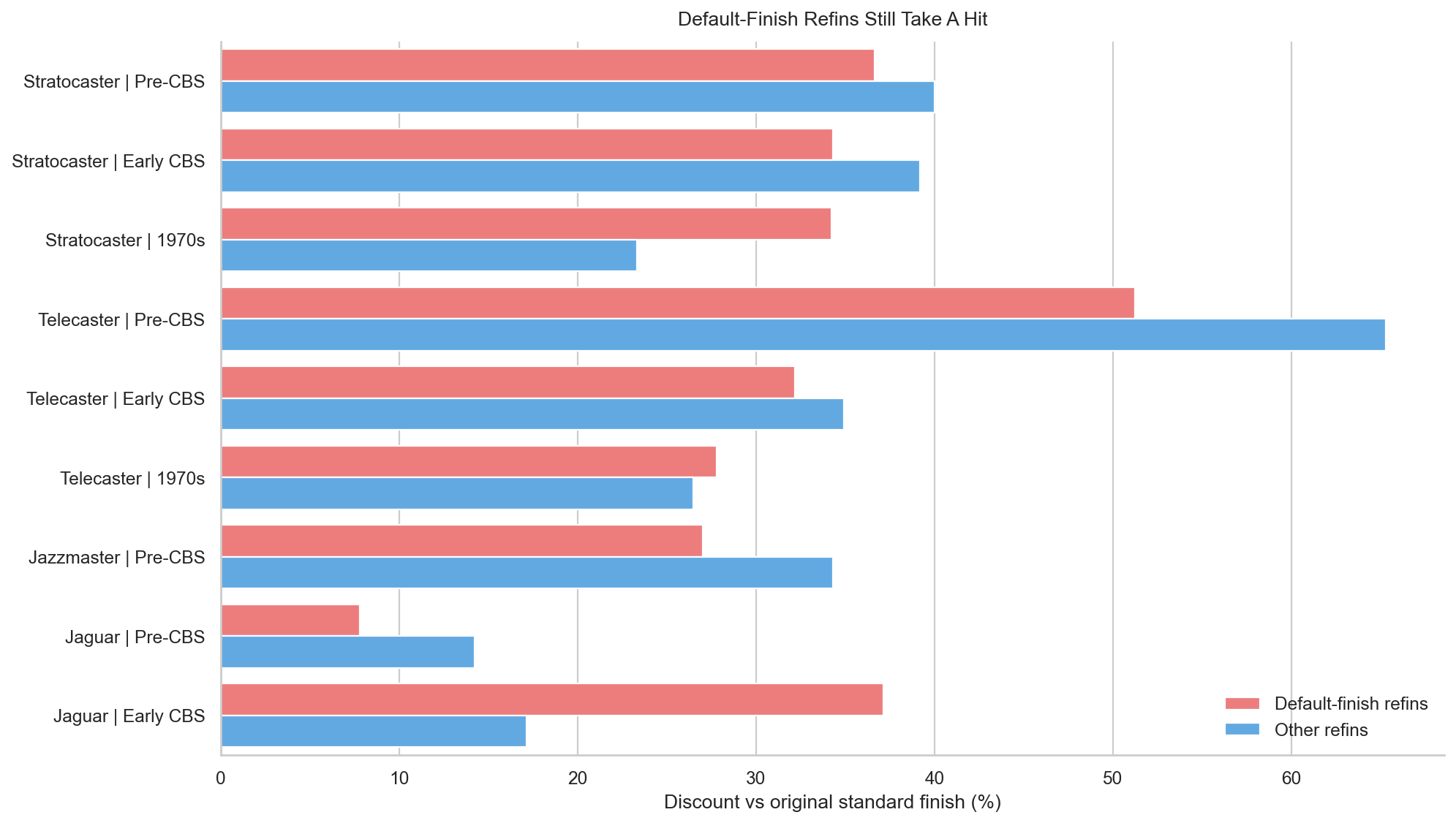
This chart is useful because it addresses a common move in vintage-guitar pricing: treating a same-family refin as if it were almost original.
A refin that lands in the “right” finish family can be less bad than an obviously off-pattern repaint. But “less bad” is not the same thing as restored originality. Even a simple overspray harms value.
The practical takeaway is simple:
- a same-family refin may do less damage
- it is still a refin
That sounds obvious, but it's worth stating since dealers and sellers will try to convince you otherwise.
Matching Headstocks Carry A Premium On Offsets
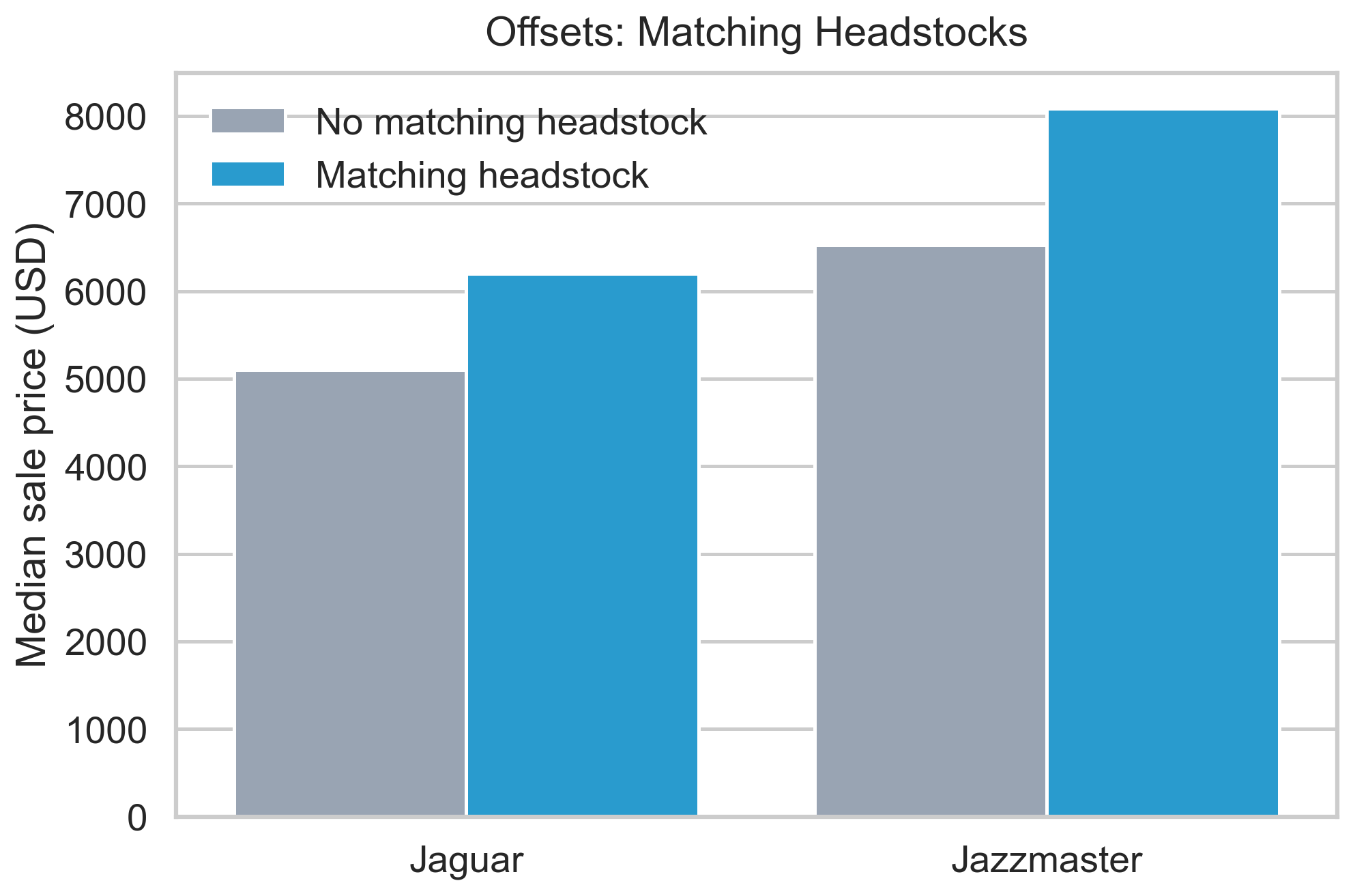
Matching headstocks are a fun special case of Fender's custom colors. For its offset models, a custom finish typically applied to both the body and the headstock. There were some instances of non-matching headstocks, but the finished headstock was the norm for a custom color offset during this period. Despite being relatively common, these demand a premium over the technically-more-rare non-matching-headstock custom colors because people like them. It's an aesthetic premium.
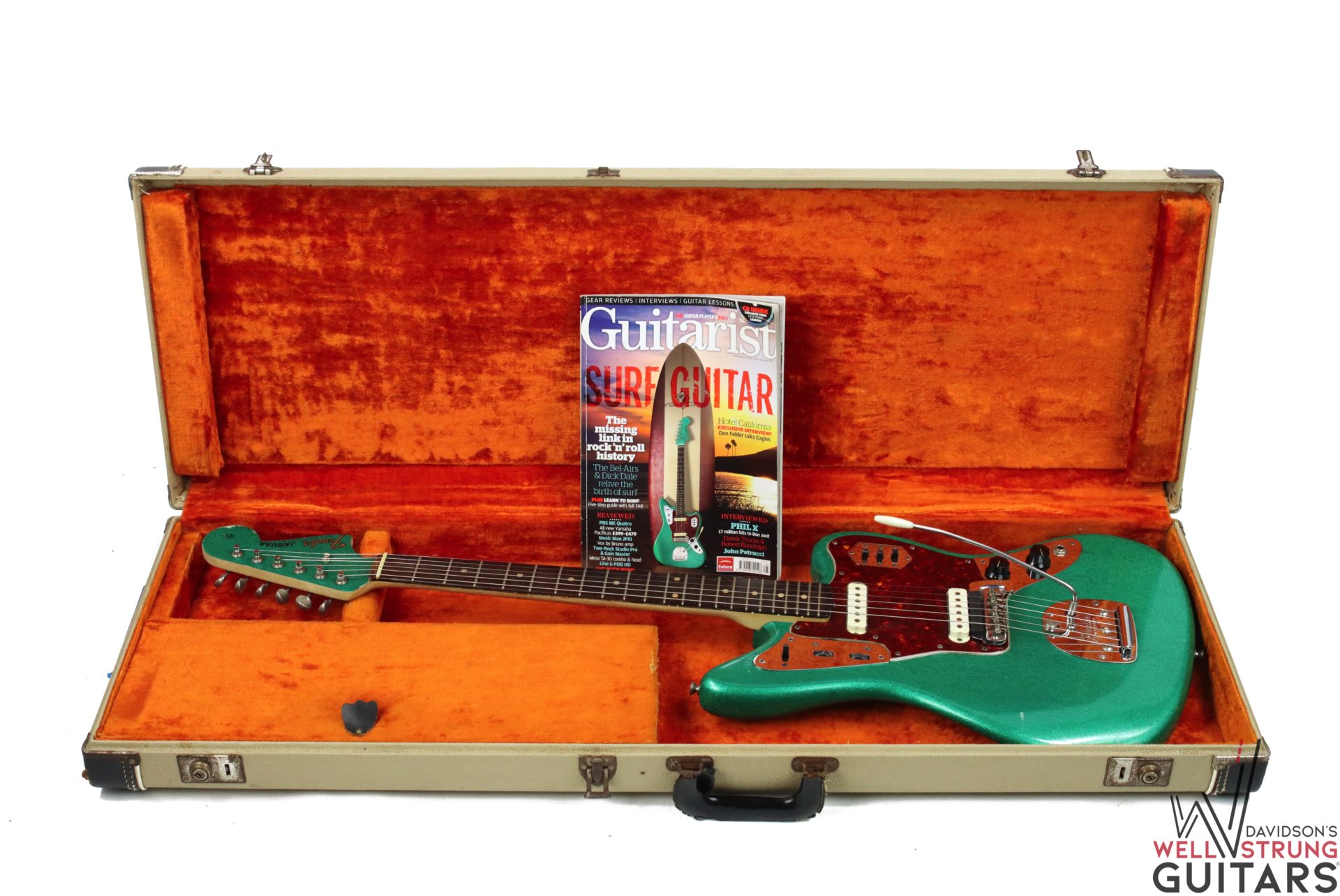
Modern Rare Colors Are Usually SKU Effects
Modern custom colors don't come close to the premiums of vintage ones. Custom colors stopped costing extra and requiring a special order around 1975. From the 80s onward they've been widely available. They're no longer "special" from a value or collectability perspective. Today, a musician can easily obtain the modern Fender that best suits their own preference.
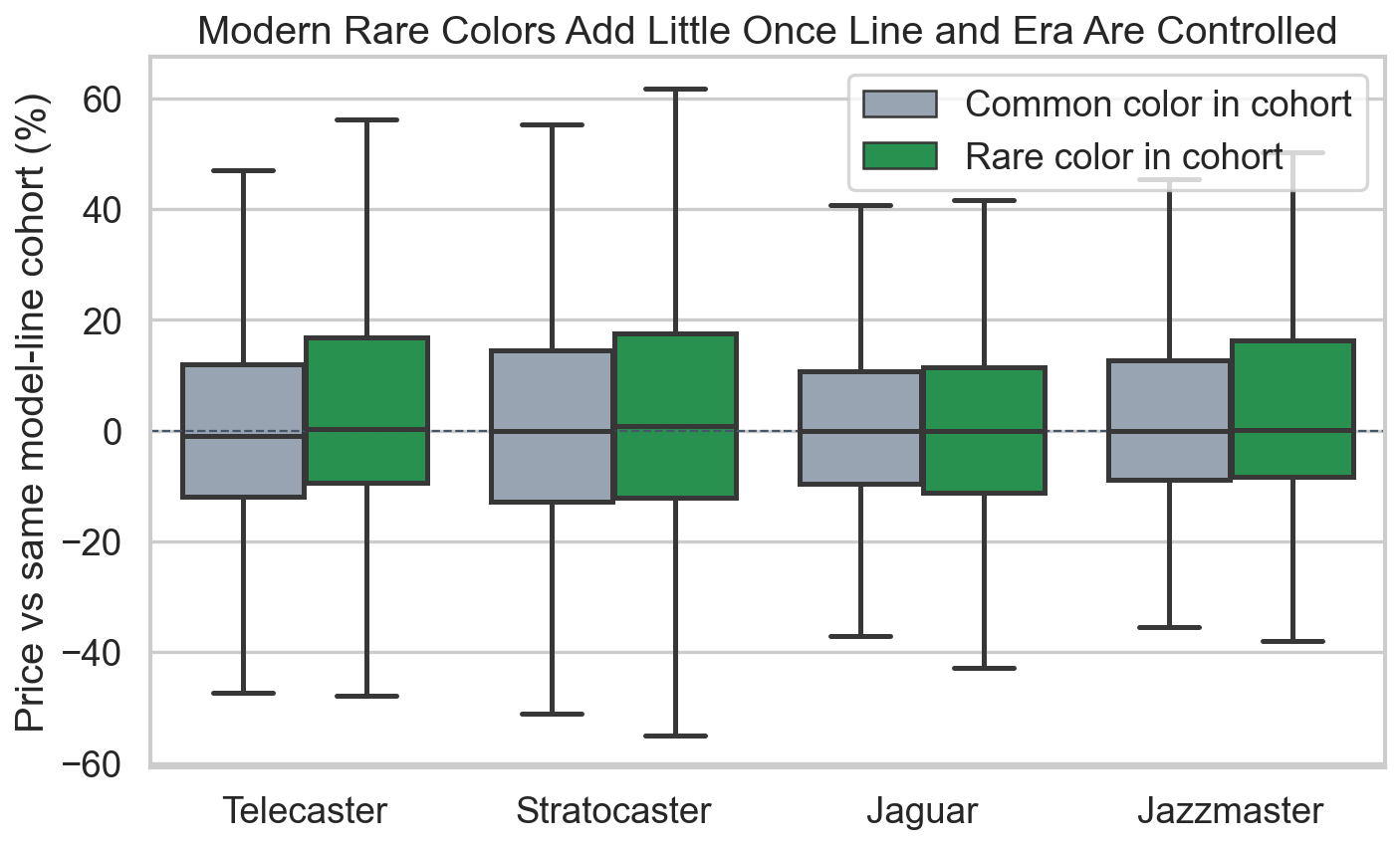
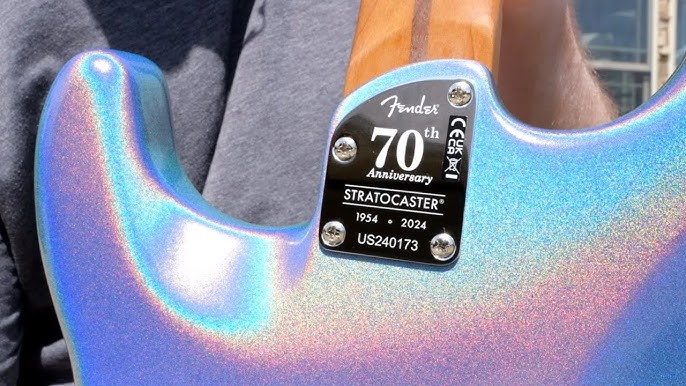
To the extent that there are still valuable finishes today, these are basically just SKU effects. "Amethyst," for example, is a unique and desirable finish that was only made available for the American Ultra II Stratocaster during a limited run for the model's 70th anniversary. The finish is valuable, but only because it's part of a limited and special run. You can't say the same about the other more standard Fender finishes today.
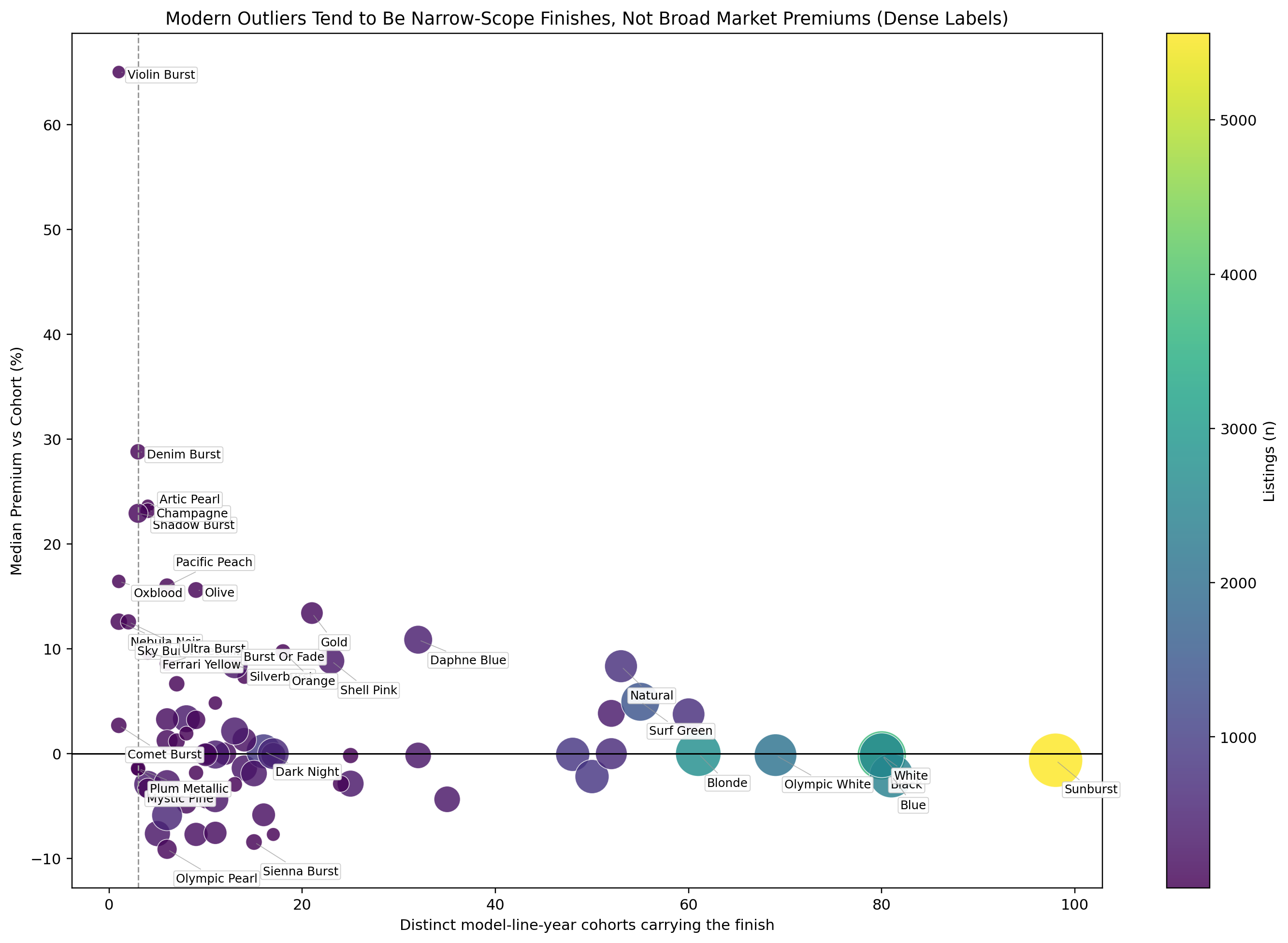
This is where vintage and modern logic separate most cleanly.
Once modern prices are compared inside the same model-line cohort, the broad “rare color premium” mostly disappears. The biggest outliers usually look like:
- special runs
- retailer exclusives
- finish-plus-package combinations
- narrow-scope SKUs
You may also notice that the outliers are priced at a ~25% premium, much smaller than was the case for the vintage examples. The largest outlier, Violin Burst, is similarly part of a special Suona Thinline collection, and mostly just looks like a pricing premium because it's being compared to less premium Stratocaster sub-models.
That does not mean rare modern colors never matter. It means the mechanism is different. A finish like Amethyst can absolutely matter, but it behaves more like a special-run product package than like a vintage custom-color premium that generalizes across the whole market.
The distinction changes how you should underwrite the guitar. Vintage color premiums are often about originality and scarcity. Modern color spikes are often about product architecture.
What Collectors Should Take From This
The cleanest conclusions from this study are:
- Originality matters more than color alone.
- Vintage custom-color premiums exist, but they are influenced by model and era.
- Offsets have the clearest custom-color market premium among vintage Fenders.
- Rarer original finishes tend to price higher inside the same model-and-era pool.
Naturaloften behaves more like finish loss than like a desirable finish category.- Same-color refins and oversprays still take meaningful discounts.
- Modern rare-color winners are usually SKU effects, not broad market premiums.
That is a better framework than either extreme version. The bullish version says rare finishes always get paid. The bearish version says color is mostly cosmetic noise. Both miss the point.
Sometimes color matters a lot. Sometimes it barely matters at all. The difference is usually originality, model context, rarity inside the original-finish pool, and whether you are looking at a collectible vintage market or a modern product catalog.
Method Notes
- Source file: Normalized and cleaned guitar sales data from Reverb, Sweetwater, multiple dealers and auction houses
- Vintage focus: Stratocaster, Telecaster, Jazzmaster, Jaguar
- Refinish identification: LLM labeling, limited human review of listings and images
The point of the exercise is not to rank colors. It is to separate three things that usually get collapsed into one: finish originality, finish rarity, and finish desirability. Vintage Fender buyers pay for all three, but not equally, and not in every market.