
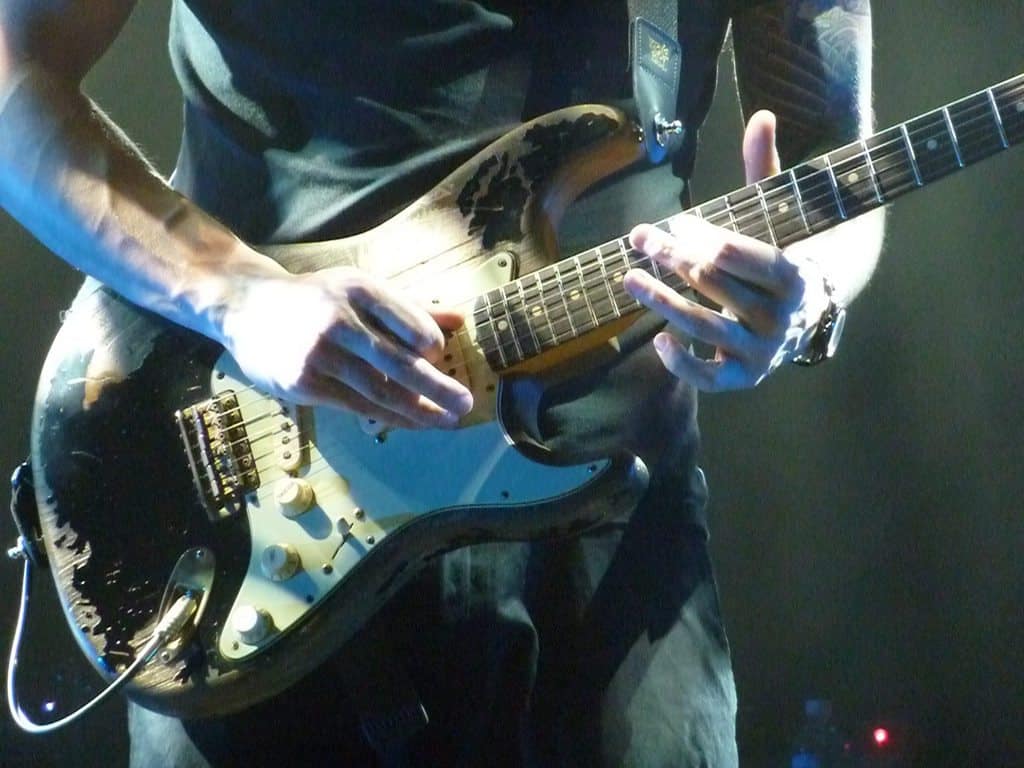
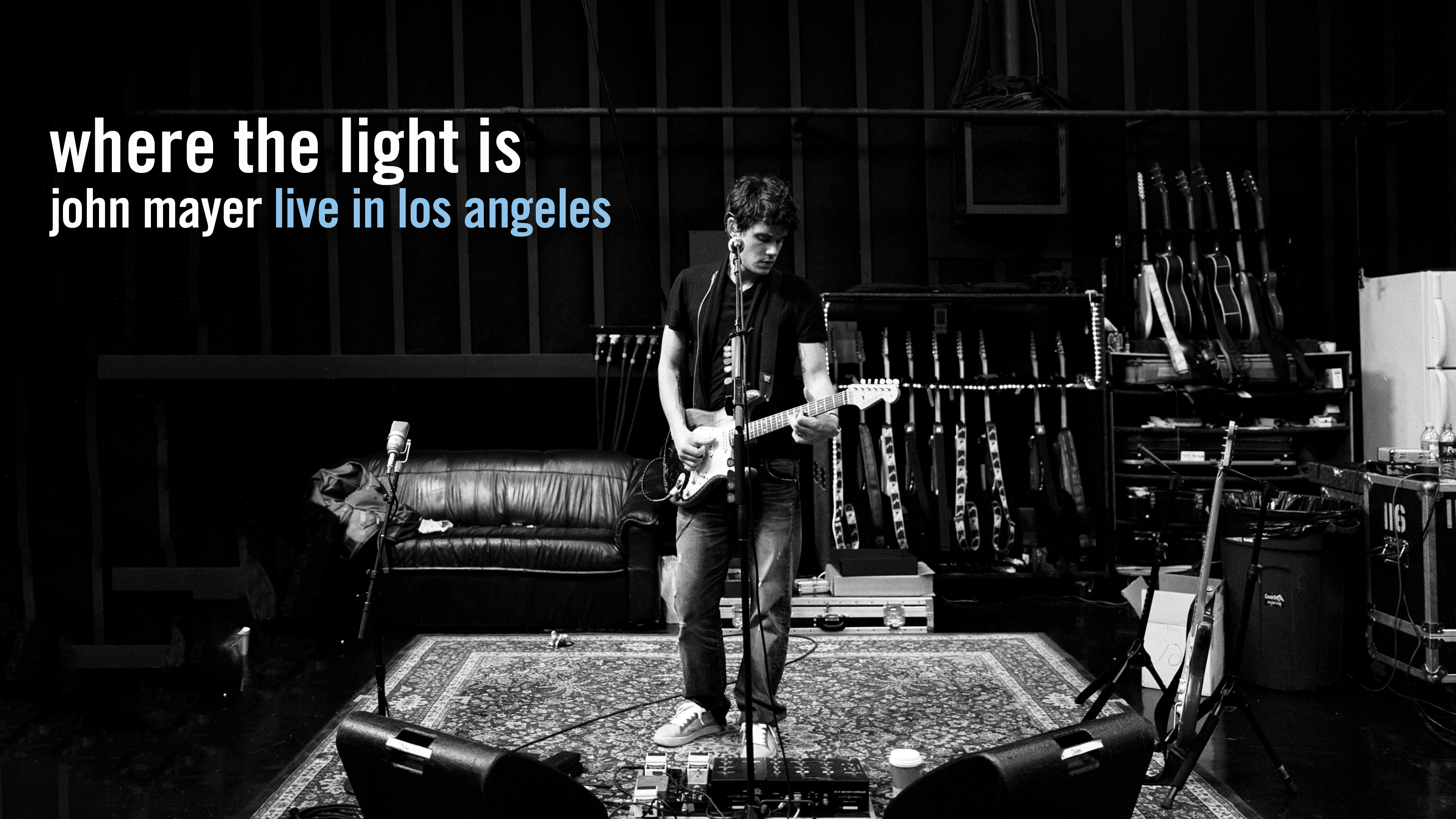
BLK1 is the guitar people think of when they talk about John Mayer's Fender era. It's the black John Cruz masterbuilt Strat most closely tied to Continuum, the guitar he kept returning to on stage, and the instrument he chose again even after its original neck had twisted badly enough to justify a replacement. Mayer has owned other important Strats. This is the one that became the reference point. Even after moving to PRS, the Black One still sits backstage at every tour stop, occasionally still making an appearance for Gravity.
Why This Guitar Matters
- BLK1 is the Fender-era Mayer guitar with the clearest identity. He has owned many notable Strats, but this is the one he kept naming as the Continuum guitar in later interviews and the one most identifiable with Mayer personally.
- It was not a stock John Mayer Signature Strat in relic form. John Cruz has said the pickups were custom-wound for this build and were not the Big Dippers used in the production signature model.
- The guitar's most famous story is also revealing: Mayer did not love it when it first arrived, tried the freezer stunt out of desperation, then discovered the real problem was a grounding issue rather than some mystical lack of "opening up."
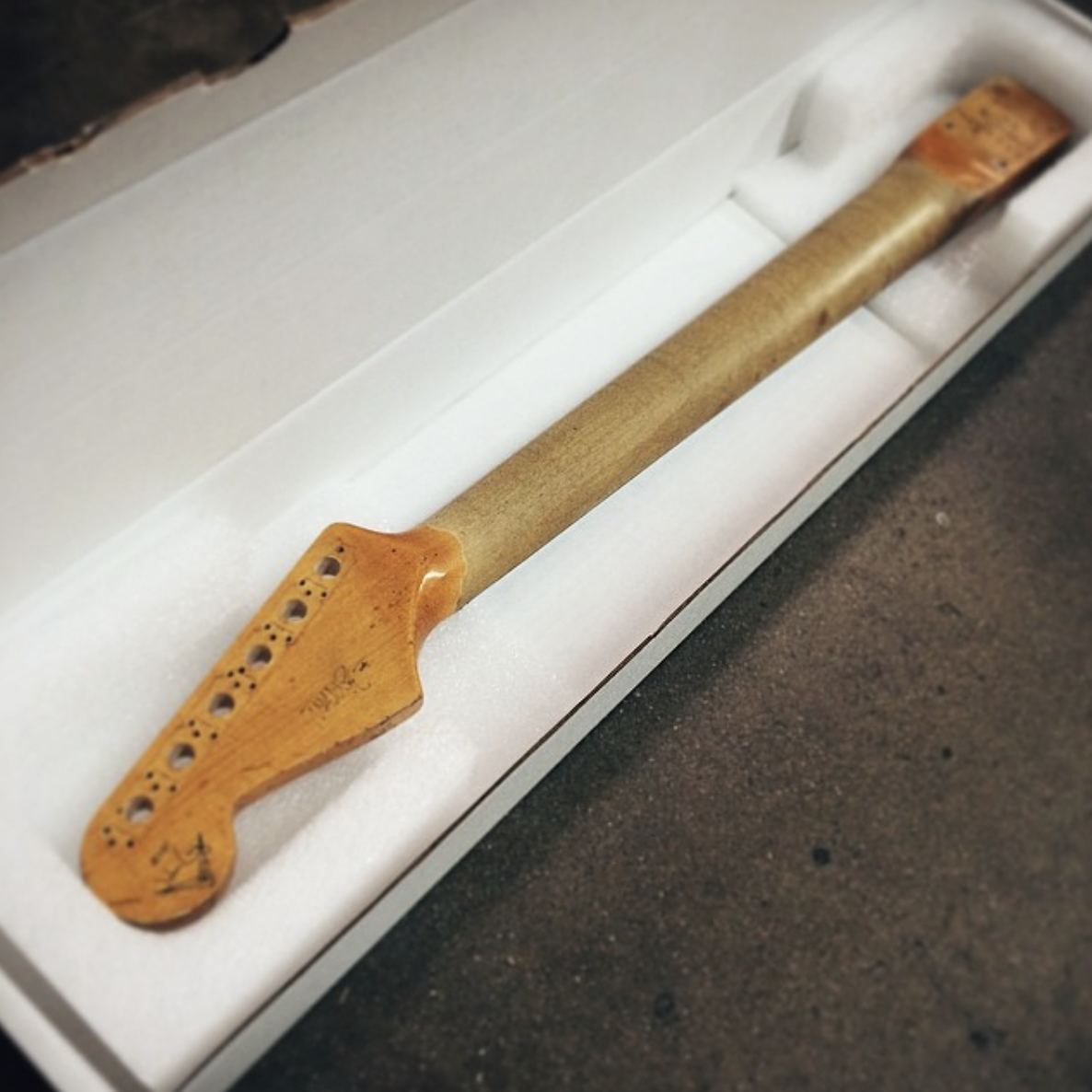
- The original neck later twisted badly enough that Cruz built a replacement in May 2014, yet Mayer ultimately put the old neck back on. That tells you how much of BLK1's appeal was in the feel of the actual object, not the paper spec.
- It's a guitar that appeals to Mayer fans, Custom Shop collectors, and the broader population of Strat players who want something that feels loose and broken-in and carries a story. Those are three different audiences, and BLK1 lands in the middle of all of them.
The Instrument
Specs
| Feature | Detail | Source |
|---|---|---|
| Make / Model | Fender Custom Shop Stratocaster, known as BLK1 or Black One | |
| Builder | Masterbuilt by John Cruz | GroundGuitar |
| Build period | Built in October 2004 and delivered to Mayer in November 2004, per multiple published retellings of the Fender Custom Shop build | FuzzFaced |
| Body | Alder Stratocaster body, hand-selected by Mayer | GroundGuitar |
| Finish | Black nitrocellulose lacquer with heavy relic treatment by Cruz | GroundGuitar; 2010 Fender Black1 dealer PDF |
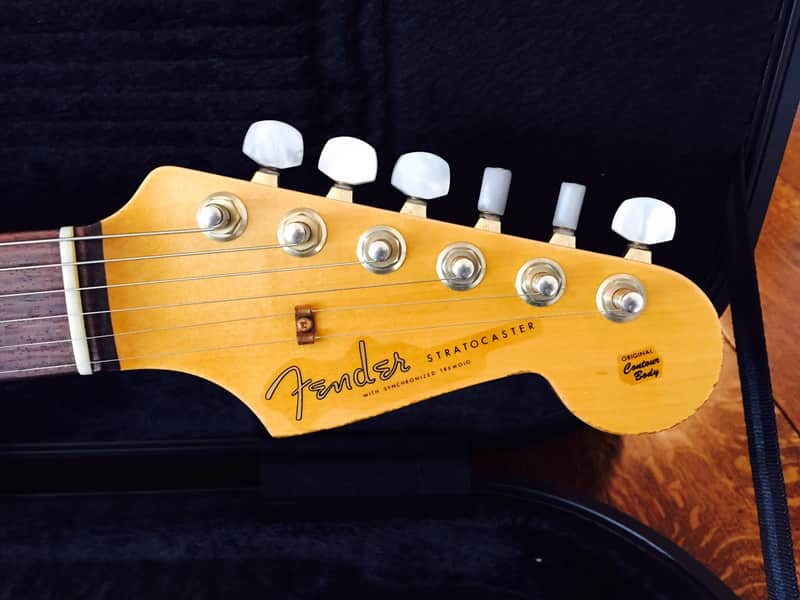
| Neck | Quartersawn maple neck, commonly reported as derived from an SRV Tribute template | GroundGuitar |
| Fingerboard | Round-laminated rosewood | 2010 Fender Black1 dealer PDF |
| Radius | 9.5" | 2010 Fender Black1 dealer PDF |
| Nut width | 1.650" | 2010 Fender Black1 dealer PDF |
| Frets | 21; fret wire size is disputed in secondary reporting | 2010 Fender Black1 dealer PDF |
| Pickups | Custom-wound '60s-style single-coils; John Cruz has said they were not Big Dippers | John Cruz road-show remarks |
| Bridge | Vintage-style synchronized tremolo | 2010 Fender Black1 dealer PDF |
| Tuners | Gold Schaller die-cast tuners with white pearloid buttons | 2010 Fender Black1 dealer PDF |
| Pickguard | Aged mint green 3-ply | 2010 Fender Black1 dealer PDF |
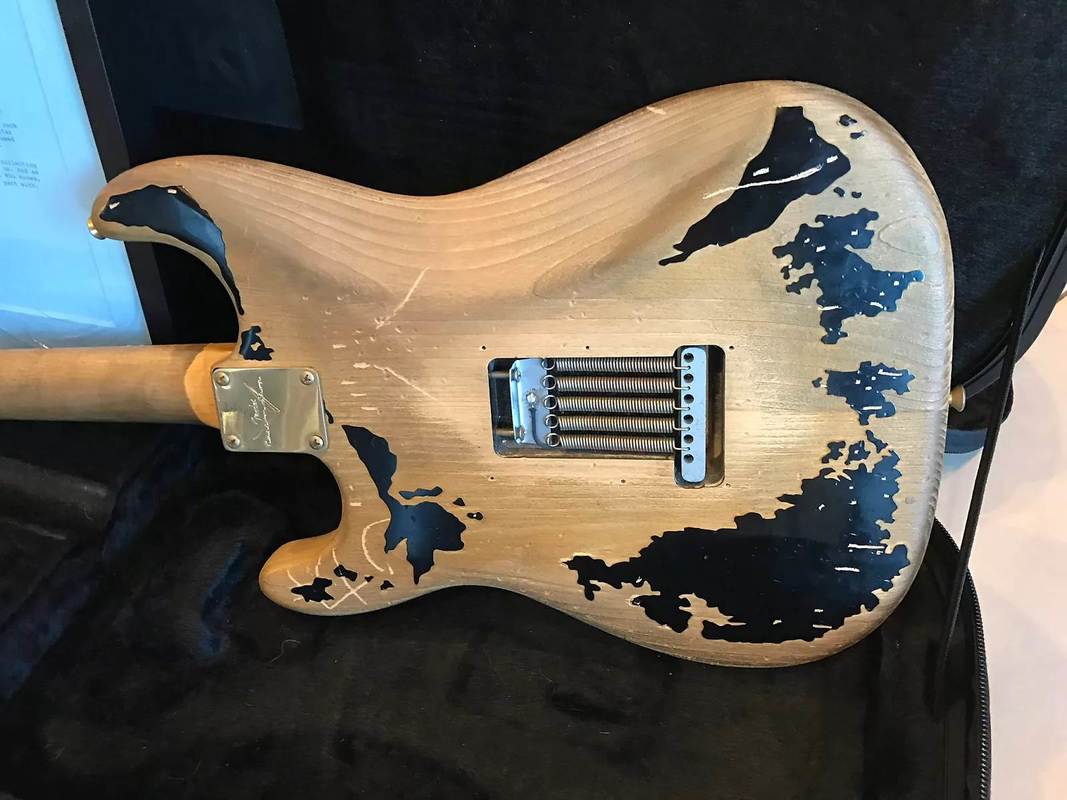
| Rear trem cover | None | GroundGuitar |
| Strings | Ernie Ball Regular Slinky .010-.046 during the Continuum period, per published rig rundowns | Premier Guitar Rig Rundown |
| Current state | Original neck reinstalled by 2017 after Mayer rejected a 2014 replacement neck | GroundGuitar |
The SRV influence is all over this guitar: the gold hardware, the broad late-'50s/early-'60s Fender logic, the sense that feel matters as much as output. Mayer grew up on an SRV Signature Strat, and BLK1 reads like the next step — his own reference Strat built from the same tradition, not a dressed-up SRV homage. Fender later turned parts of that language into commercial models without fully duplicating the original.
Replica debates around BLK1 get muddy fast. The safe version is: 2004 John Cruz masterbuilt alder Strat, black nitro relic, rosewood board, 21 frets, gold hardware, no back plate, and custom-wound non-Big-Dipper pickups. Once you get more specific than that, certainty drops.
Black One's Tone and Rig Rundown
Mayer's mid-2000s rig was never a one-guitar story. The Continuum sessions used several Stratocasters feeding multiple amps — Chad Franscoviak has described sessions built around combinations of Two-Rock, Dumble, Marshall, and Fender amplifiers rather than one fixed chain. Dedicated Mayer accounts like JohnMayerGear on Instagram and Justin Jeske on YouTube catalog the full history, showing that a vintage '64 Strat and Custom Shop Monterey replica contributed alongside BLK1, and that the album ran through a rotating cast of Dumbles. Not all Continuum-era tracks are BLK1 tracks, and separating what the guitar does from what the rig does is worth the effort.
- Attributable to the guitar: low-to-moderate output Strat single-coils, a 25.5" scale, rosewood-board attack, and a feel Mayer consistently described in terms of looseness and "buttery" response rather than raw output.
- Rig-dependent: the polished Continuum compression, width, and bloom. That came from multi-amp recording choices, careful mic placement, and a player who had already settled into a very specific clean-to-edge-of-breakup sound.
- Player-dependent: Mayer's right-hand dynamics, thumb-over phrasing, and habit of shaping clean tones by touch rather than brute-force gain. Once the guitar is fundamentally right, most of what people call "Strat tone" lives in the hands.
If you could only copy three things from this setup:
- A rosewood-board Strat with low-output vintage-leaning pickups, not an overwound blues set
- A clean, high-headroom amp path with enough compression and low-end authority to stay full at moderate gain
- Mayer's light-to-hard touch range, because BLK1 makes the most sense when the player can move from glassy rhythm to pushed lead without a dramatic gear change
As of late 2025, you can buy a fairly honest digital recreation of Mayer's rig via his Neural DSP plugin. Any Strat played into the plugin's Gravity presets is a pretty great start for a BLK1 John Mayer tone.
Provenance: Where It's Been
How Mayer got it
BLK1 was not bought off the wall. Mayer built it in collaboration with Fender's Custom Shop in Corona in October 2004, working directly with John Cruz. He helped pick the wood, helped shape the concept, and left the guitar with Cruz for the relic work after the initial multi-day build session. He describes the experience in an interview. From day one, BLK1 had Mayer's fingerprints all over it — literally and otherwise.
Ownership timeline
| Period | Owner | How acquired | Notable changes |
|---|---|---|---|
| October-November 2004 | John Mayer | Built with Fender Custom Shop and John Cruz | Black nitro relic finish, custom-wound pickups, gold hardware, no trem cover. Members of Fender's build team signed the inside. |
| 2005-2014 | John Mayer | Ongoing personal use | Became primary Mayer-era Fender stage guitar; accumulated additional wear |
| May 2014-July 2017 | John Mayer | Same owner | Replacement neck built by John Cruz in May 2014 after twist developed in the original neck |
| July 2017-present | John Mayer | Same owner | Original twisted neck reinstalled; guitar remains in Mayer's collection and occasional stage use. Seen less often post-PRS deal. |
BLK1 has never left Mayer's hands. No prior owners, no auction history, no collector chain. It's a one-owner guitar, and the story stays simple because of it.
Timeline: How It Changed
| Era | What changed | Why | Evidence |
|---|---|---|---|
| October 2004 | Built at Fender Custom Shop with Cruz | Personal build project rather than production model | Firsthand retelling in an interview |
| Late 2004 | Grounding issue corrected after delivery | Guitar initially sounded wrong; Mayer later found the electrical fault after trying the freezer stunt | Later in that same interview |
| 2005-2010s | Additional natural wear beyond Cruz's relic work | Regular studio and touring use | Visible in live footage and later appearances |
| May 22, 2014 | Replacement neck built by Cruz | Original neck had twisted | Mayer discussed it on his Instagram |
| By July 2017 | Original neck reinstalled | Mayer preferred the feel of the original, twist and all | July 19, 2017 Instagram Live Interview |
| October 4, 2023 | Brief high-profile live return at Madison Square Garden | Nostalgic return during Mayer's solo show; the guitar hadn't been seen live in years after Mayer moved from Fender to PRS. | Guitar.com coverage |
The neck swap is the key change because it reveals how players actually bond with guitars. On paper, a fresh neck built by the original masterbuilder should have been the tidy solution. In practice, Mayer went back to the old one.
Essential Listening
Documented BLK1 appearances, chosen for what each one shows about the guitar's sound and why Mayer reached for it.
-
"Gravity" (Continuum, 2006) — The track Mayer has most directly and consistently tied to BLK1. The neck and neck-middle pickup work here — the clean-to-pushed-lead dynamic that became his signature — is the clearest studio argument for what BLK1 specifically contributed to the record.
-
"Belief" (Continuum, 2006) — The harder-edged side of the same guitar on the same album. More bridge-pickup aggression, more percussive attack. Useful for understanding the full range BLK1 covered rather than reducing it to the neck-pickup ballad sound.
-
"Gravity" (Madison Square Garden, October 4, 2023) — Mayer's documented BLK1 return during his solo tour, years into his PRS era. Worth hearing because it answers the question of why he still keeps the guitar backstage: the song and the guitar are bound together in a way that no replacement has resolved.
Market Context
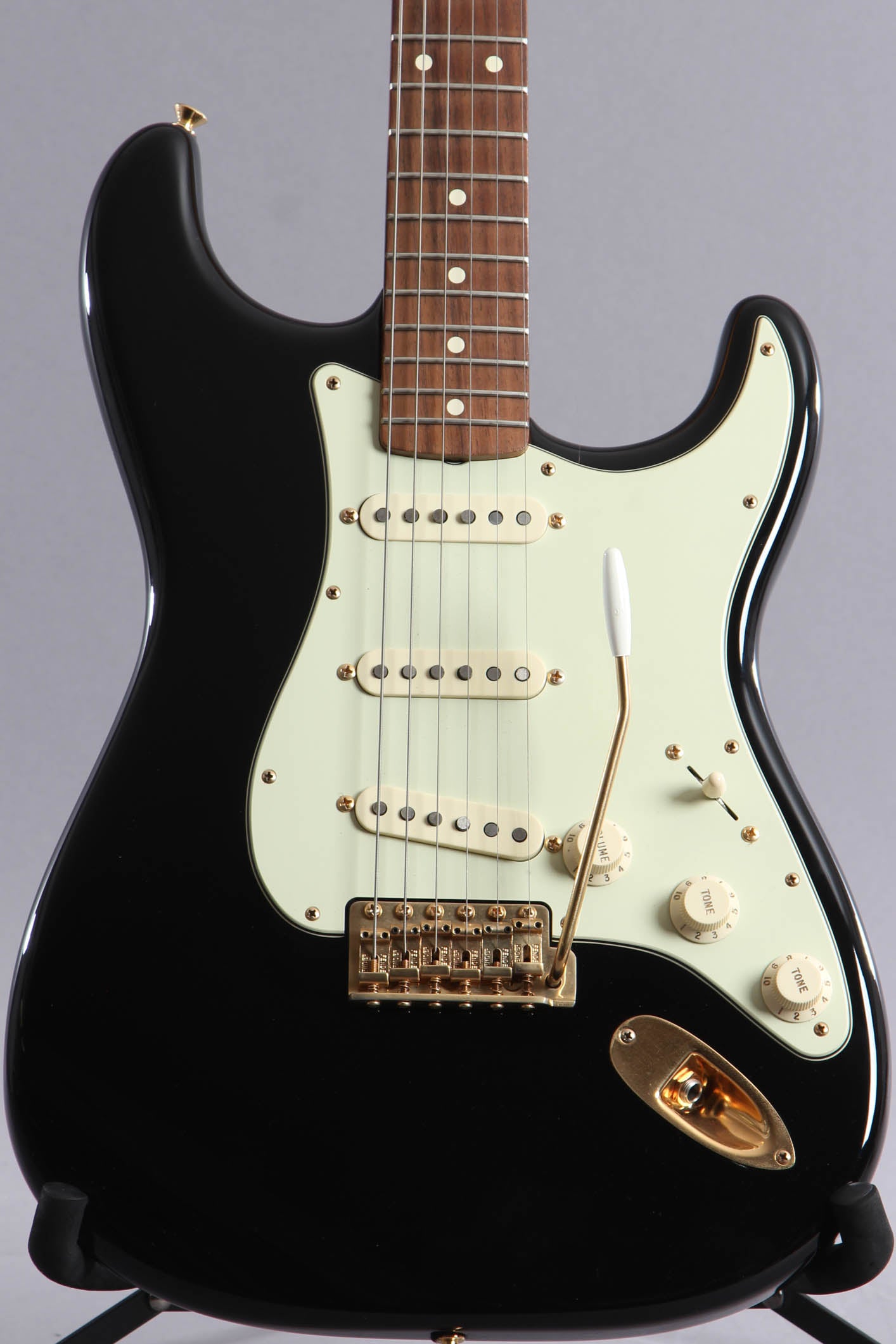
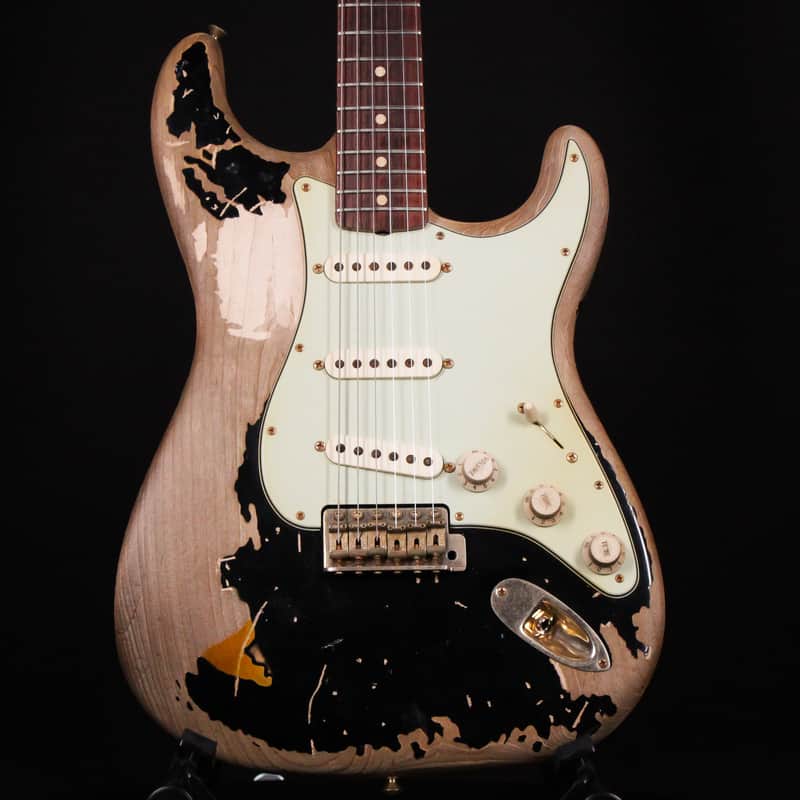
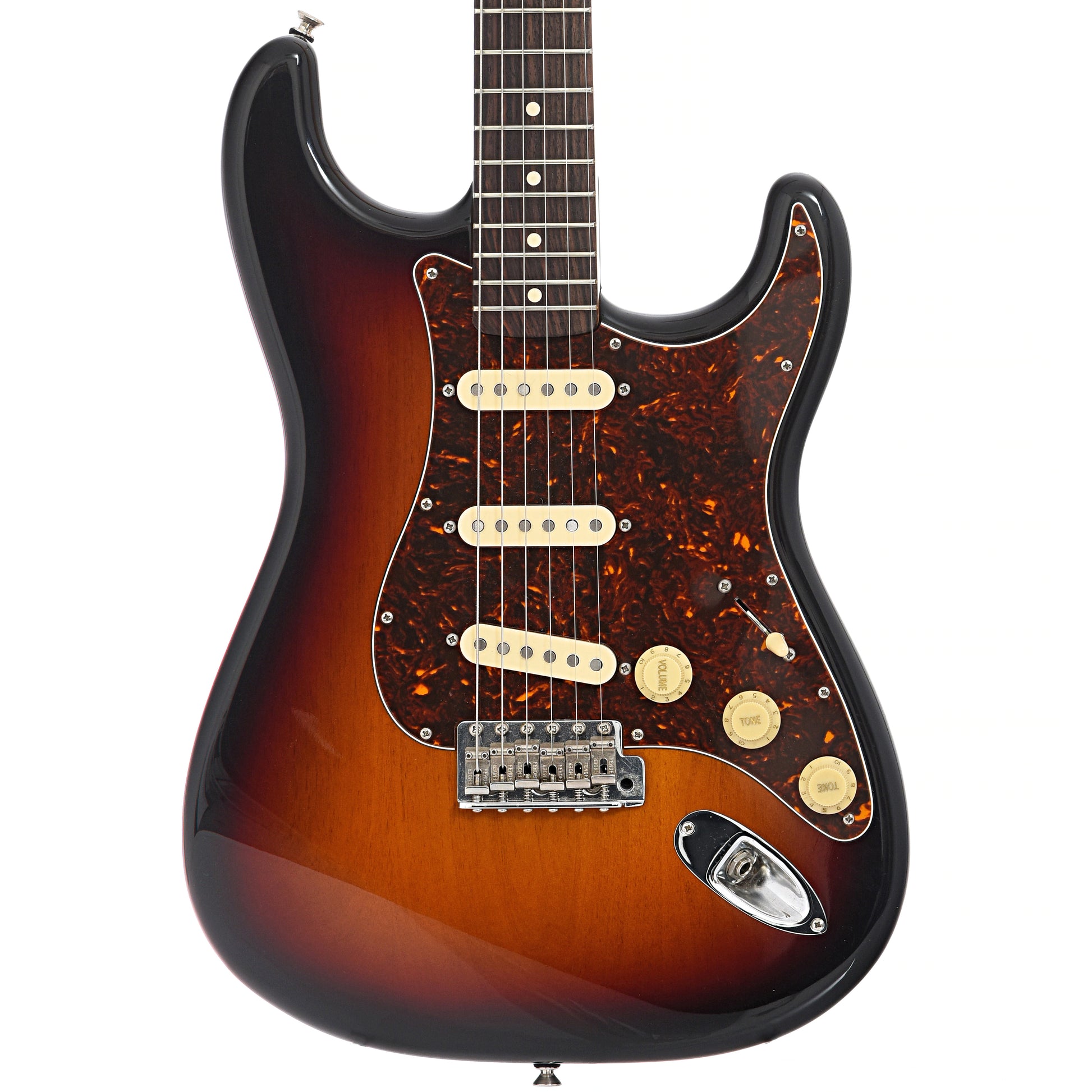
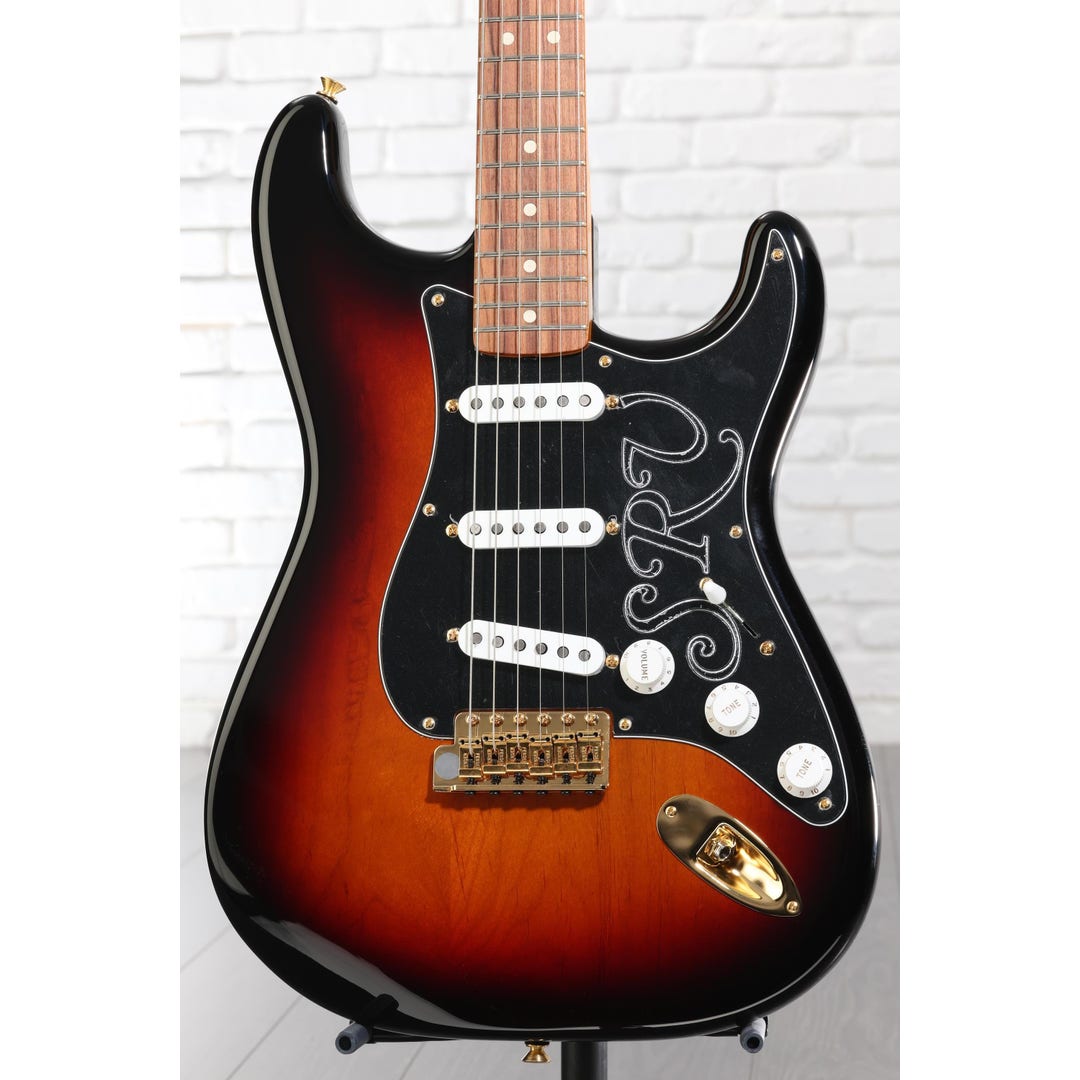
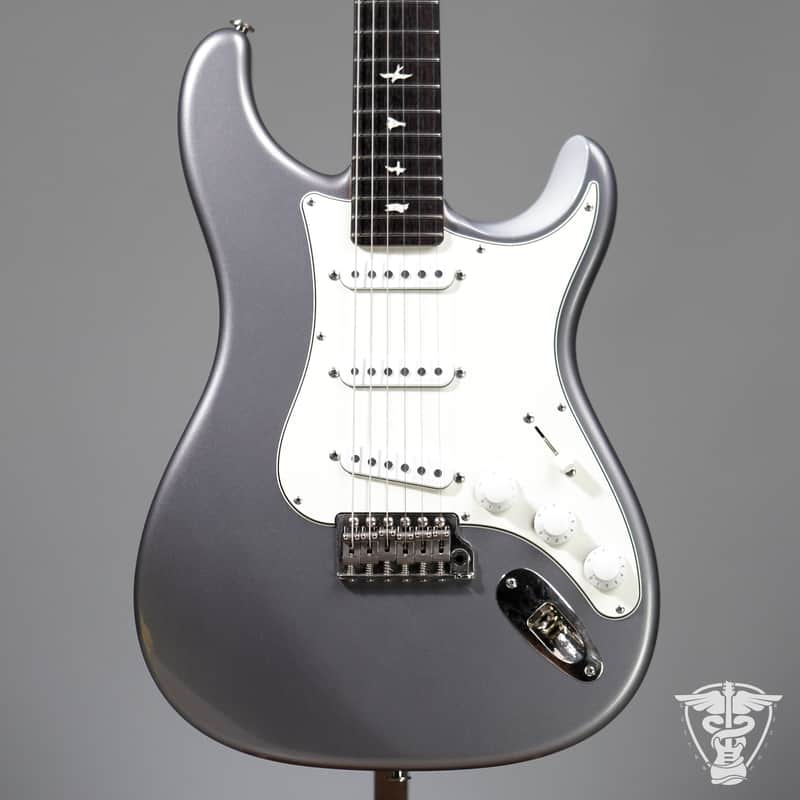
If you decide you want some version of the BLK1 thing, the cross-shopping usually lands on one of these: John Cruz Black1 replicas, the production Black1, the John Mayer Signature Strat, the SRV Signature Strat, or a PRS Silver Sky. Each one answers a different version of the question — closest collectible tribute, most direct production Mayer-Fender guitar, the Stevie lineage behind Mayer's Strat taste, or the cleaner PRS-era take on the same design problem.
Relevant AxeDB model pages:
John Mayer Signature Stratocaster Stevie Ray Vaughan Signature Stratocaster Vintage Stratocaster PRS Silver Sky
What drives the price
- Mayer's name — the 2010 Black1 editions cost what they cost because they're tied to Mayer and to a fixed Fender run, not because they're automatically the best-playing Strats in the room.
- Masterbuilt vs. production — the biggest price divide. The 83 John Cruz masterbuilts live in a different world from the 500-unit production Black1.
- Pickups — if you want the replica for historical reasons, the pickup story matters. If you just want the feel, getting into the right low-output vintage-leaning zone is what counts.
- Condition vs. intended look — relic wear is expected on the masterbuilt version. On the glossy production Black1, later wear either makes it cooler as a player or less appealing to someone who wants it clean.
What it actually costs
The real BLK1 has never been sold publicly, so there's no price on it. If you want a number attached to "Black One," you're looking at the replica runs.
The 2010 83-piece John Cruz masterbuilt Black1 run now trades like a scarce Fender artifact. Asking prices are commonly well into five figures, and examples with complete case candy and documentation push much higher. The 2010 500-unit production Black1 has climbed sharply too, with asking prices now far above original retail. Those are asking prices, not always closed sales.
If you want Mayer-style Strat tone, there are cheaper and saner ways to get there. The Black1 premiums are about Mayer, scarcity, and the story — not about the instrument being irreplaceable as a playing experience.
Get Your Own
Off the shelf
The discontinued John Mayer Signature Stratocaster is the most direct production Mayer-Fender guitar and captures the formula better than a random black relic ever will.
The SRV Signature Stratocaster is part of the story too — the Stevie lineage sits behind a lot of Mayer's Strat taste, even though BLK1 is not just an SRV copy in black. The Texas Special pickups are considerably hotter than BLK1's, but the broader feel and styling are in the right direction.
The PRS Silver Sky is where Mayer landed after leaving Fender — same feel priorities, rethought Strat format, and the guitar he's actually playing most nights now.
If you specifically want the commercial Black1, Fender made two 2010 runs: the 83-piece John Cruz masterbuilt and the 500-unit production Black1. The production version was a glossy, non-relic guitar with a list price that made sense in 2010 and does not look remotely cheap now. Source: Fender Black1 dealer PDF.
Build your own
- Body: Alder Strat body in black; nitro if you care about the aging path or relicing, poly if you care more about price and durability; super heavy relic
- Neck: Maple neck with rosewood board, 21 frets if you want the closer visual and ergonomic match; sanded finish
- Radius: 9.5" is the practical BLK1 target
- Pickups: Vintage-leaning, low-output Strat set rather than hotter blues or modern-noiseless designs
- Hardware: Vintage-style trem, mint guard, gold tuners (pearloid Schaller Elite if you can find them) and hardware if you want the BLK1 look
Myths and Disputes
-
Myth: BLK1 was just a relic version of the John Mayer Signature Strat.
Reality: The production signature model and BLK1 overlap, but BLK1 is generally described as having its own custom-wound pickups rather than the signature model's Big Dippers. -
Myth: Every major Continuum track was recorded with BLK1.
Reality: Mayer has called it the Continuum guitar, but specific track assignments are messier. Published reporting has tied "Slow Dancing in a Burning Room" more closely to his 1964 Strat and "Vultures" to the gold-leaf Strat. -
Disputed: Exact fret wire on the original guitar.
Best read: Fender paperwork associated with replicas and enthusiast consensus do not align perfectly. Treat any highly specific fret claim with caution unless backed by a direct Cruz or Fender document. -
Disputed: Whether BLK1 still carries its original pickup set.
Best read: There has been plenty of forum talk, but no clean public confirmation from Mayer that would justify treating later pickup-swap theories as fact.
FAQ
What is BLK1?
A 2004 John Cruz-built Fender Custom Shop Stratocaster made for John Mayer and usually referred to as Black One or BLK1.
Was BLK1 used on Continuum?
Yes, in the broad sense that Mayer has repeatedly identified it as the album's defining guitar. No, in the narrower fan-forum sense that it was not necessarily the only Strat used on every key track.
Did BLK1 have Big Dipper pickups?
Best available read: no. John Cruz has said the original BLK1 pickup set was custom-wound and not the same as the production John Mayer Signature Strat set.
What happened with the freezer?
Mayer has said he put the guitar in a freezer overnight because it sounded wrong when it arrived, then later found that the real issue was a grounding fault.
Why is the neck story important?
Because Mayer tried a replacement neck from the original builder in 2014, then went back to the twisted original by 2017. That is unusually clear evidence that the feel of the original neck was part of the guitar's identity.
Did BLK1 lead directly to the PRS Silver Sky?
Not directly in a one-to-one engineering sense. But BLK1 sits in the middle of the story. It was the most famous guitar of Mayer's Fender years, and the Silver Sky can be read as the next stage of what he wanted from that general design.
How many Black1 replicas did Fender make?
Two main 2010 versions: an 83-piece John Cruz masterbuilt run and a 500-unit production Black1. Those are the important collectible reference points.
What's the closest guitar I can actually buy?
If you want the Mayer-Fender feel, start with a used John Mayer Signature Strat or a good rosewood-board Strat with low-output pickups. If you want the later, more refined version of Mayer's design priorities, buy a PRS Silver Sky.